

Audio By Carbonatix
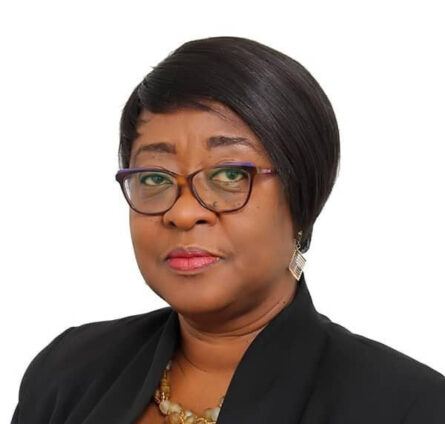
The Managing Consultant at ALC Law Consult, Sheila Minkah-Premo, has argued that empowering women through increased opportunities is not enough to achieve economic justice, insisting that deeper structural reforms are needed to ensure women own and control wealth.
Speaking at the 10th anniversary lecture of the Young African Women's Congress Network on Wednesday, July 29, she said true economic justice requires transforming the legal, economic and social systems that determine who owns productive assets and who benefits from economic growth.
"Empowerment is a word that we all hear every day about. It's been widely explored within development scholarship. While the literature offers diverse perspectives, it's perhaps most useful to understand empowerment as both a process and an outcome through which individuals acquire the ability to make meaningful choices and to exercise agency over decisions affecting their lives," she said.
Mrs. Minkah-Premo explained that economic empowerment goes beyond increasing women's incomes.
"Building on this understanding, economic empowerment refers not only to increasing women's incomes, but to expanding their capacity to access productive resources, participate in markets, influence economic decision-making, and exercise control over the benefits derived from their labor. However, empowerment alone does not necessarily produce economic justice."
She stressed that economic justice demands more than expanding opportunities for women.
"Economic justice, therefore, requires more than expanding opportunities. It requires transforming the legal, economic, and social systems that determine who owns productive assets, who exercises control over resources, and who benefits from economic growth."
Mrs. Minkah-Premo also distinguished between income and wealth, noting that the two are often confused despite their significant differences.
"Income is what we earn. Wealth is what we own. Wealth comprises land, housing, businesses, savings, investments, pensions, shares, and other productive assets capable of generating long-term economic security and intergenerational prosperity."
Citing the work of economist Thomas Piketty, she said patterns of wealth ownership often expose inequalities that are more entrenched than differences in income.
"As Thomas Piketty has demonstrated, patterns of wealth ownership frequently reveal deeper and more enduring inequalities than income alone. Ownership, in turn, is not merely a question of legal title. Ownership is the ability to control, use, derive benefits from, and transfer productive assets."
She warned that countries could successfully empower women without ensuring they build meaningful wealth.
"So these distinctions are important because they expose a reality that is often overlooked. A country may succeed in producing empowered women while still failing to produce women who own wealth in meaningful and transformative ways."
Defining economic justice, Mrs. Minkah-Premo described it as "a set of moral principles for building fair economic institutions focusing on equal opportunity, fair wealth distribution, and equitable working conditions."
"Its ultimate goal is to provide every person with sufficient material foundation to live a dignified, productive, and creative life," she added.
Latest Stories
-
ECG announces power outages in Central, Eastern and Western Regions on Thursday
3 minutes -
God does not take campaign instructions
59 minutes -
Government moves to address rising accommodation costs at KNUST
59 minutes -
Cristiano Ronaldo marries longtime love Georgina Rodríguez in Portugal
1 hour -
Political parties, judiciary must reform themselves to protect Africa’s democracy – Asiedu Nketia
1 hour -
Luv FM High School Debate: T.I AMASS advances as IBASS makes impressive debut
1 hour -
Greater Accra Business Merit Awards honours SIM Group of Companies
1 hour -
Cyberbullying : When social media becomes a tool for public humiliation
2 hours -
Awerco Construction hands over 130-bed Weija Paediatric Hospital to Health Ministry
2 hours -
YEA to migrate personnel on public sector salary structure – CEO
2 hours -
I won’t be part of this selective justice – Atta Akyea rejects Adu-Boahene trial during legal vacation
2 hours -
GBA has no business responding to law firms’ petitions – Dafeamekpor
2 hours -
Is Legal Vacation intended for the Bench or the Bar?
2 hours -
NPP accuses Chief Justice of partisan bias over vacation trial warrants
2 hours -
Political parties must stop being ‘seasonal electoral machines’ – Asiedu Nketia
2 hours