

Audio By Carbonatix
The Volta River Authority (VRA) has warned that payment delays, inter-utility debt and revenue shortfalls are putting pressure on its liquidity, despite generating GH¢8.9 billion in electricity revenue in 2025.
The Chief Executive of the VRA, Ing. Edward Obeng Kenzo, said the financial pressures remain a major challenge to the Authority’s operations and its ability to execute planned projects.
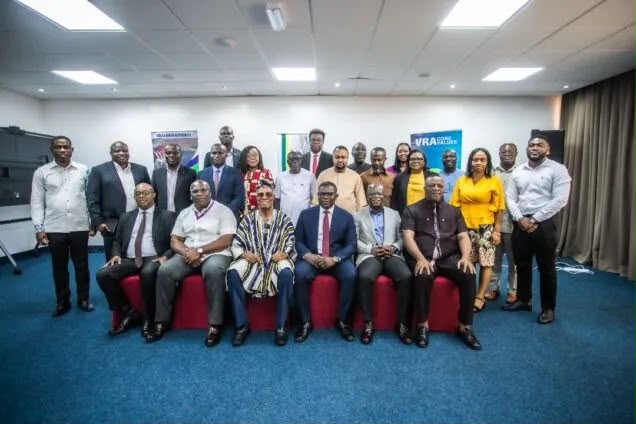
He made the remarks during his presentation at the VRA’s annual stakeholder engagement, where he outlined the Authority’s financial and operational performance for the 2025 financial year.
According to the VRA’s report, electricity revenue declined by about 4.0%, from GH¢9.291 billion in 2024 to GH¢8.947 billion in 2025.
At the same time, the Authority’s cost of sales increased by 4.0%, from GH¢7.479 billion to GH¢7.814 billion.
Despite the financial pressures, VRA recorded a net profit of GH¢88 million in 2025, down from GH¢106 million in the previous year.
The Authority also recorded a significant improvement in its foreign exchange position, moving from an exchange loss of GH¢695 million in 2024 to an exchange gain of GH¢237 million in 2025.
Financial expenses also fell by 24.0%, from GH¢255 million to GH¢194 million, while administrative costs increased by about 14.0 to GH¢1.384 billion.
Liquidity Challenge
Ing. Obeng Kenzo’s warning comes as VRA continues to face challenges in maintaining sufficient liquidity to support its operations and investment programme.
The Authority identified payment delays, inter-utility debt and revenue shortfalls as key factors constraining its liquidity.
It also cited difficulties in securing financing for projects, as well as lengthy procurement and approval processes, among the factors affecting project delivery.
Generation Performance
VRA remained a major contributor to Ghana’s electricity supply in 2025, accounting for 48% of total sector generation.
The Authority generated 12,978 GWh, compared with 14,045 GWh generated by Independent Power Producers.
Hydropower accounted for 57 percent of the country’s generation mix, while thermal generation contributed 42 percent and solar less than one percent.
The Authority is also pursuing additional generation capacity, including the 100MW Anwomaso Phase II, 132MW T3 Repowering Project and 30MWp Akuse Floating Solar Project.
Latest Stories
-
2 injured amid gunshots during raid at Nawara Mining office at Nsuapemso
44 seconds -
St Augustine’s College retains 2026 National Investment Quiz title
5 minutes -
KNUST Nursing and Midwifery School staff recognised at 2026 Health Ministry Excellence Awards
13 minutes -
JoyNews’ Esther Esi Nkrumah selected for UK Media Excellence for Emerging Technology Fellowship
18 minutes -
Five NDC youth organisers in Western Region pay courtesy call on Armah-Kofi Buah
31 minutes -
NACOC demands tighter port controls to prevent Tema Harbour drug trafficking
33 minutes -
Ghana’s startup ecosystem must build sustainability into innovation – Ghana Hubs Network
45 minutes -
Friday’s beachfront demolition was carried out at Labadi Beach Hotel’s request, not for flood mitigation – Stan Dogbe
46 minutes -
LA 2028: Mukarama returns to Black Queens squad for Olympic Games qualifiers
47 minutes -
Fusaini Yakubu Abanga leads NPP National Youth Organiser race with 45% in Global InfoAnalytics poll
1 hour -
Suame Methodist JHS marks 120 years with a call for STEM innovation
1 hour -
Global fashion coalition launches in the heart of Kantamanto Market
1 hour -
‘No concrete commitments from government’ – Brong Ahafo teacher unions maintain strike
1 hour -
Finance Minister demands greater returns from NLA after GH¢10 million dividend presentation
1 hour -
National Customers’ Choice Awards set to celebrate Ghana’s best customer-centred brands
2 hours