

Audio By Carbonatix
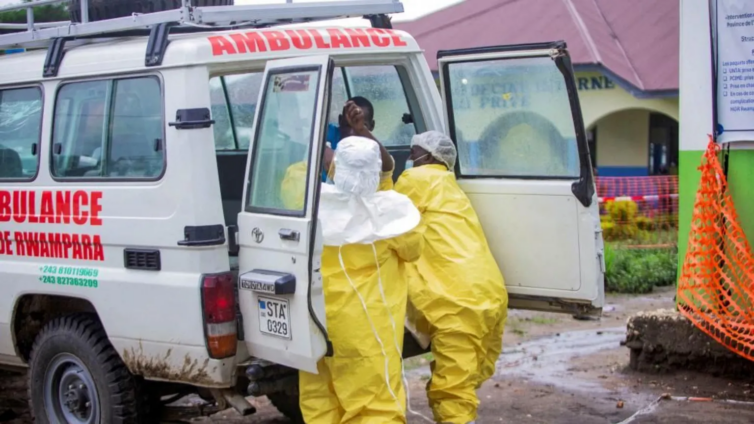
Uganda has declared the end of its Ebola outbreak after completing 42 consecutive days without a new confirmed case.
The announcement has been welcomed by the Africa Centres for Disease Control and Prevention (Africa CDC) and the World Health Organization (WHO).
The 42-day period is twice the upper limit of the incubation period for Ebola and is the internationally established benchmark for confirming that transmission linked to an outbreak has ended.
Uganda's last patient, an imported case, was discharged from care on 16 July 2026.
The country had earlier announced the interruption of local transmission on 28 July, after recording 42 days without a new locally acquired case. Surveillance and other outbreak control measures continued after the last patient was discharged.
WHO Director-General Dr Tedros Adhanom Ghebreyesus said Uganda's response showed how quickly an Ebola outbreak could be brought under control when action is taken early.
“Uganda has demonstrated that with decisive action, Ebola outbreaks can be brought under control quickly," he said.
He said preparedness, surveillance and careful management at points of entry were important in protecting communities without unnecessarily disrupting travel and trade.
Uganda reported 20 confirmed cases of Ebola disease caused by the Bundibugyo virus after the outbreak was declared on 15 May.
Fifteen of the cases were imported from the Democratic Republic of the Congo, while five were acquired locally among contacts and health workers linked to the imported cases.
Eighteen people recovered and two died. More than 800 contacts were identified and monitored during the response.
Rapid response
The outbreak was contained through a combination of case detection and confirmation, contact tracing, isolation and clinical care.
Health authorities also strengthened infection prevention and control, community engagement and disease surveillance in health facilities and at points of entry.
Africa CDC Director-General H.E. Dr Jean Kaseya said the response demonstrated the importance of leadership and strong links with communities.
“Uganda has shown that Ebola can be stopped when leadership acts decisively, communities are trusted and public health systems reach people quickly.”
But he warned that the end of transmission in Uganda should not lead to complacency.
An Ebola outbreak is still ongoing in the Democratic Republic of the Congo, which shares close social and economic ties with Uganda.
Frequent movement of people and cross-border trade mean neighbouring countries remain at risk of imported cases.
“We must now protect this achievement while accelerating the response in the DRC,” Dr Kaseya said.
“We will only be secure when transmission is stopped everywhere.”
Keeping borders open
WHO continues to advise against travel and trade restrictions because of Ebola outbreaks.
It does not recommend suspending flights, closing borders or denying entry to travellers from countries affected by Ebola.
Instead, countries are encouraged to maintain travel and trade while putting in place proportionate public health measures that can detect cases early and strengthen preparedness.
For Uganda, the end of the outbreak is also being presented as an opportunity to maintain the systems developed during the response.
WHO Regional Director for Africa, Dr Mohamed Janabi, said the lasting benefit should go beyond ending the immediate outbreak.
“Ending an Ebola outbreak is an important milestone, but the lasting achievement is a stronger ability to protect people from future health threats.”
He said Uganda had demonstrated what sustained investment in preparedness could achieve.
WHO and Africa CDC are calling for continued disease surveillance and testing capacity, rapid investigation of alerts and strong infection prevention and control in health facilities and communities.
They are also urging continued engagement with communities and close coordination between countries along their shared borders.
Both organisations said they would continue supporting the governments of Uganda and the Democratic Republic of the Congo through a joint continental preparedness and response plan.
For Uganda, 42 days without a new confirmed case marks the formal end of the outbreak.
But with Ebola still present in the region, health authorities say the work to prevent new infections and detect imported cases early must continue.
Latest Stories
-
Zoomlion begins disinfection and disinfestation exercise across Upper East Region
7 minutes -
Ghana AIDS Commission strengthens community-level HIV data collection to track 2030 target
7 minutes -
Parliament approves three new Supreme Court Justices
14 minutes -
Zoomlion intensifies disinfection, disinfestation exercise across Ahafo Region
37 minutes -
GHASALC income rises 89% to GH¢1.84m as sector prepares for 2027 reforms
43 minutes -
‘Africa is being short-changed because we fail to negotiate well’ – Col Festus Aboagye
47 minutes -
NSMQ 2026: PRESEC Legon keeps 9th title dream alive as Mfantsipim looms in quarter-finals
48 minutes -
Zoomlion begins fumigation exercise across Eastern Region after floods
52 minutes -
Police suspend concrete mixer truck operations in Accra and Tema for 3 days
1 hour -
Parliament approves Mahama Ayariga and Zanetor Agyeman-Rawlings as ministers
1 hour -
NACOC, University of Ghana strengthen collaboration to tackle drug abuse on campus
1 hour -
NSMQ 2026: Presby SHS, Bompata dethrones OLAG to snatch seeded status, book quarter-final spot
1 hour -
Senyo Hosi calls for policy certainty, productive infrastructure and stronger human capital to transform Africa
1 hour -
Mali music star Salif Keïta cancels South African concerts over ‘xenophobic violence’
1 hour -
Legal holiday means there’s no urgency to confirm judges – Annoh-Dompreh
1 hour