

Audio By Carbonatix
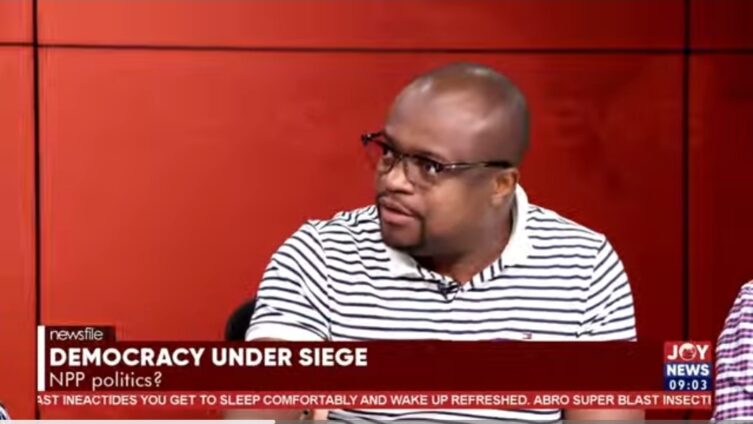
Professor Sharif Mahmud Khalid, Associate Professor of Accounting and Finance and Economic Adviser to the Vice-President, has challenged claims that the introduction of specialised tribunals constitutes a threat to Ghana's democracy.
According to him, specialised tribunals could instead help reduce pressure on the regular courts and improve the administration of justice.
Speaking on JoyNews Newsfile on Saturday, August 8, Prof. Khalid said the debate should be based on evidence and a proper understanding of the purpose of tribunals rather than historical comparisons with periods of authoritarian rule.
He questioned how the establishment of specialised tribunals could, in itself, amount to an attack on democracy.
"How is the introduction of tribunal system a dent on democracy? I would need some education really on this," he said.
"If you have a tribunal on tax, it reduces issues. Maybe you go to GRA, you have your dispute with GRA over your tax liability, and you go to a tax tribunal. Does it not reduce the burden of the judicial pressure we are talking about?" he asked.
He made a similar argument about employment tribunals, saying they could accelerate the resolution of workplace disputes and reduce pressure on the judiciary.
"Do you go to an employment tribunal? Does that not also help in accelerating and also watering down the pressure we are talking about?" he asked.
Prof. Khalid cautioned against automatically associating the word "tribunal" with Ghana's past experiences of detention and authoritarian rule, particularly under the PNDC era.
He argued that the mere existence of specialised tribunals should not be viewed as evidence of democratic regression without examining how they are constituted, their powers and the manner in which they operate.
His comments form part of a broader debate over claims by the New Patriotic Party (NPP) that Ghana's democracy is under attack.
Prof. Khalid has maintained that the assessment of Ghana's democratic health should rely on empirical evidence, including international democracy and press freedom assessments, rather than isolated political cases.
He cited Ghana's position in global press freedom rankings as one indicator that, in his view, complicates claims that the country's democracy is currently under siege.
The debate follows the NPP's Democracy Under Attack demonstration, during which the party raised concerns about alleged selective justice, arbitrary arrests and what it describes as threats to judicial independence.
Latest Stories
-
God does not take campaign instructions
42 minutes -
Government moves to address rising accommodation costs at KNUST
42 minutes -
Cristiano Ronaldo marries longtime love Georgina Rodríguez in Portugal
1 hour -
Political parties, judiciary must reform themselves to protect Africa’s democracy – Asiedu Nketia
1 hour -
Luv FM High School Debate: T.I AMASS advances as IBASS makes impressive debut
1 hour -
Greater Accra Business Merit Awards honours SIM Group of Companies
1 hour -
Cyberbullying : When social media becomes a tool for public humiliation
1 hour -
Awerco Construction hands over 130-bed Weija Paediatric Hospital to Health Ministry
1 hour -
YEA to migrate personnel on public sector salary structure – CEO
1 hour -
I won’t be part of this selective justice – Atta Akyea rejects Adu-Boahene trial during legal vacation
1 hour -
GBA has no business responding to law firms’ petitions – Dafeamekpor
2 hours -
Is Legal Vacation intended for the Bench or the Bar?
2 hours -
NPP accuses Chief Justice of partisan bias over vacation trial warrants
2 hours -
Political parties must stop being ‘seasonal electoral machines’ – Asiedu Nketia
2 hours -
Jatikay Centre backs National Security reorganisation, urges focus on emerging threats
2 hours