

Audio By Carbonatix
Ghana has over 2.3 million people living with various mental health conditions, yet mental health care remains a challenge, with a 98% treatment gap. Since 2022, the country has been implementing the Director General’s Special Initiative for Mental Health (DG-SIMH) in four regions to address the gaps and strengthen the standard of mental health and well-being.
The five-year initiative supported by the Government of Norway and USAID seeks to get 100 million more people to access quality and affordable mental health services in 12 countries around the world, including Ghana.
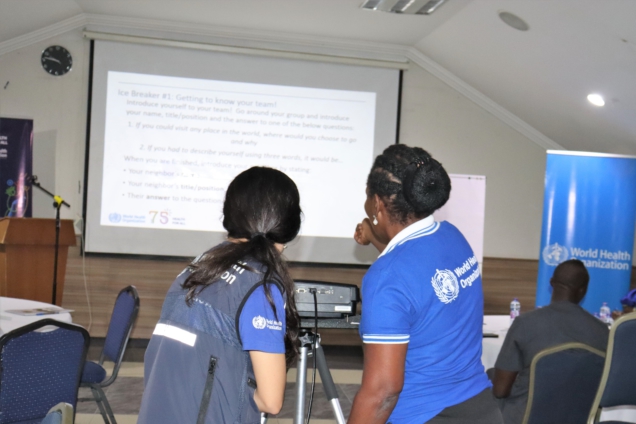
Now, the World Health Organization (WHO) is enhancing the capacity of the implementing regions and partners to ensure the sustainability of the initiative and other inventions even after the implementation period.
“Through the WHO Special Initiative for Mental Health, Ghana has stepped up efforts to improve mental health care. So now we are working to ensure that the significant effort being made is sustained beyond the lifespan of the initiative,” says the Noncommunicable Diseases & Risk Factors Officer at WHO Ghana, Dr Joana Ansong, during a sustainability planning and business case development workshop for the implementing partners in Kumasi.
On her part, the Deputy Director for Mental Health at the Ghana Health Service, Dr Amma Boadu lauded the foresight of WHO in seeking to enhance capacity for sustainable programming and pledged the service’s commitment to leverage the new skills sustain health programmes at all levels.
The workshop was aimed at building the foundational knowledge and expertise of the regions to effectively pursue, secure, and manage strategic partnerships for sustainable and impactful health programs.
“This capacity will help us to address gaps in our efforts to sustain mental health programmes and other health interventions, especially at the subnational level where resources are very constrained,” noted Dr Boadu.
Participants described the workshop as timely and insightful as they empowered with the requisite technical competence to build strong business cases for sustainable health interventions.
“This is the first time we are participating in this kind of workshop. We are ready to leverage the skills to not only mental health programmes but all other health interventions,” says Mr Edward Owusu, the Savannah Regional Mental Health Coordinator.
The four-day workshop saw participants taking through partnerships, resource mobilization and advocacy to strengthen their capacity to sustain their health programmes.
Latest Stories
-
FDI inflows hit US$2.61bn in 2025 – GIPC
31 minutes -
Sixteen pupils killed in Kenya school fire
46 minutes -
Ghana’s tax gap: New levies loom in mid-year budget
47 minutes -
Ashanti region: Mining pit collapse kills 4 illegal miners at Bepotenten Sukuumu
51 minutes -
Asanko Scholarship Programme supports 31 students in the Amansie West and South districts
1 hour -
When the message excludes the customer: Insights from MTN’s tariff announcement on financial inclusion in Ghana
1 hour -
Weija Dam spillage submerges Tetegu, Sampah Valley, and Choice communities
1 hour -
Toyota Ghana launches new RAV4 Hybrid with self-charging technology
1 hour -
ILAPI commends Ministry of Finance on the Inter-Agency Working Group to manage unclaimed funds
1 hour -
Pregnant woman from Ghana detained with child at Dulles Airport, ACLU says
2 hours -
Today’s front pages: Thursday, May 28, 2026
2 hours -
51km of Accra-Kumasi Expressway corridor cleared; compensation plans underway – Finance Minister
2 hours -
AfDB forecasts 5% GDP growth for Ghana as macroeconomic indicators strengthen
2 hours -
Menstrual poverty: United Pension Trustees calls for an end to menstruation stigma
2 hours -
Vaccine survey reveals strong public confidence as Ghana pushes local manufacturing agenda
2 hours