

Audio By Carbonatix
The Ashanti Regional Director of Education has opined that the introduction of Science, Technology, Engineering and Mathematics (STEM) education in Ghana’s education system could eliminate the ‘chew and pour’ phenomenon among students.
Dr William Kwame Amankrah said STEM sought to expose students to practical ways of solving problems, thereby, moving students away from memorising their notes just for examination purposes without basic understanding of concepts.
The Regional Director who was speaking at the fourth edition of Energy Commission’s Renewable Energy Challenge for Senior High Schools in the Ashanti Region, said STEM education was the way to go as a country determined to build its human resource base.
The challenge, which was put together by the Energy Commission in collaboration with the Education and Energy Ministries was on the theme, “Mechanised Small-Scale Agriculture Using Renewable Energy Technologies.”
It sought to promote creative thinking and provide mentorship to students in second-cycle institutions and extend to them the platform to exhibit their innovative projects.
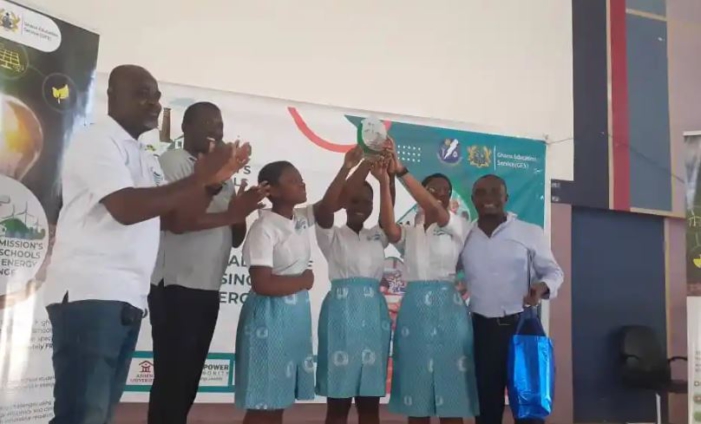
Yaa Asantewaa Senior High School emerged winner of the competition which was contested by 10 Senior High Schools (SHSs) in the region.
Other schools that participated were Opku Ware School, St. Loius SHS, Esaase Bontefufuo SHS, KNUST SHS, Akrofuom SHTS, Asokore Ahmadiyya Girls SHS, St. Jerome SHS, and Obuasi SHTS.
Dr Amankrah applauded the Energy Commission for instituting the renewable energy challenge for schools, saying that it was in line with the vision to transform students into critical thinkers through STEM education.
He said the competition could potentially bring out the innovative skills of students considering the amazing talents exhibited by participating schools since the inception of the contest.
Mr Frederick Ken-Appiah, the Deputy Director of Energy Commission, said the exercise formed part of efforts by the Commission to promote, develop, and utilise energy resources in the country.
He advocated for the incorporation of efficient use of renewable energy resources in the mainstream educational curriculum in Ghana.
Latest Stories
-
Ipswich Town investigates racist abuse of Fatawu
4 hours -
Man City battle past Sunderland in eight-goal thriller
4 hours -
Neville calls Man Utd ‘pathetic’ – but Carrick maintains belief
4 hours -
Cunha rescues point for Man United at Fulham
5 hours -
Government has improved sanitation in one-and-a-half years — Salaga South MP
5 hours -
Impressive defence behind Iraola’s solid Liverpool start
5 hours -
Nkwanta North Assembly to appear before Parliament over DACF sanitation spending
5 hours -
PSG beat Marseille for second league win of the season
5 hours -
Mourinho prints out ‘red card’ incidents after Real lose derby
5 hours -
Atletico beat 10-man Real in feisty Madrid derby
5 hours -
Twelve Tribes of Israel Ghana to mark 40 years with anniversary celebration
6 hours -
GPL 2026/27: Hearts held by Bechem as Kotoko, Samartex share spoils
6 hours -
My Story (Kwaku Antwi-Boasiako)
6 hours -
We expect growth rate to re-accelerate in second-half of 2026 – IC Insights
6 hours -
The ungodliness and unrighteousness underlying the National Cathedral mess!
6 hours