

Audio By Carbonatix
Stakeholders in adolescent sexual and reproductive health have called for stronger coordination among government institutions, civil society organisations, communities and young people to address persistent adolescent health challenges.
These include adolescent pregnancies, HIV infections, gender-based violence, and barriers to sexual and reproductive health services.
Acting Executive Director of the National Population Council (NPC), Angelina Osei Kodua-Nyanor, said adolescent sexual and reproductive health had become a critical national development issue, given Ghana’s increasingly youthful population.
She was speaking at the Third Quarter High-Level Coordination Meeting of Partners on Adolescent Sexual and Reproductive Health Policies and Programmes in Accra on Friday.
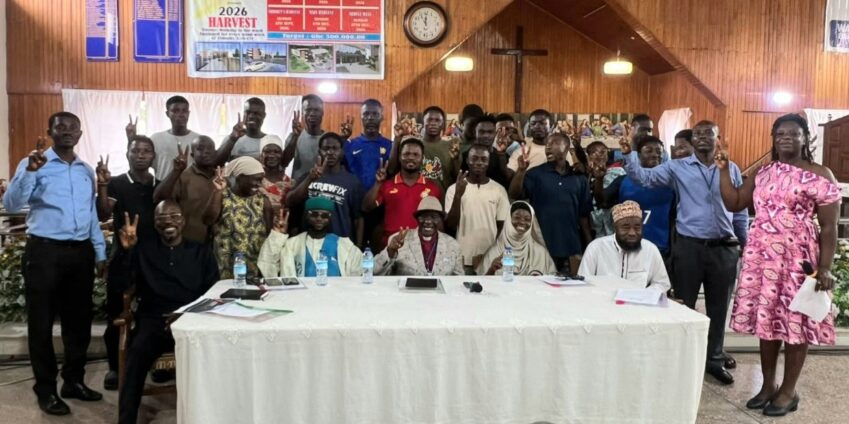
She said the meeting brought together institutions implementing adolescent sexual and reproductive health programmes to share experiences, identify gaps and strengthen collaboration with the Ghana Health Service (GHS) and other stakeholders.
The urgency of the issue was underscored by data presented by Ms Sharifa Mohammed, Programme Manager for Adolescent Health and Development at the GHS.
She said 53,415 adolescent pregnancies were recorded at health facilities between January and July 2026, including 1,501 involving girls aged 10 to 14 years.
The 2022 Ghana Demographic and Health Survey (GDHS) also found that 15.2 per cent of girls, aged 15 to 19, had ever been pregnant, while the adolescent birth rate was 63 births per 1,000 women aged 15 to 19.
Ms Mohammed said the problem should not be addressed by focusing only on girls.
She explained that adolescent boys who impregnated girls could also drop out of school to seek work and support their partners and children.
She called for particular attention to adolescents aged 10 to 14, saying pregnancies involving children raised health, education and child-protection concerns.
Ms Mohammed said the GHS’s Adolescent Health Safety Net, implemented since 2017, provided adolescent-responsive maternal and child health services, sexual and reproductive health education, psychosocial support, referrals and links to social protection.
Pregnant adolescents were also supported to return to school or access livelihood opportunities where necessary.
She identified gaps in adolescent sexual and reproductive health education and services, including differing approaches, stigma at health facilities and social norms that discouraged young people from seeking care.
She called for harmonisation of the positions of the GHS and Ghana Education Service, stronger adolescent-friendly services and communication tailored to different groups of young people.
Among the interventions cited were digital platforms providing confidential counselling and information, monitoring of adolescent services in schools and health facilities, and involving young people in designing behaviour-change materials and programmes.
Programme Manager at the Alliance for Reproductive Health Rights,Mr Isaac Nyampong, said civil society organisations were strengthening advocacy by using evidence to improve public understanding of reproductive health challenges.
He said more than 100 community-based personnel had been trained in selected districts to receive and relay clients’ feedback on health services.
Engagements with technology companies and social media content creators were also being explored to expand reproductive health education.
Mr Nyampong said traditional and religious leaders, the media and community structures should also be equipped to understand and communicate health data in accessible ways.
The Planned Parenthood Association of Ghana (PPAG) highlighted interventions to reduce gender-based violence and improve adolescents’ access to information and services.
These included training service providers on survivor-centred approaches and referral pathways, engaging about 500 young people on technology-facilitated gender-based violence and supporting services for adolescents and pregnant girls.
The organisation also maintained its Young and Wise platform as a resource for young people.
PPAG said it had participated in multisectoral dialogue on teenage pregnancy and adolescent health initiatives, as well as the adaptation of international tools to Ghana’s cultural context.
Other stakeholders called for sustained, multisectoral action that placed young people at the centre of programme design and implementation.
They identified priorities including stronger child-protection responses for very young adolescents, keeping girls and boys in school, expanding quality adolescent-friendly services and improving HIV and pregnancy prevention education.
They also called for stronger community feedback and accountability mechanisms, wider access to safe digital platforms and longer-term financing beyond short project cycles.
The 2022 GDHS data show that adolescent pregnancy remains unevenly distributed across the country.
The proportion of women aged 15 to 19 who had ever been pregnant ranged from six per cent in Greater Accra to 26 per cent in Savannah, underscoring the need for interventions responsive to local circumstances.
Latest Stories
-
Suzuki proves worthy replacement for Martinez at Villa
3 minutes -
Brighton humbling ‘a big lesson’ for Arsenal – Arteta
7 minutes -
Arsenal handed first loss by brilliant Brighton
14 minutes -
Video: Akwatia MP clashes with Kofi Bentil over 3.9-tonne cocaine seizure
16 minutes -
Ratcliffe ‘must go’ says Man Utd Muslim fan group
20 minutes -
Ignite Social Enterprise targets global market for Ghanaian shea butter
35 minutes -
Eviction notice leaves retired, serving railway workers in Kumasi in limbo
1 hour -
Asiedu Nketia: Why I remain an unrepentant Nkrumahist
1 hour -
Kudus, Djiku return a boost to Black Stars – Agyemang-Badu
2 hours -
‘If the world, Africa honoured Nkrumah as the Millennium Man, why are we not doing same?’ – Asiedu Nketia
2 hours -
Yaw Preko backs renewed push to revive Colts football
2 hours -
UMB Speed Stars defeat Black Stars Legends 6-2 in friendly
2 hours -
Dafeamekpor hails Kwasi Pratt Jnr as ‘scholar of formidable proportions’
2 hours -
The BECE exam and placement conundrum: Necessary evil or failing system?
2 hours -
‘Who did this to you and what was your crime?’ – Father grives over late Ivan Baidoo
2 hours