

Audio By Carbonatix
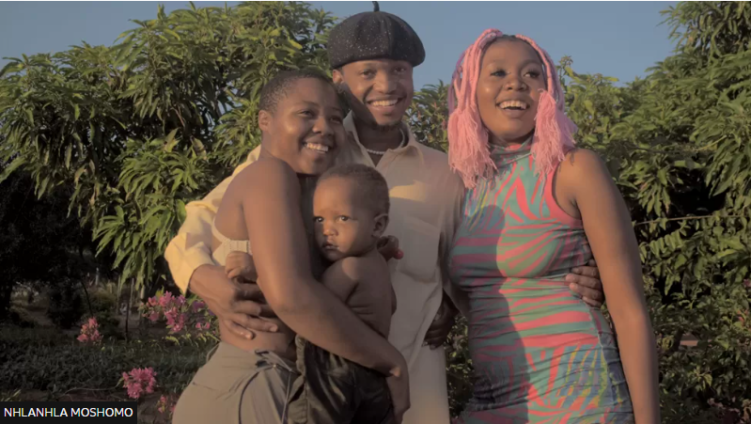
A new trend appears to be emerging among young South Africans - polyamory - having romantic relationships with multiple partners at the same time.

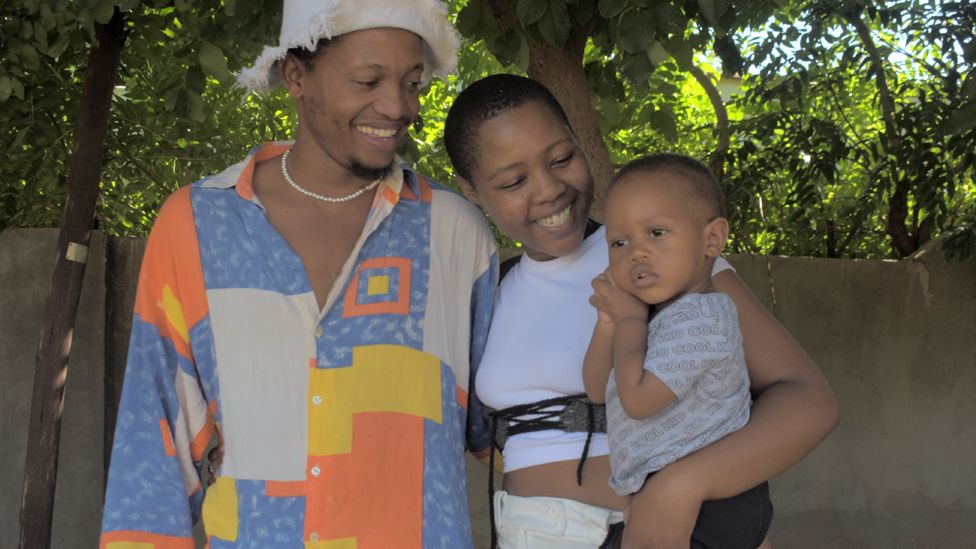
With her short hair and matching white trousers and top Lethabo Mojalefa cuts a striking figure.
She is a bisexual woman who started dating Fletcher Mojalefa in December 2018.
Fletcher, who equally oozes confidence and charisma, is a flamboyant man often wearing a colourful flowery shirt and a bucket hat.
The couple, who are in their 20s, live together with their son, nearly two years old, in a semi-rural township outside Burgersfort in South Africa's Limpopo province.
When they first got together, however, Fletcher had no idea that Lethabo was bisexual.
"I broke the news two or three months into our relationship because I realised that I could actually be open with this guy," Lethabo says.
Fletcher was fine with it.
"I felt happy that she went public with me and she came out," he says. "If she didn't, we were going to have other secret relationships and we were not going to last."
The couple realised early on that if their relationship was going to work out, they would have to fulfil Lethabo's sexual and emotional needs as a bisexual woman, as well as Fletcher's as a straight man.
So, they came up with a rather radical idea. They would bring a third person into their relationship.
Together they decided to actively go out and search for that individual.
In August last year, they met Lunya Makua, a bisexual woman who works as a stripper at a nightclub in the small town of Burgersfort. She too is in her early 20s.
"We got along. We would relate to most of the stuff we would talk about. He liked her from the beginning. He liked her when he realised she's a go-getter. I know he likes females who are like that," Lethabo says.
"With me it was the same thing because I am also into doing similar stuff, I'm also a hustler. We clicked because of the same thing."
Lunya feels the same way.
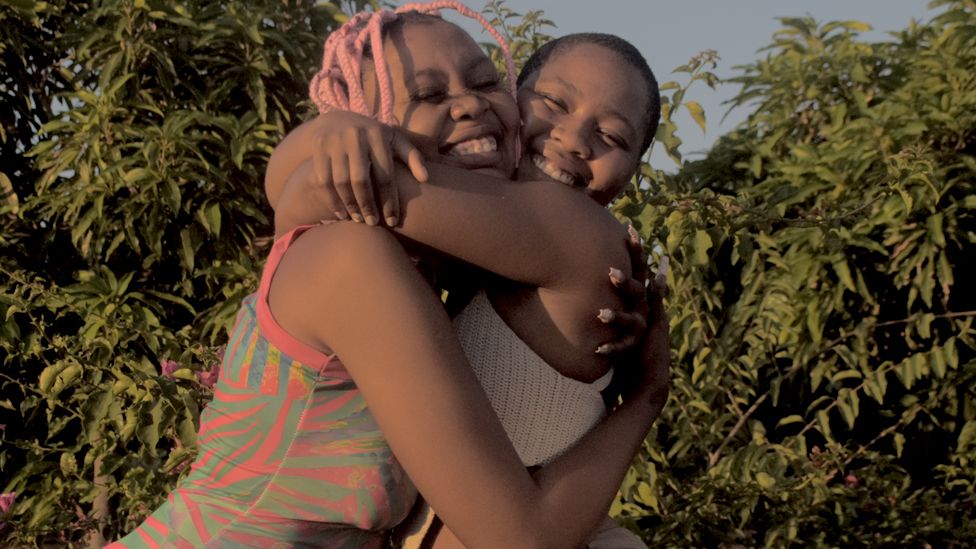
"Lethabo is the one who approached me, so I started dating her. She then introduced me to Fletcher. We all later got into a relationship," Lunya says.
"I had feelings for Lethabo. The first time I realised I had feelings for Fletcher [as well], we were at a social event. I found myself kissing him.
"In no time we all hooked up. The three of us were sharing the same bed, especially when attending social events and staying at a guest house."
But understanding a polyamorous relationship in Limpopo province, a rural part of South Africa, was always going to prove difficult for the local community.
Lethabo admits that some of their peers still do not get it and often mistake it for polygamy, which is common among some South African communities.
'I'm accused of being possessed'
"They ask me how I handle my partner having another partner. I just explain to them that it's not just his partner, I'm dating her too.
"Once people realise that she's my partner too, they start accusing me of being possessed, saying this is not normal," she says, seemingly unfazed by the criticism.
"It doesn't matter to me, I'm conscious of what I am doing and I am aware of the decisions I'm taking."
Fletcher says these reactions are influenced by lingering homophobia in the conservative community.
"They strongly do not believe that a lady would be attracted to another lady."
The three often have to explain how their relationship works.
"I tell them It's not just the guy who can have sex with whoever he wants," says Lethabo.
Fletcher backs her up: "The girls can have sex with each other too, without me."
Clinical psychologist Dr Ian Opperman says what defines polyamorous relationships is consent.
"People of different sexual orientations are part of the community and form a network of relationships with the agreement of their partners.
"Many things differentiate polyamory from other types of non-monogamous relationships." For example, there are those who agree to have sex outside their main relationship but do not form an emotional bond with that sexual partner.
Relationship counsellors here say they are now seeing more people involved in polyamory and say that it is more common than expected in South Africa.
Polyamorous people often start dating online.
Even though those in polyamorous relationships are frowned upon in some circles, there is a growing group of polyamorous people organising events to meet others with a similar outlook in the main cities of Johannesburg, Cape Town and Durban.
'Not just young people'
From the clients she has seen, intimacy and relationship coach Tracy Jacobs says that while polyamory is on the rise, she has noticed that it is not exclusively among young people.
"Although it does tend to be more popular among the younger generations, such as the millennials and Gen Z, there are also other individuals in older age groups who practise polyamory or other forms of ethical non-monogamy.
"The range of these individuals who identify as polyamorous is quite broad and there's no real clear-cut age," she says.
Intimate relationship counsellor Elizabeth Retief says polyamorous relationships are also more attractive because they offer more flexibility and challenge traditional roles that is very different to polygamy.
"If you live in a house with your partner and her other partner, and their one kid, your gender roles don't necessarily come to play as automatically as what it does in monogamy or in polygamous set-ups," the counsellor says.
"Ethical polyamory is egalitarian, whereas polygamy very much says: 'One person in this relationship has more rights than the other.'"
The most commonly asked question about polyamory is how it affects the children, particularly in cases like that of Lunya, Lethabo and Fletcher.
"I think he's going to grow up knowing that he has two moms. I've seen polygamous families where the husband has several wives and they are raised in one yard and one house. So, I think everything is going to be fine," says Lethabo about her son with Fletcher.
Lunya agrees and says she is involved in raising the child, even though she is not his biological mother.
"Lethabo is usually busy. So, when I'm not, I visit him [the child]. I think one day I will also have a baby, but for now it's not possible due to the nature of the work that I do.
"If we are going to have a child, we need to all agree. I need to talk to Lethabo, if she's OK with it, we can then have a baby."
But Dr Opperman says conversations involving children need to be approached carefully.
"Children of polyamorous unions may experience confusion... and it can happen when parents aren't honest about the nature of their relationship.
"If children aren't exposed to the fact that love can be expressed in a multitude of ways, they can become confused."
There is a chance that Lunya, Lethabo and Fletcher could invite a fourth person into their relationship.
"We are open to getting another female," says Lethabo, "but only if the third female is fine with it."
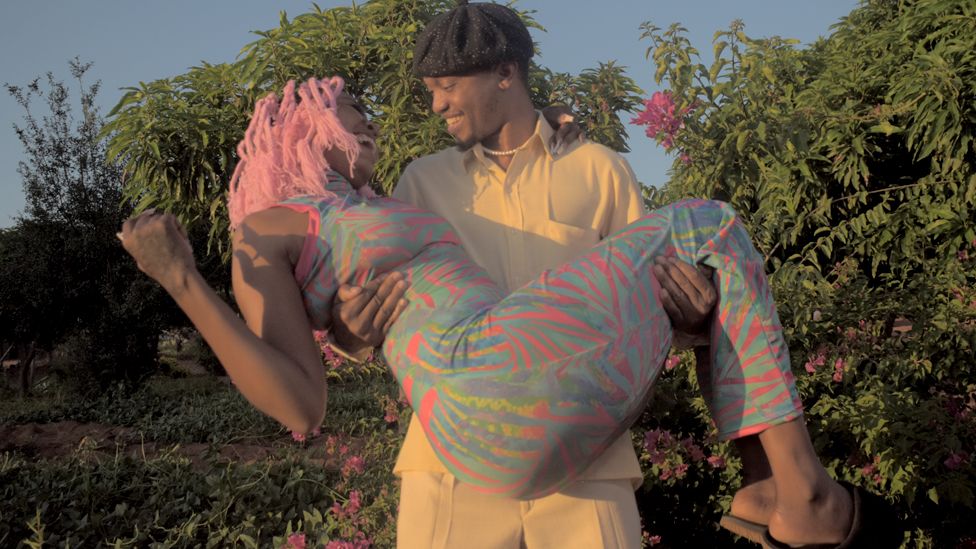
Right now, Fletcher is the only man in the relationship and says this is what makes him honour his two girlfriends.
"When two women get along, it's actually precious… So, I'm lucky. I actually appreciate it and I step back and I support this by any means."
But how would things change if Lethabo, the mother of his child, brought another man to the relationship?
"I wouldn't be part of that relationship because I'm a straight man. But if she wants to commit to another relationship with a man, that would be OK, " he says.
Latest Stories
-
Western Regional YMCA turns plastic waste into school bags for pupils
40 minutes -
Do you have the capacity to investigate narcotic seizure? – Majority questions Minority’s recall of Parliament
50 minutes -
Alidu Seidu joins OGC Nice on loan
2 hours -
Thunderstorms, rain expected across several regions this evening – GMet
2 hours -
Ten female entrepreneurs graduate from the Standard Chartered Foundation Women in Tech Accelerator
2 hours -
AUCB invests first Chancellor as stakeholders chart new direction for university
2 hours -
The 4,126-kilometre journey of three African wild dogs
2 hours -
Tano North MP responds to constituents’ concerns with 100 streetlights
2 hours -
Narcotic seizure probe: Minority says inter-agency task force cannot replace parliamentary inquiry
2 hours -
MUSIGA opens applications for SheRhythms Festival 2026
2 hours -
Agbogbloshie site to be transformed into industrial park after waste evacuation – Mahama
2 hours -
Parents urged to raise children with love, open communication to curb teenage pregnancy
2 hours -
Newly invested AUCB Chancellor outlines five-point vision
2 hours -
Counsellor Lutterodt’s free prostate screening initiative draws over 160 men in Accra
3 hours -
Ghana launches strategic plan to reduce heavy metals in food
3 hours