

Audio By Carbonatix
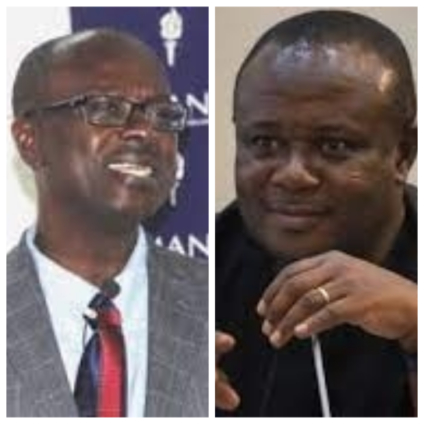
US-based Ghanaian Accounting Professor, Stephen Kwaku Asare, has condemned comments by First Deputy Speaker, Joseph Osei-Owusu that the Rastafarian religion is associated with weed smoking.
In the Professor's opinion, being Rastafarian doesn't necessarily mean one smokes weed.
"Weed is smoked by a whole bunch of people, one does not have to be a Rastafarian to smoke weed...It is a moot question because one does not go to school to smoke weed. If you're caught, you'll be dealt with," he said Friday, on the Super Morning Show.
This follows comments by first Deputy Speaker, Joe Osei-Owusu, that references made to the Rastafarian religion in the case of some students who have been denied enrolment into some Senior High Schools may complicate matters for the students.
This, he explained is because of the misconception held against some practices of the religion.
He argued that Rastafarianism is mostly associated with weed-smoking, and this he believes may not help in resolving the situation at hand.
“I get worried in the attempt to rope in Rastafarianism as religion. If we do that, then we complicate the matter. The reason is this: If you study Rastafarianism, it includes the smoking of weed and weed is an illegal substance. It is not a substance that is permitted to be smoked,”. the first Deputy Speaker said.
However, the Professor says such comments are not needed in the current discussion.
"I'm not sure what the relevance of the insertion of weed into an important debate about a very important discussion on the right of students to enjoy religious freedom and the equally import rights of school authorities to have rules that facilitate learning environment.
"And for the Deputy Speaker to insert weed in this conversation, I was frankly very shocked and appalled. There's no place for that type of insertion in this important debate," he added.
This comes in the midst of controversies surrounding the denial of admission by some Public Senior High schools to Rastafarian students, on grounds that it is against the rules of the schools to admit students with such hairstyle.
The move by the schools has generated a public debate as to whether school authorities have the right to do so or not.
A school of thought believes that the decision is discriminatory, however, others also believe school authorities are right since every student must conform to the rules of the schools.
At the height of the controversy, six schools are reported to have offered to admit the students unconditionally, with some offering to admit them on full scholarships plus providing free meals to them.
Latest Stories
-
2025 in review: Joy Prime’s Prime Insight to discuss eventful year
3 hours -
Afeku says Adwoa Safo’s remarks highlight Kennedy Agyapong’s principled leadership
4 hours -
Afeku backs Kennedy Agyapong’s leadership style and industrial agenda
5 hours -
NCA engages ISPS on licensing reclassification and review of fees
5 hours -
2nd Deputy BoG boss sounds alarm on digital fraudsters, calls for united front
5 hours -
Parliament renames key universities to reflect focus and location
6 hours -
GES, NADMO move to prevent future bee attacks after Anloga school tragedy
6 hours -
Protecting cross-border investments: Why Ghana’s ECOWAS petition matters for regional business confidence
6 hours -
KGL does not operate or conduct 5/90 national lotto, but retails 5/90 national lotto – Razak Opoku
6 hours -
Parliament approves renaming of C.K. Tedam University to University of Technology and Applied Sciences, Navrongo
7 hours -
Former Jasikan MCE returns to Bawumia camp
7 hours -
Daily Insight for CEOs: The CEO’s role in stakeholder engagement and relationship management
7 hours -
Streetlight theft undermining Accra’s illumination effort – Regional Minister
7 hours -
Frequent use of emergency contraceptives could affect fertility, youth warned
7 hours -
Police arrest 8 suspects in Navrongo anti-crime sweep ahead of Christmas
7 hours