

Audio By Carbonatix
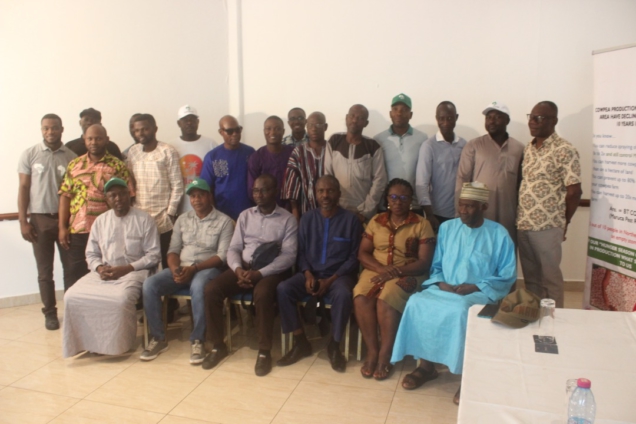
Open Forum on Agriculture Biotechnology (OFAB) Ghana, has partnered with the Council for Scientific and Industrial Research (CSIR), to organise a day’s sensitisation programme on Biotechnology and Genetically Modified Foods (GMOs) for some Muslim clergypersons in the Kumasi.
It was aimed, among others, at equipping the Muslim clergy members with the requisite knowledge and understanding of biotechnology in farming and agriculture to help effectively educate the general public to adopt the technology to ensure sustainable national food security and improved farmers' livelihoods.
Biotechnology involves the exploitation of biological processes for industrial and other purposes, particularly the genetic manipulation of micro-organisms to produce antibiotics, and hormones, among others.
Owing to the misconception about the adoption of GMO technology, OFAB believes that the training would enable the clergy members to significantly educate policy-making on agriculture issues through the provision of expert knowledge and facts.
According to OFAB, one tool, which is currently used to enhance biodiversity, is biotechnology. The technology covers various techniques and applications that allow variation and enhancement in living organisms to provide desirable products for humanity.
The one-day sensitisation programme, held with the Muslim clergy members in the Ashanti Region, was also to enable the clergy members to contribute significantly to neutralising the false impression, beliefs, and mystery surrounding the adoption of GMO products.
It brought together high-profile Muslim personalities and researchers from Council for Scientific and Industrial Research (CSIR) and Savanna Agricultural Research Institute (SARI).
Alhaji Professor Walter Alhassan, a senior statesman and former Director-General of CSIR, mentioned to the clergymen that the GM technology can be considered “Halal” in the Muslim faith.
The former Director-General, who is also a staunch Muslim, explained that GMO crops must be considered 'Halal', meaning pure for consumption by Muslims.
“Let’s all help promote the GM technology; it will help solve food security issues in Ghana and even beyond,” he said.
Latest Stories
-
Some OMCs reduce fuel prices; petrol going for GH¢10.86, diesel GH¢11.96
2 hours -
Trump says health is ‘perfect’ amid ageing concerns
2 hours -
China’s BYD set to overtake Tesla as world’s top EV seller
2 hours -
Joy FM’s iconic 90’s Jam returns tonight: Bigger, better, and packed with nostalgia
3 hours -
Uproar as UG fees skyrocket by over 25% for 2025/2026 academic year
4 hours -
Japan PM joins fight for more female toilets in parliament
5 hours -
Ga Mantse declares war on fishing industry child labour
6 hours -
Adom FM’s ‘Strictly Highlife’ lights up La Palm with rhythm and nostalgia in unforgettable experience
6 hours -
OMCs slash fuel prices as cedi gains
8 hours -
Around 40 dead in Swiss ski resort bar fire, police say
8 hours -
AFCON 2025: Aubameyang and Nsue make history among oldest goalscorers
9 hours -
AFCON 2025: How Kwesi Appiah’s Sudan qualified for round of 16 without scoring any goal
10 hours -
Ghana is rising again – Mahama declares
10 hours -
Firefighters subdue blaze at Accra’s Tudu, officials warn of busy fire season ahead
11 hours -
Luv FM’s Family Party In The Park ends in grand style at Rattray park
11 hours