

Audio By Carbonatix
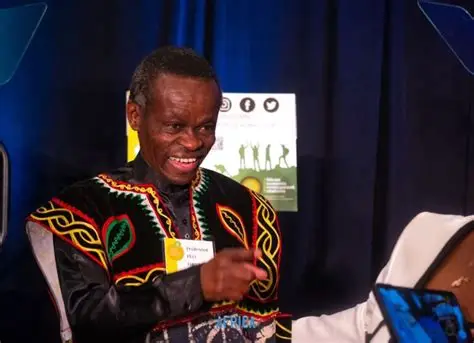
Pan-Africanist and anti-corruption campaigner Professor P.L.O. Lumumba has called for a renewed commitment to the ideals of Ghana’s first President, Osagyefo Dr Kwame Nkrumah, arguing that the continent’s political and economic liberation remains incomplete.
Speaking at a ceremony marking the 117th anniversary of Nkrumah’s birth at Nkroful, Professor Lumumba said Nkrumah transformed the struggle for African independence by linking Ghana’s freedom to the liberation and unity of the entire continent.
Nkrumah was born at Nkroful in the Gold Coast on September 21, 1909. He later became Ghana’s first Prime Minister and President and a leading figure in the Pan-African movement.
According to Prof. Lumumba, Nkrumah was different from many earlier African leaders because he regarded Ghana’s independence as meaningful only when linked to the freedom of the rest of Africa.
He recalled Nkrumah’s declaration at independence on March 6, 1957, saying the Osagyefo’s vision went beyond Ghana and sought the liberation and dignity of Africans everywhere.
“He did not just look at Ghana. He looked at the rest of Africa.”
Prof. Lumumba said Ghana subsequently became a centre for African liberation movements, attracting leaders and intellectuals from across the continent and the diaspora.
He cited figures including Julius Nyerere of Tanzania, Milton Obote of Uganda, Kenneth Kaunda of Zambia, Hastings Kamuzu Banda of Malawi, Dawda Jawara of The Gambia, Jomo Kenyatta of Kenya, Robert Sobukwe and Nelson Mandela of South Africa, Sam Nujoma of Namibia, Agostinho Neto of Angola, Eduardo Mondlane of Mozambique, and Amílcar Cabral of Guinea-Bissau and Cabo Verde.
He also mentioned prominent Pan-African intellectuals and activists who spent time in Ghana, including W.E.B. Du Bois, George Padmore and Martin Luther King Jr.
Prof. Lumumba said their presence demonstrated the influence Ghana acquired under Nkrumah as a centre for the wider African liberation struggle.
He traced Nkrumah’s Pan-African campaign to major conferences hosted or attended by the Ghanaian leader, including the 1958 conferences in Accra and the Casablanca Conference in Morocco in January 1961. Historical records confirm Nkrumah’s central involvement in the Accra conferences and his participation in the Casablanca meeting.
Prof. Lumumba said Nkrumah consistently warned that political independence without continental unity could leave African states vulnerable to external influence.
He pointed to the creation of the Organisation of African Unity (OAU) in Addis Ababa, Ethiopia, where 32 independent African states met from May 22 to 25, 1963 and adopted the OAU Charter on 25 May. The OAU later became the foundation for the African Union.
He said Nkrumah's message at the time was that African countries had a collective responsibility to unite and prevent a return of colonial domination in another form.
Prof. Lumumba also recalled the subsequent struggles involving African leaders such as Patrice Émery Lumumba of the Congo and Sylvanus Olympio of Togo, presenting them as part of the wider post-independence struggle that Nkrumah sought to influence.
Prof. Lumumba described Nkrumah’s legacy as extending beyond his physical death, arguing that attempts to suppress his ideas after his overthrow in 1966 had failed.
He recalled that Nkrumah was overthrown on February 24, 1966 while he was abroad on a diplomatic mission in Asia, with contemporary historical records confirming that the coup occurred while he was en route to Beijing. Ghanaian historical accounts also describe the trip as involving a peace mission to Hanoi.
He further highlighted the continuing influence of Nkrumah’s ideas on later African leaders, including Thomas Sankara of Burkina Faso, who addressed the OAU summit in Addis Ababa in 1987. Importantly, the organisation at the time was the OAU, not the African Union, which was launched only in 2002.
Prof. Lumumba said Nkrumah's remains had themselves passed through several locations before being finally laid to rest in Accra. Historical records indicate that Nkrumah was initially buried in Conakry, Guinea, later reburied at Nkroful, and finally laid to rest in Accra in 1992.
Prof. Lumumba said the commemoration should not become merely an annual ceremony, insisting that Nkrumah’s central concerns remain relevant to Africa’s contemporary challenges.
He cited conflicts in Somalia, Sudan and the Anglophone regions of Cameroon, terrorism in the Sahel, irregular migration and Africa’s dependence on foreign sources for medicines, food, technology and information.
He argued that Nkrumah’s vision demanded greater African capacity to produce what the continent consumes, develop its own technology and strengthen its agricultural and industrial base.
“There is work to be done.”
He also questioned Africa’s dependence on foreign media to tell African stories, recalling Nkrumah’s support for a strong Pan-African press.
Prof. Lumumba pointed to modern technologies such as the internet and drones as examples of areas where he believes Africa needs greater capacity to develop and manufacture its own technologies.
He invoked Nkrumah’s long-standing emphasis on self-reliance, African unity, industrialisation and energy development, including the significance of the Akosombo project to Ghana’s development.
For Prof. Lumumba, therefore, celebrating Nkrumah’s 117th anniversary should serve not only as an occasion to remember the former Ghanaian leader, but also as a reminder that the continental project he championed remains unfinished.
“We are not here simply to memorialise the Osagyefo Kwame Nkrumah. We are not here simply to remember the Osagyefo Kwame Nkrumah. We are not here just for an annual jamboree. We are here because we know that the work that was started by Kwame Nkrumah is incomplete.”
Latest Stories
-
Suzuki proves worthy replacement for Martinez at Villa
5 minutes -
Brighton humbling ‘a big lesson’ for Arsenal – Arteta
9 minutes -
Arsenal handed first loss by brilliant Brighton
16 minutes -
Video: Akwatia MP clashes with Kofi Bentil over 3.9-tonne cocaine seizure
18 minutes -
Ratcliffe ‘must go’ says Man Utd Muslim fan group
22 minutes -
Ignite Social Enterprise targets global market for Ghanaian shea butter
37 minutes -
Eviction notice leaves retired, serving railway workers in Kumasi in limbo
1 hour -
Asiedu Nketia: Why I remain an unrepentant Nkrumahist
1 hour -
Kudus, Djiku return a boost to Black Stars – Agyemang-Badu
2 hours -
‘If the world, Africa honoured Nkrumah as the Millennium Man, why are we not doing same?’ – Asiedu Nketia
2 hours -
Yaw Preko backs renewed push to revive Colts football
2 hours -
UMB Speed Stars defeat Black Stars Legends 6-2 in friendly
2 hours -
Dafeamekpor hails Kwasi Pratt Jnr as ‘scholar of formidable proportions’
2 hours -
The BECE exam and placement conundrum: Necessary evil or failing system?
2 hours -
‘Who did this to you and what was your crime?’ – Father grives over late Ivan Baidoo
2 hours