

Audio By Carbonatix
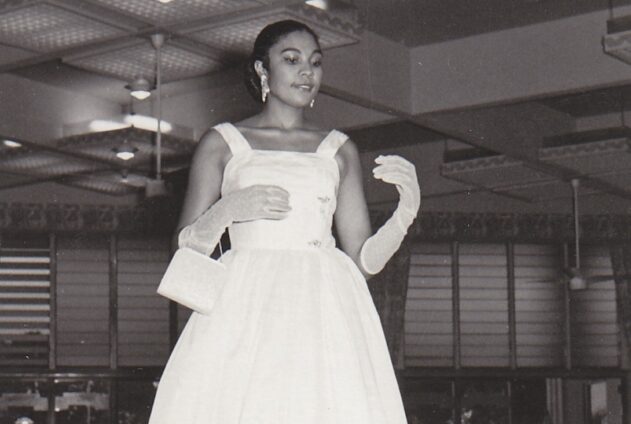
To thoroughly grasp the psyche of Francis Nwia-Kofi Kwame Nkrumah, the only child of Nyanibah, I relied on Genoveva Esther Marais. Nkrumah strongly insisted Genoveva biographed his life since she knew him much better than his closest acquaintances.
He was vulnerable with Genoveva and never hid his emotions from her. This was the motivation behind the publication of the autobiography she authored titled: Nkrumah as I knew him. Genoveva was a bosom companion and confidante of Kwame Nkrumah. Genoveva was more intimate with the radical political reformist than any other person he had met throughout his entire adult life. She exposed an aspect of his personality rarely experienced by anyone else.
Genoveva relocated to Ghana, just before the former British colonial territory attained political independence, to serve as Inspector of Schools. She received an expatriate appointment from Michael Dei-Anang, recruitment officer at the Colonial Civil Service, and arrived at the new nation on 22 February 1957.
The charismatic Prime Minister and Ms Marais met at an Independence state ball. The stunning damsel caught the eye of Kwame Nkrumah, while he swayed with swagger on the dance floor, holding the hands of another stunning lady. Kwame fixed his eyes on Genoveva and never turned away. Eventually he gathered enough courage and chivalrously requested for a dance.
Starstruck by the jet-propelled political boss, it was an offer the beautiful debutante simply could not refuse. That’s how the relationship between the two lovebirds began. Genoveva instantly fell for Kwame’s infectious laugh; it seduced her. Kwame found comfort in the warmth of Genoveva’s embrace, and God in her thinking.
Genoveva was a cultured lady of many talents with polished personal taste. She played the piano remarkably well and found interior decoration amusing. Nkrumah and Genoveva frequently played tennis at dawn. In fact, she was his stylist and personally hired the Prime Minister’s tailor. She fashioned what became his subversive and iconic dandy look.
Nkrumah grew paranoid after various assassination attempts on his life. He was a marked man for whom death prowled after his life. It would seem that the bubbly Kwame was such a massive success that, but for the distress of the Pan-African struggle, would have easily passed for a sterling example of Maslow’s happy man.
However, accounts from his inner circles tell of a man who battled depression and loneliness. Unconditional loyalty was the gaping void he much desired filled, and Genoveva came in just about in time to fill the void. Nkrumah discovered in Genoveva a brutally honest and trustworthy partner who disregarded his ego, and did not mince words with him.
It was for this reason he shared his grand ambitions and deepest fears with her, without the slightest iota of scepticism. Genoveva was convinced the special relationship they cherished endured because it was centred on ‘affection, friendship rather than by law’.
Nkrumah fell head over heels for her and proposed marriage. But she pitilessly rejected him. She feared her marriage to Kwame would compromise her professional career. Genoveva wasn’t ready to play the role of a traditional African wife, whose duties were confined to the home.
She was an independent woman driven by her individual ambitions. Genoveva eventually gained employment at the Ghana Broadcasting Corporation, as Head of Television Programmes. She acted and produced theatre for radio and television.
She stood firmly by her assertion that Nkrumah was so preoccupied with his ideal of a united, classless African society that ‘a wife was a hindrance rather than an asset’. Kwame once told Genoveva, ‘African unity must always come first, if I have to sacrifice my own mother for that, I would, however much I love her’.
Nkrumah was profoundly political in every step he took. When he decided to settle down with Fathia, a Coptic Christian Egyptian lady, it was merely after an exchange of photographs.
The marriage was orchestrated by close friends who collectively decided it was not ideal for the senior-most citizen to hold the highest office of the land without the companionship of a better half. They were eager for him to settle down and nurture a family. Fathia gave him exactly what he lacked his entire life — a stable home.
24 February 1966 spelled doom for a nation, a continent, a race and generations dead, alive and yet unborn. The torchbearer of the African renaissance, Kwame Nkrumah, was clipped down by his detractors. Aided by internal collaborators, Nkrumah was ousted from office by self-seeking military officers, led by Kotoka, with unflinching support from the American Central Intelligence Agency.
He was on a peace mission to Hanoi when chaos broke out in his home. But there was another home for him in Guinea, where he was elected Co-President by the Guinean Parliament. When Genoveva Marais was on her way to Guinea to see him, she got arrested.
She was detained in custody by the coup makers, continually raped and expelled from the Republic. Meanwhile, the 16 March 1966 issue of the Life magazine released an exposé which described Genoveva as ‘Nkrumah’s slender mulatto mistress’. The public, for the first time, got a glimpse into their cautiously veiled love affair.
As it is the case with most military takeovers, regrettable excesses characterised the coup of 1966. Nkrumah himself recounted the gory violence meted out to women in a post-coup observation thus, ‘Mothers are murdered in their own homes. With appalling barbarism their children are snatched from their lifeless embrace and flung from the third and second-floor windows to crash dead on concrete pavements below’.[1]
After a brief stop in Togoland, the Chief of Security paid Genoveva a visit at the hotel and summoned her to the Sûrete; the police headquarters. There, Genoveva was interrogated by six men, which included two Ghanaian nationals.
Her bags were thoroughly searched and some of her possessions threatened with confiscation. She was held under house arrest before they eventually allowed her to leave. A stressful trip to meet her revolutionary lover, she misplaced the manuscripts for the book on the plane but recovered the documents afterwards, with the help of Miriam Makeba.
Nkrumah only ever disclosed his affectionate pursuit of Genoveva to his wife Fathia Nkrumah and two other close friends, explicitly Ayeh-Kumi and Professor Dei Anang. The personal relationship between Genoveva and Kwame still remains an unexplored part of the man, the myth, the legend.
Genoveva later rediscovered love and married Victor S. Kanu, heir to one of Sierra Leone’s royal families, the Chieftaincy of Malal. He had served as the High Commissioner to the United Kingdom for Sierra Leone until he was dismissed from his post for his marriage to her.
The author, V. L. K. Djokoto (b. 1995), is a financier and gallerist. He leads D. K. T. Djokoto & Co — an old-fashioned top-tier multi-family office, established in 1950 — which is deeply anchored on residential real estate; steers the wheels of rural banking across coastal Ghana; revived the Accra Evening News, established in 1948, delicately rebranded into a post-partisan cultural newspaper; and finances a cultic arts and culture department intensely focused on engineering a radiant legacy. Through expertly crafted artistic experiences, Djokoto seeks to mobilise Ghanaians weaving African music, literature and art.
[1] Kwame Nkrumah, Voice from Conakry (London, 1967) p. 12.
Latest Stories
-
Invest in juvenile football to build strong national teams – Alhaji Grusah
2 hours -
Myanmar’s coup leader who set off a brutal civil war becomes president
2 hours -
Ghana risks continued currency weakness without ownership reforms – Joe Jackson
2 hours -
Reducing petroleum taxes won’t affect 2026 budget – Amin Adam
2 hours -
Amin Adam urges gov’t to cut fuel taxes amid windfall oil revenue
3 hours -
Arlo Parks: ‘I got out of my head and into my body’
3 hours -
Stanbic Bank posts 38% profit growth as earnings momentum strengthens in 2025
4 hours -
PAC emphasises documentation key to curbing financial irregularities
4 hours -
Reinventing corporate payments through digital transformation
4 hours -
Fuel tax cuts sustainable despite rising prices – Amin Adam insists
4 hours -
MTN Ghana completes mobile money separation, paves way for fintech growth
4 hours -
Mantrac Ghana champions industrial local skills development through world-class CRC facility
4 hours -
Ghana, Zimbabwe sign 10 landmark MoUs
4 hours -
Telecel Ghana trains hearing impaired entrepreneurs in digital finance
4 hours -
We’re not just giving credit, we’re changing lives – GCB Bank MD defends SME lending push
5 hours