

Audio By Carbonatix
The National Seed Council has called for stronger collaboration among government regulators, research institutions, private seed companies, and agro-dealers to build a resilient seed sector and improve agricultural productivity in Ghana.
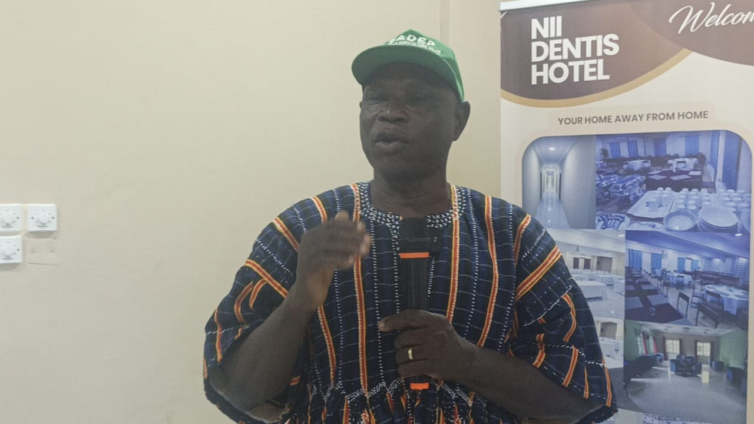
The Chairman of the Council, Alhaji Mumuni Abubakari, made the call during a stakeholder engagement at Walewale in the North East Region as part of the Council’s nationwide tour to assess seed production, distribution, and certification activities.
He said the tour was aimed at determining the real-time status of the seed value chain while identifying challenges and opportunities that could affect farmers’ access to quality seeds.
According to him, quality seed is a time-sensitive commodity, making an efficient seed value chain critical to the success of farmers and the country’s food security agenda.
Alhaji Abubakari said the Council was assessing the capacity of local seed growers, the efficiency of distribution networks, and the effectiveness of the certification process to safeguard agricultural investments, including the Feed Ghana Programme.
He noted that the sector continued to face infrastructure challenges, particularly inadequate modern seed processing and cold storage facilities, as well as the growing impact of climate variability.

He, however, identified opportunities for private-sector investment and the use of digital technologies such as electronic seed tracking and authentication to help eliminate fake seeds from the market.
The chairman said the council was also working to accelerate the release and multiplication of improved seed varieties developed by research institutions.
He explained that although research institutions had developed high-yielding, drought-tolerant, and pest-resistant varieties, such innovations would have limited impact if they remained in laboratories or seed banks.

The Council, he said, was therefore streamlining the processes of the National Variety Release and Registration Committee and strengthening the multiplication pipeline from breeder seed to foundation seed and ultimately certified seed for farmers.
He further highlighted government support for the seed sector, including the distribution of free fertiliser and Nkoko nkititi under the Feed Ghana Programme, support for climate-sensitive borehole irrigation and strategic investment in the vegetable sector, particularly tomato production.
The ministry is also partnering with research institutions to develop tomato varieties capable of ensuring a steady, year-round supply while working with JICA to modernise seed conditioning facilities in Tamale, Bolgatanga, and Wa.
The council is also strengthening seed traceability systems to enable farmers to identify the source of seeds they purchase and use.

Alhaji Abubakari urged seed producers to improve their production practices and adopt sustainable production and management principles.
He said building a resilient seed sector required deliberate partnerships among government regulators, research scientists, private seed companies, and agro-dealers.
He called on stakeholders to use the engagement as a platform for concrete action rather than merely a forum for discussions.
Latest Stories
-
Asantehene to grace Mfantsipim School’s 150th anniversary celebrations in November
2 minutes -
Agbogbloshie yam traders reject proposed 24-hour market structure
2 minutes -
Christian Council condemns assault on handcuffed cleric, calls for calm and lawful action
5 minutes -
Police foil attempted robbery at GCB Bank in Labone; two suspects killed, one arrested
10 minutes -
Minority questions need for Parliament recall as Majority defends decision
33 minutes -
NHIA releases 13 staff to Ghana Medical Trust Fund after one-year secondment
34 minutes -
Can traditional purification help curb frequent road crashes and deaths?
40 minutes -
KsTU-TUTAG threatens strike, gives gov’t August ultimatum to pay post-retirement salary arrears
41 minutes -
NHIA releases GH¢35.1m to 107 districts for Free Primary Healthcare
45 minutes -
Dosted Gennah strengthens independent run with new EP ‘Out of the Broken City’
46 minutes -
Zambians voting as president bids for second term
48 minutes -
Ghana at the threshold of a new financial era: What non-interest banking could mean for the economy
48 minutes -
NHIA begins 50% NHIS tariff increase, introduces digital claims verification
49 minutes -
NHIA launches ‘80 Campaign’ to increase active NHIS membership to 80%
50 minutes -
Kojo Antwi presents memoir to Otumfuo, promises to launch next album at Manhyia
53 minutes