

Audio By Carbonatix
The National Food Buffer Stock Company (NAFCO) has revamped its National Food Reserve Programme with an initial GH¢100 million government funding to strengthen Ghana’s ability to respond to food crises and price pressures.
The programme was introduced in response to reported gluts of grains, particularly rice and maize, in some parts of the country.
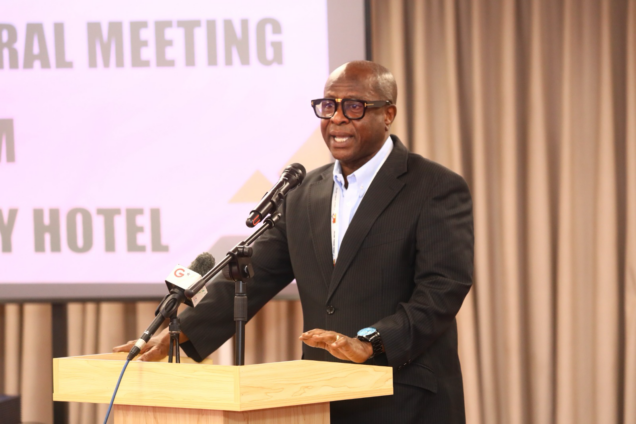
According to NAFCO Chief Executive Officer, George Abradu-Otoo, the company had, by December 31, 2025, stocked 36,597 bags of maize, 21,287 bags of rice and 5,982 bags of gari in warehouses across Tamale, Badu, Kumbungu, Dzodze, Wenchi and Kumasi.
“Under this program, NAFCO is required to keep or hold some quantity of food as a buffer for the nation and release it when necessary, including emergencies, disasters and high food cost seasons,” he said.
He said the programme would help keep inflation in check, reduce post-harvest losses and support government interventions in agriculture.
The development forms part of broader measures by NAFCO to strengthen Ghana’s food security architecture, including the rehabilitation and expansion of storage facilities across the country.
Abradu-Otoo said many of the company’s warehouses had deteriorated and become unfit for purpose.
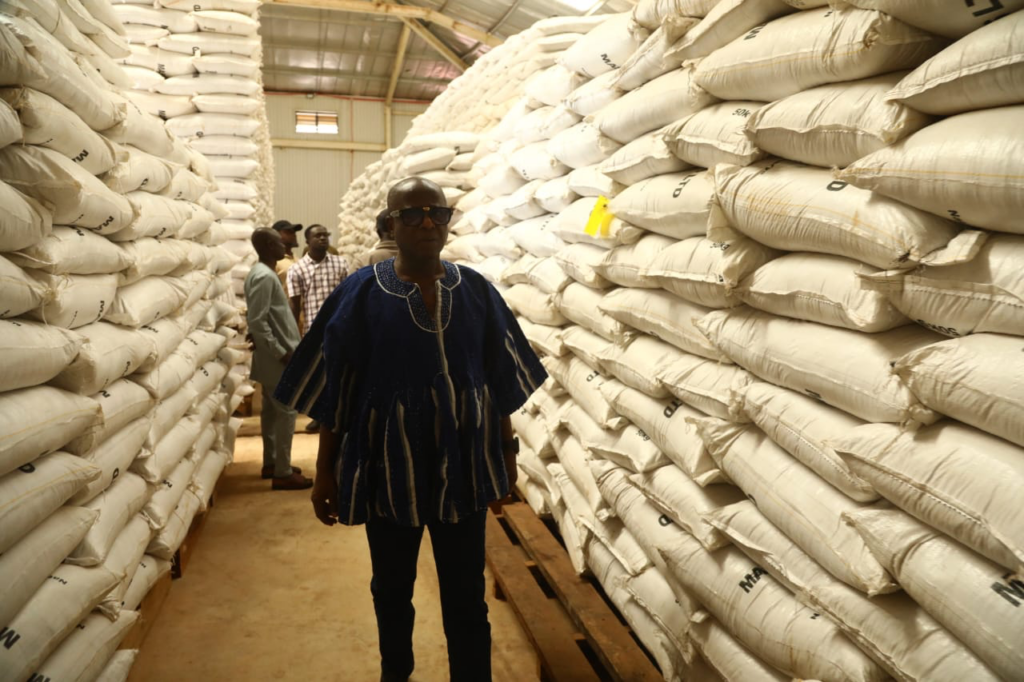
NAFCO has therefore commenced an aggressive programme to rehabilitate and expand its storage facilities, with support from the Ministry of Food and Agriculture, ECOWAS and the World Food Programme.
The programme also includes the provision of laboratories, testing equipment, tracking and digital devices, as well as training and retraining of personnel.
NAFCO’s regional operations have also been strengthened, with all 16 regional offices now operational.
The CEO said the company’s 2025 performance marked a major turnaround.
NAFCO recorded a net profit before tax of GH¢91.7 million, its highest since its establishment, after posting a GH¢19.4 million loss the previous year.
The company also paid GH¢20.3 million in taxes to the state in 2025, the highest annual tax contribution in its 16-year history.
Abradu-Otoo attributed the turnaround partly to structural reforms, including the establishment of a dedicated Procurement Department, a strengthened Internal Audit Department, a fortified Food Safety Department and the reconstitution of the Board and its sub-committees.
He said the company also improved payments to suppliers and resourced its regional offices.
“The year 2025 was a turning point. We recorded our highest profit in 16 years. We improved payments to our suppliers. We resourced our regions. We paid the highest tax to the state,” he said.
“We have consolidated. We have shown what is possible. Now we build.”
Latest Stories
-
Todays Front pages: Monday, September 28, 2026
35 seconds -
WAFU B U-17 Girls Cup: Black Maidens finish tournament with 4-0 win over Cote d’Ivoire
5 minutes -
2026 Women’s Super Cup: FC Savannah to face Epiphany Warriors in final on September 29
19 minutes -
Ghana’s second chance: How President Mahama’s return offers historic opportunity for transformation
25 minutes -
AFCON 2027Q: Alexander Djiku ruled out of clash against Gambia
28 minutes -
RCI Immanuel Temple donates supplies to Motherly Love Orphanage
1 hour -
COCOBOD asks investors to fund cocoa purchases, but proceeds may also repay old debt
2 hours -
Gov’t hands over site for construction of 160-bed Savannah Regional Hospital
2 hours -
NCPTA clarifies GH¢200 cap on PTA dues and levies per parent
2 hours -
Asante Kotoko part ways with coach Eric Tinkler
2 hours -
GTA calls for ultra-modern Cocoa Museum in Western North
2 hours -
NPP says concerns over delegates’ register addressed ahead of October 3 polls
2 hours -
PwC Ghana appoints George Arhin as Country Senior Partner
2 hours -
New Economy will turn imports into opportunities for Ghanaian production – Ato Forson
2 hours -
Two Ada SHS students convicted, placed on 12-month good behaviour bond
2 hours