

Audio By Carbonatix
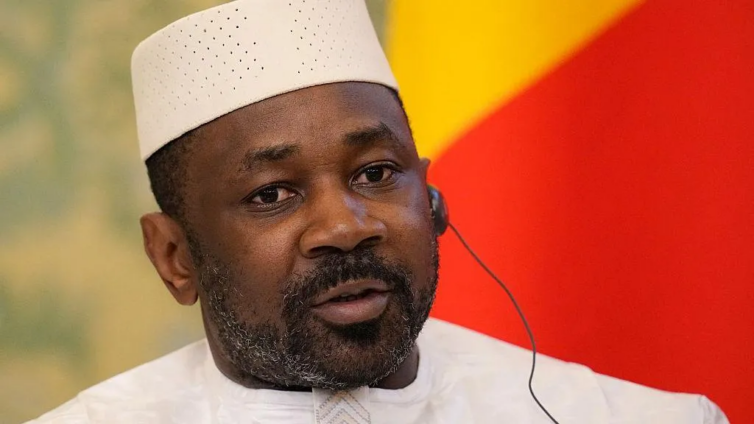
A Frenchman who was sentenced to 20 years in prison in Mali for plotting an alleged coup in the West African country has now been granted a presidential pardon, it was announced on Thursday.
Yann Vezilier was accused a year ago of trying to destabilise President Assimi Goïta's government "on behalf of the French intelligence service" alongside a number of army generals and dozens of soldiers.
It is not yet clear what has prompted Mali's U-turn.
France's foreign ministry has yet to comment on the pardon, and previously said accusations that Vezilier was working in Mali as a French spy were "unfounded".
In a post on Facebook, the Malian government said: "This act of clemency, which does not call into question the facts established by an adversarial judgment rendered during a trial, where all rights of the defence were respected, is accompanied by the immediate removal of the individual from national territory."
Mali is a former colony of France, and has been gripped by a security crisis fuelled by an Islamist insurgency since 2012. It was one of the reasons given for Goïta leading a coup in 2021, but attacks by jihadist groups have continued and even increased.
At the time of the arrests last year, Mali's Security Minister Gen Daoud Aly Mohammedine said "fringe elements of the Malian armed security forces" had been detained for seeking to "destabilise the institutions of the republic".
"These soldiers and civilians" were said to have obtained "the help of foreign states", the minister said.
Vezilier was said to have acted "on behalf of the French intelligence service, which mobilised political leaders, civil society actors and military personnel" in Mali, according to the minister.
Political tension and the security crisis have worsened in Mali.
In April the country's defence minister was killed in an apparent suicide truck bombing on his residence near the capital, Bamako, during a wave of militant attacks. Goïta named himself defence minister shortly after, in an apparent attempt to consolidate his already considerable power.
When the capital came under siege by Islamist fighters, they managed to impose a partial blockade there and total blockades elsewhere, including the city of Ségou.
Last May, the junta dissolved all political parties following rare anti-government protests, which former Prime Minister Moussa Mara described as a severe blow to reconciliation efforts initiated by the military leaders.
Goïta had promised elections within two years of seizing power, but these have never been held.
Last July, the transition period was extended by five years, clearing him to continue leading the country until at least 2030.
Latest Stories
-
GRA Commissioner-General commends Customs for improved revenue performance
8 minutes -
Ashanti Region records Ghana’s highest maternal mortality rate at 196.7 deaths per 100,000 births
9 minutes -
Upper East Airport will ease gold transport, attract investors — Mahama
10 minutes -
MTN to reward 30,000 customers with cash, Toyota Land Cruisers in 30th anniversary promotion
12 minutes -
“My new movie ‘Ama’ has no single dot of English” – McBrown
14 minutes -
From Altar to Aisle: How Ghana turned “prophets” into kingmakers
20 minutes -
Ending double-track will improve WASSCE performance – Mahama
20 minutes -
“Marketing opened my mind to the business of creativity” – fashion designer Michael Brett Odoom
23 minutes -
From AI adoption to African innovation: Building technology that solves real problems
40 minutes -
Police foil planned heist at three banks; 2 suspects killed, one arrested
51 minutes -
Why are international agencies exposing corruption Ghana cannot detect? — MP
60 minutes -
DTI graduates over 1,500 master crafts persons, SMES to drive formalisation of Ghana’s informal sector
1 hour -
We don’t have confidence in AG to independently probe AKSA energy deal – NPP
1 hour -
Ofankor crash death toll rises to 12, 22 injured – NRSA confirms
1 hour -
Mali pardons Frenchman jailed 20 years over alleged coup plot
1 hour