

Audio By Carbonatix
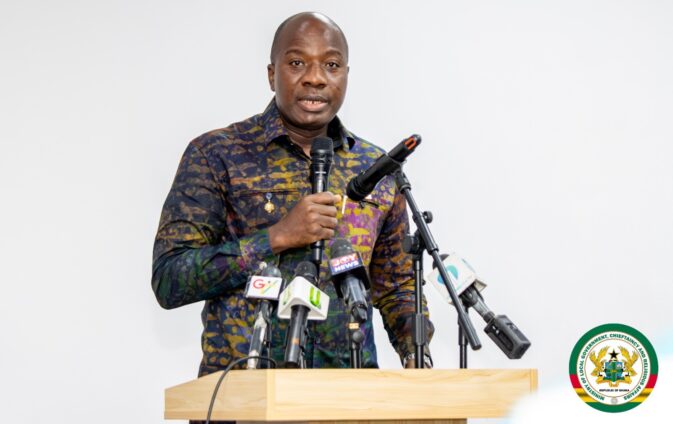
Minister of Local Government, Chieftaincy and Religious Affairs, Mr Mahama Ayariga, has charged Metropolitan, Municipal and District Chief Executives (MMDCEs) to strengthen early warning systems and report emerging security threats before they escalate into major crises.
He said MMDCEs, as heads of the Metropolitan, Municipal and District Security Councils, are strategically positioned at the local level to identify potential threats and provide timely intelligence to the regional and national security authorities.
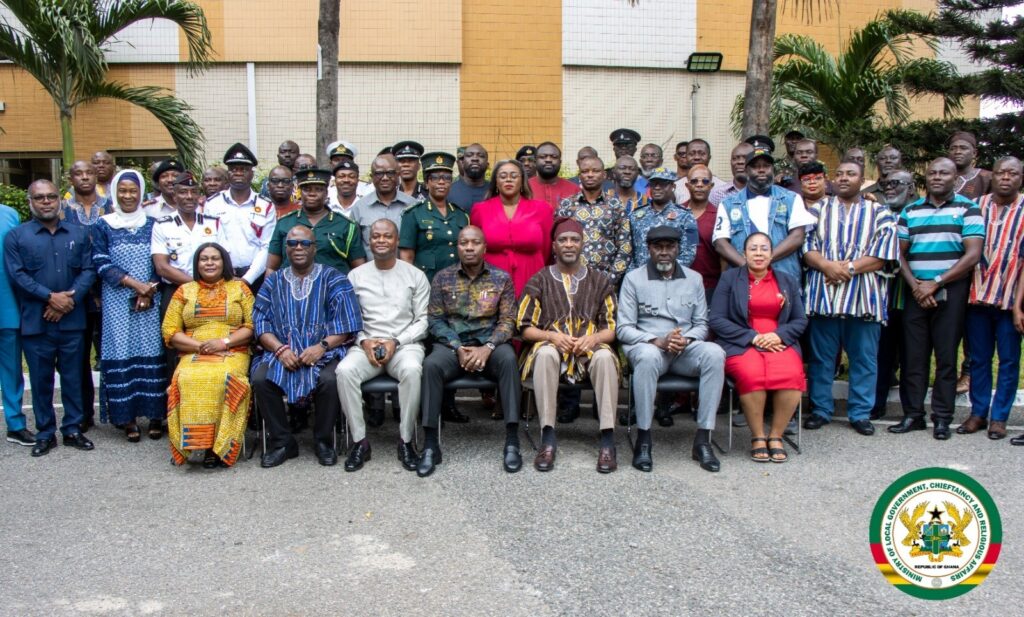
The Minister was speaking during a high-level training programme for the Greater Accra Regional Security Council (REGSEC) and MMDCEs to build their capacity on the Security and Intelligence Agencies Act, 2026 (Act 1168) in Accra.
The Act, which received presidential assent in March 2026, provides a new legal framework for Ghana’s security and intelligence architecture, including structures and reporting channels from the national to the local level.
Mr Ayariga said Greater Accra was critical to national stability, describing the region as “the heartbeat of the nation.”
He said peace and stability in Greater Accra had a direct bearing on the rest of the country, making it essential for local authorities to take security matters seriously.
The Minister said the new legal framework seeks to modernise the handling of national security and establish clearer structures and reporting channels to ensure effective coordination between the national, regional and local levels.
He said the responsibilities of MMDCEs under the new framework are particularly important because they are primarily responsible for the security councils at the metropolitan, municipal and district levels.
“If security does not work at the local level, it doesn’t really work at the national level,” he added.
Mr Ayariga urged MMDCEs to be vigilant and watch out for communal disputes, cyber threats and other local vulnerabilities that could threaten peace and security.
He called for closer collaboration among MMDCEs, REGSEC and national security institutions to ensure that the new security and intelligence framework achieved its intended purpose.
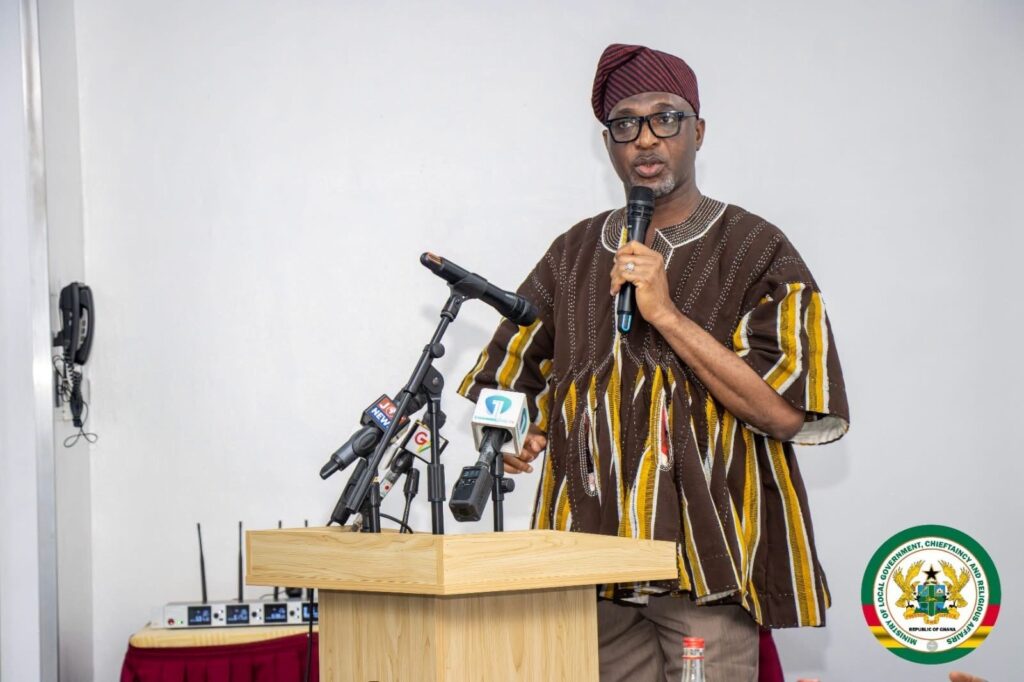
Minister for the Interior, Mr Muntaka Mubarak, cautioned security personnel against abusing their positions by trading sensitive information entrusted to them, stating that such conduct undermined national security and eroded confidence among Ghana’s international security partners.
He said officers who had been properly trained, vetted and entrusted with sensitive responsibilities were expected to uphold the confidentiality of information they handled rather than exploit it for personal gain.
The Minister said when sensitive information leaked through insiders, the consequences were often wrongly attributed to government officials, ministers or national security coordinators, while the actual breach could have originated from an officer entrusted with the information.
“If we don’t change this attitude, there’s no way we are going to get angels coming from the sky to come and solve this problem for us,” he added.
The Minister said the situation was also affecting Ghana’s cooperation with international security partners, who are becoming increasingly cautious about sharing intelligence for fear that such information could be compromised by insiders.
He explained that when foreign partners traced security breaches to insiders, they could become uncertain about whether the information would remain secure after being shared with Ghanaian authorities.
Mr Muntaka said strengthening internal security therefore required a change in attitude among security personnel and a stronger commitment to professional ethics and confidentiality.
He also acknowledged concerns that existing security guidelines could sometimes be too restrictive, noting that the security challenges confronting urban communities were not necessarily the same as those in rural areas.
He expressed optimism that the proposed new guidelines would address some of those emerging challenges and provide a more practical framework for security coordination at the local level.
The Minister further urged MMDCEs to understand their security responsibilities and work closely with the various security agencies within their jurisdictions.
He said some MMDCEs wrongly viewed their role primarily as representing the President at the local level without fully appreciating their responsibilities in the local security architecture.
Mr Mubarak urged the MMDCEs to build effective working relationships with security agencies, and that local government authorities had an important role in identifying and responding to emerging security threats before they escalated.
Latest Stories
-
Ashanti region records 25% drop in maternal mortality in first half of 2026
7 minutes -
Ghana’s unemployment situation is ‘scary’ – NSA Ashanti regional Director
14 minutes -
Photos: Mahama chairs security meeting over drug trafficking through Ghana’s ports
19 minutes -
Constitutional Review: 5-year term means extra year to amass wealth, loot state coffers — Ansa-Asare
22 minutes -
Bekwai MP rewards top BECE performers as academic results improve
23 minutes -
NIA marks Identity Day with public education float, mass registration exercise
25 minutes -
Mahama directs inter-agency task force to submit roadmap to deal with drug trafficking in two weeks
26 minutes -
Gender Ministry tasks women in media to drive Affirmative Action Act implementation
29 minutes -
MoFA launches National Horticultural Seed Roadmap to improve access to quality seeds
31 minutes -
10 people, including 4 Customs officers held as Ghana probes drug trafficking through ports
40 minutes -
Kwabenya Court denies bail to six over suspected 3.9-tonne cocaine shipment
49 minutes -
Sports Ministry spent $1.26m on 2,922 World Cup tickets — Kofi Adams
58 minutes -
India faces 100% tariff threat over Russian oil after US House vote myjoyonline
1 hour -
The importance of World Tourism Day celebrations in Ghana and across the globe
1 hour -
Over 100 pupils cram into one classroom as Amantin Basic School battles congestion
1 hour