

Audio By Carbonatix
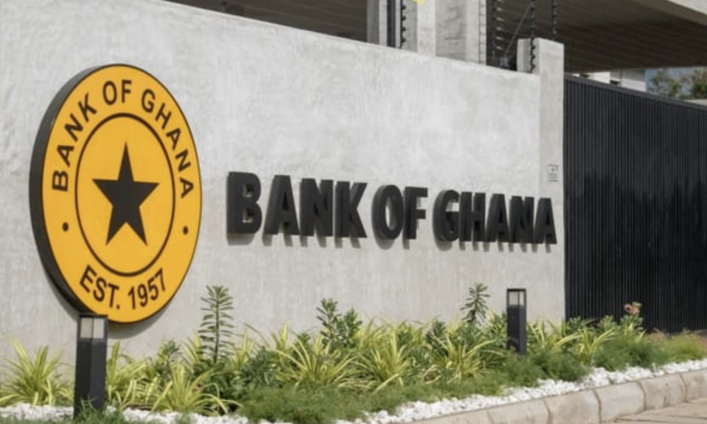
Rising inflation, renewed pressure on the Ghana cedi and concerns over economic growth are expected to dominate discussions as the Bank of Ghana’s Monetary Policy Committee begins a three-day meeting to review developments in the economy.
A key question before the Committee is whether the current policy rate should be increased to contain recent inflationary pressures.
The MPC began its meeting on Wednesday, September 23, 2026, and is expected to conclude its deliberations on Thursday, September 24, with the Bank of Ghana announcing its decision on the policy rate.
Inflation has been rising in recent months, reaching 5% in August 2026, raising concerns about further price pressures.
This could strengthen the case for a policy rate hike, alongside other monetary policy measures, to contain inflation.
However, an increase in the policy rate could also have implications for businesses that are already struggling to access credit.
The Ghana cedi is another key issue expected to feature prominently in the MPC’s deliberations.
There are views that using the policy rate to support the cedi could help limit further depreciation in the coming months.
Market analysts are also expected to consider developments in the Middle East and recent changes in US interest rates and how these could affect Ghana’s economy.
Potential effects include lower gold prices, reduced foreign exchange inflows through the GoldBod, slower reserve accumulation, reduced capacity for foreign exchange intervention and additional pressure on the exchange rate.
These developments could also feed into domestic inflationary pressures.
At the same time, some analysts believe the gap between inflation and the policy rate remains sufficiently wide to warrant caution over any further tightening.
With inflation at 5% and the policy rate at 14%, there are therefore arguments for the MPC to maintain the rate or consider a marginal reduction.
The competing pressures could make the latest MPC meeting a difficult one, as the Committee weighs inflation and exchange rate risks against the potential impact of tighter monetary policy on economic activity and access to credit.
However, persons close to the MPC have told JOYBUSINESS that the Committee’s decision will be guided by economic data as it assesses the policy rate and the way forward.
The Bank of Ghana has also previously indicated that global developments alone would not necessarily mean that the appropriate response is to increase the policy rate.
The MPC’s decision will therefore indicate how the central bank assesses the balance among inflation, exchange rate pressures, external developments, and economic growth.
Latest Stories
-
Bagbin summons Parliament for September 29 sitting over cocaine seizure concerns
3 minutes -
Average lending rate stood at 15.9% as of August 2026
3 minutes -
Repeated cocaine seizures could hurt Ghana’s trade reputation – CDM
19 minutes -
Baffour Awuah’s failed arrest, parliamentary immunity & PDS bail conditions
26 minutes -
Stop producing research that ends up on shelves – Prof Dittoh challenges Ghanaian academics
27 minutes -
Ghana’s growing youth population could become unemployment time bomb — Alan Kyerematen warns
32 minutes -
Ghana signs agreement with Intel to expand AI for Youth programme
33 minutes -
AFCON 2027Q: ‘Our goals are clear’ – Carlos Queiroz on qualification
33 minutes -
Use legal means to achieve legal ends – Kyei-Mensah-Bonsu on MP’s attempted arrest
36 minutes -
Government pledges support for fashion industry through skills, technology and market access
43 minutes -
Gender Minister joins First Lady at OAFLAD summit as Ghana pushes stronger support for women, children
43 minutes -
Black Queens defender Susan Ama Duah signs for Mexican side Tigres
44 minutes -
Carlos Queiroz’s real test begins as Ghana face Côte d’Ivoire in Bouaké
45 minutes -
Social Audit Committee monitoring helping improve development projects in Tano North – Mehoso CEO
47 minutes -
IFC, LMI Holdings expand partnership to power Ghana’s industrial growth
58 minutes