

Audio By Carbonatix
The government is working to upgrade ageing 2G and 3G mobile infrastructure in rural communities to 4G-capable networks as part of efforts to bridge Ghana’s digital divide, Communications, Digital Technology and Innovations Minister Samuel Nartey George has said.
He said access to a mobile signal was no longer enough, as services such as mobile money, digital agriculture, e-learning and telemedicine increasingly depended on reliable broadband connectivity.
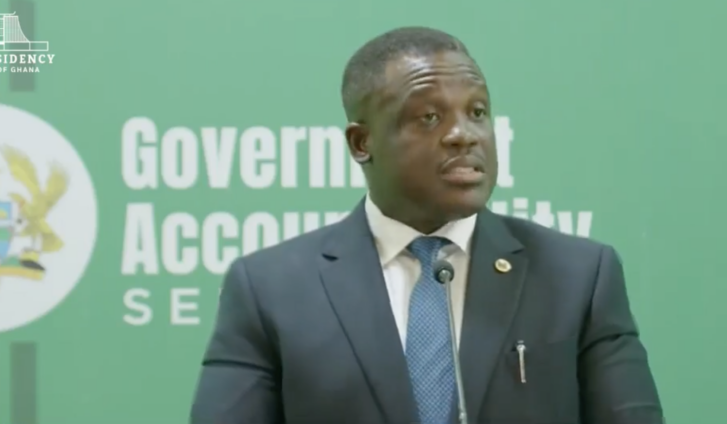
Speaking on Monday, September 7, at the Government Accountability Series at the Jubilee House in Accra, Mr George said many rural and remote communities were still served by legacy networks that could support voice calls and text messages but were inadequate for modern digital services.
“A farmer in a 2G-only community can call the market to ask about prices; she cannot, on that same connection, list her produce on a digital marketplace, receive a real-time weather advisory, or draw down a mobile banking loan,” he said.
Mr George said the Ministry was therefore working with the National Communications Authority (NCA), the Ghana Investment Fund for Electronic Communications (GIFEC) and mobile network operators to upgrade ageing masts and provide the fibre and microwave backhaul needed to deliver reliable broadband services.
He said operators had also been directed to ensure that new rural sites were built 4G-ready, while the retirement of legacy-only equipment would be accelerated in areas where traffic and terrain allowed.
‘Rural Ghana should not wait a generation’
Mr George said the government’s approach was focused not only on extending network coverage but also on ensuring that existing infrastructure in underserved communities was upgraded to support modern digital services.
He said a constituency-level mapping exercise being used to guide new network deployments was helping identify communities where technological upgrades to existing infrastructure were needed, rather than simply adding new coverage.
“Rural Ghana should not be made to wait a generation behind the rest of the country for tools that are transforming how citizens learn, trade, farm, bank and access healthcare,” he stressed.
The Minister said the measures were part of broader efforts to ensure that rural communities could participate fully in Ghana’s digital economy and benefit from technology-driven opportunities.
Latest Stories
-
Examination malpractice is rising, not declining – EduWatch
18 minutes -
Credit Unions encouraged to use technology to improve service
20 minutes -
GBA President calls for reasonable, proportionate bail conditions
24 minutes -
NAGRAT calls for end to political influence on WAEC results
27 minutes -
GBA to announce position on Tribunals Law soon – GBA President
27 minutes -
WAFU B U-17 Girls Cup: Joe Nana Adarkwa eyes title defence with Black Maidens
29 minutes -
GFA opens disciplinary case against GoldStars CEO Kwasi Adu
29 minutes -
Education Ministry welcomes Catholic Bishops’ call for CSSPS review
33 minutes -
2026 Women’s Super Cup set for September 23 to September 29 in Prampram
41 minutes -
Rennes register Ghana defender Alidu Seidu for Europa League amid Nice interest
46 minutes -
Deliberate VAT evasion will attract penalties — GRA
49 minutes -
If the Ghana Premier League is financially weak and structurally fragile, Africa will expose its weaknesses
60 minutes -
Accra-Kumasi Expressway: 48 Engineer Regiment can deliver if well resourced – Political Lecturer
1 hour -
Businesses above GH¢750,000 turnover must register for VAT – GRA
1 hour -
Kenya confirmed hosts of World Athletics Championships 2029
1 hour