

Audio By Carbonatix
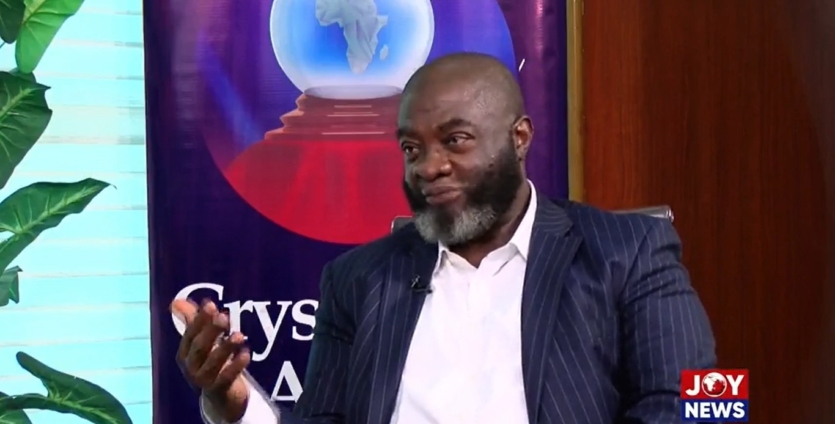
A Senior Partner at AB & David and Business Strategist, David Ofosu-Dorte, has expressed concerns about the conventional approach adopted by governments during challenging economic times.
Speaking on JoyNews' PM Express, he argued that the typical strategy involves restoring financial and macroeconomic stability, but this often comes at the expense of stifling local businesses.
"Anytime we've had challenges with our economy, the typical approach is to restore financial stability and macroeconomic stability. But this approach ends up destroying the micro ones.
"So, we often tend to create macroeconomic stability by overtaxing the micro-economy. That is a big challenge and it constantly prevents businesses from scaling up," he said on Thursday.
Mr Ofosu-Dorte's comments come amid the introduction of new tax policies set to role out this year because the government is currently under an IMF programme to resuscitate the economy.
He highlighted the dilemma faced by micro-enterprises, emphasising that macroeconomic stability is often influenced by external forces, especially when the government resorts to borrowing.
Mr Ofosu-Dorte then urged local businesses to develop strategies that minimise their dependence on government policies for growth.
"The extent that the macro is often dictated by external forces, especially when we go to borrow. So, micro-enterprises should be putting their strategies in a way that, as much as possible, causes them to depend less and less on the policies of the government. This is because the more you depend on the policies of the government, the more they affect you,"he explained.
The Business Strategist encouraged businesses to take a proactive approach and reduce reliance on government policies, suggesting that this would contribute to greater resilience and sustainability in the face of economic challenges.
"In any sector that you find yourself in, you can depend less on government policies or expect government policies to be the basis of your growth, as much as you can depend less on it, the better," he advised.
Latest Stories
-
Ghana’s new envoy to U.S. and diaspora lawyers to launch ‘Law Day’ for citizens
5 hours -
Mahamud Iddi wins TCL Electronics worth GH¢100,000 in EGL’s Akye3de3 Kese3 Promotion
7 hours -
Lands Minister, NAIMOS mourn fallen soldier killed during anti-galamsey operation in Obuasi
7 hours -
Ghana Impact Project donates $20k to restore mobility for children
7 hours -
JoyNews’ Kwaku Asante named Best Radio and TV Journalist in Parliamentary Reporting
8 hours -
Education Ministry updates EMIS indicators to strengthen ICT integration in schools
9 hours -
Interior Ministry declares Christmas, Boxing Day and New Year’s Day public holidays
9 hours -
President Mahama directs Finance Ministry to disburse $78m for completion of Takoradi–Agona-Nkwanta road
9 hours -
Interior Minister lauds NIA staff for dedication, pledges continued government support
9 hours -
First Atlantic Bank will run a “proper and decent business” to protect shareholder value – CEO
10 hours -
First Atlantic Bank targets African expansion as IPO strengthens capital, governance
10 hours -
First Atlantic Bank CEO attributes IPO and GSE listing decision to renewed confidence in Ghana’s economy
10 hours -
GPL 2025/26: Bechem United end All Blacks 6-game unbeaten run
10 hours -
Eggs fly off shelves as shoppers throng The Multimedia Group’s X’mas Egg Market on final day
11 hours -
Bankable energy: Why Africa’s downstream sector is the next global investment frontier
11 hours