

Audio By Carbonatix
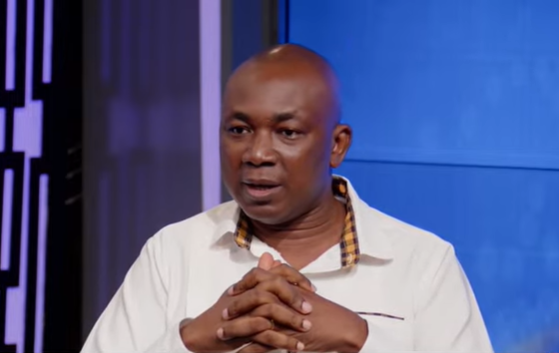
Economist and Professor of Finance at the University of Ghana, Prof. Godfred Bokpin, says the financial costs associated with the Ghana Gold Board (GoldBod) could have been minimised if authorities had undertaken a more comprehensive assessment of the gold value chain before operationalising and aggressively scaling up the institution.
Prof. Bokpin said while the costs associated with GoldBod's operations could not have been eliminated entirely, better planning, transparency and openness to expert suggestions could have reduced the financial burden.
“And the next question is, if we had been transparent and open to suggestions, and if we had examined the value chain approach from the beginning, before we operationalized Gold Board, possibly these losses would have been minimized. We couldn't have eliminated it totally. Possibly it would have been minimized," he said this on Joy FM’s Top Story.
He said the intervention was expanded without policymakers fully anticipating the total costs that would emerge across the value chain.
“So we designed this intervention, aggressively scaled up its operation without even anticipating the total cost that was going to come along.”
Prof. Bokpin's comments come amid a growing political dispute over GoldBod's financial performance.
Minority Leader Alexander Afenyo-Markin has accused GoldBod's management of incompetence and questioned the policies underpinning its operations, arguing that reported losses could not simply be attributed to market conditions.
GoldBod CEO Sammy Gyamfi, however, has rejected the claim that the institution recorded losses, saying its audited 2025 financial statements showed an operational surplus of GH¢907 million and an overall surplus of GH¢5.4 billion.
Prof. Bokpin's assessment introduces a distinction between the broader benefits of the GoldBod intervention and the efficiency with which the policy was designed and implemented.
He recalled that when the International Monetary Fund initially reported losses of about $214 million associated with GoldBod's domestic gold purchasing operations, GoldBod disputed the figures.
He said even the Bank of Ghana initially questioned the IMF's estimates, arguing that the actual position should be determined after the accounts had been audited.
For Prof. Bokpin, that sequence suggested that the full cost implications of the intervention had not been adequately anticipated before its implementation.
“That clearly tells me that we couldn't fully anticipate the cost implications across the value chain.”
The economist nevertheless acknowledged that the GoldBod intervention was expected to have some costs, stressing that the key question was whether those costs could have been better managed.
Latest Stories
-
Gauff’s flaw forgotten on winning US Open return
42 minutes -
Birds stop play but Medvedev flies into third round
54 minutes -
LA Clippers fined $30m by NBA over Leonard scandal
1 hour -
Uber to cut over 3,000 jobs in major global restructuring
1 hour -
Tiger Woods gets five-year driving ban after reckless driving plea
1 hour -
South African airline behind daring stadium stunt cancels next flyby
2 hours -
PURC urges ECG to address outages, metering delays
2 hours -
Police engage traders over alleged harassment, extortion on Aflao-Accra highway
2 hours -
Uber shuts operations in Nigeria and Uganda with immediate effect
2 hours -
Netherlands moves billions in gold to London in ‘crisis preparedness’ move
2 hours -
Legal vacation does not halt urgent court cases – Chief Justice
2 hours -
Keta residents react with mixed feelings to fresh fuel price hike
3 hours -
Managing Director on GH¢150,000 bail over five dud cheques
3 hours -
BOSTenergies reports strong 2025 performance, pays first-ever dividend to government
3 hours -
Carlos Queiroz reappointed as Black Stars head coach
4 hours