

Audio By Carbonatix
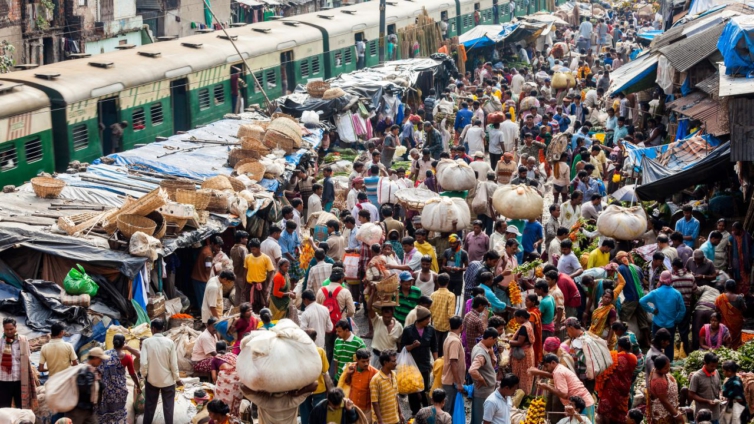
The world’s population will reach 8 billion people on Tuesday, representing a “milestone in human development” before birth rates start to slow, according to a projection from the United Nations.
In a statement, the UN said the figure meant 1 billion people had been added to the global population in just 12 years.
“This unprecedented growth is due to the gradual increase in human lifespan owing to improvements in public health, nutrition, personal hygiene and medicine. It is also the result of high and persistent levels of fertility in some countries,” the UN statement read.
Middle-income countries, mostly in Asia, accounted for most of the growth over the past decade, gaining some 700 million people since 2011. India added about 180 million people, and is set to surpass China as the world’s most populous nation next year.
But even while the global population reaches new highs, demographers note the growth rate has fallen steadily to less than 1% per year. This should keep the world from reaching 9 billion people until 2037. The UN projects the global population will peak at around 10.4 billion people in the 2080s and remain at that level until 2100.
Most of the 2.4 billion people to be added before the global population peaks will be born in sub-Saharan Africa, according to the UN, marking a shift away from China and India.
Environmental impact
Reaching an 8 billion global population “is an occasion to celebrate diversity and advancements while considering humanity’s shared responsibility for the planet,” UN Secretary General António Guterres said in the UN statement.
Having more people on Earth puts more pressure on nature, as people compete with wildlife for water, food and space. Meanwhile, rapid population growth combined with climate change is also likely to cause mass migration and conflict in coming decades, experts say.
And whether it’s food or water, batteries or gasoline, there will be less to go around as the global population grows. But how much they consume is equally important, suggesting policymakers can make a big difference by mandating a shift in consumption patterns.
Carbon emissions of the richest 1%, or about 63 million people, were more than double the emissions of the poorest half of humanity between 1990 and 2015, according to a 2020 analysis by the Stockholm Environment Institute and non-profit Oxfam International.
Resource pressure will be especially daunting in African nations, where populations are expected to boom, experts say. These are also among the countries most vulnerable to climate impacts, and most in need of climate finance.
Latest Stories
-
Prudential Life settles GH¢100,000 medical bills under its PRUCares Valentine Experience Initiative
6 hours -
Wa West Picnic: Peter Lanchene Toobu champions peace, health and unity in landmark celebration
6 hours -
Dr Mensah Market flooded after downpour in Kumasi
6 hours -
Armed men reportedly storm Adjen Kotoku Onion Market amid tensions
7 hours -
Tecco Mensah writes: Why football fans must look beyond statistics
8 hours -
Police recover stolen Honda CR-V in Kumasi within 48 hours
9 hours -
Apetorku Gbodzi 2026 Festival opens in Dagbamete with development focus
9 hours -
President Mahama arrives in Lyon to co-chair One Health Summit
9 hours -
Beverly View Plus Hotel draws crowds amid coastal Easter rush in Volta
9 hours -
Maiden Zongo Festival held in Wa amid calls to tackle drug abuse among the youth
9 hours -
FDA warns of fake HIV test kits on Ghanaian market
10 hours -
Africa urged to build resilient health systems as donor support tightens
10 hours -
Easter gesture: Ablakwa settles medical bills for 85 North Tongu constituents
12 hours -
Africa must harness its population strength—Titus-Glover
12 hours -
Visa-free access doesn’t mean unlimited stay – Lom Ahlijah
12 hours