

Audio By Carbonatix
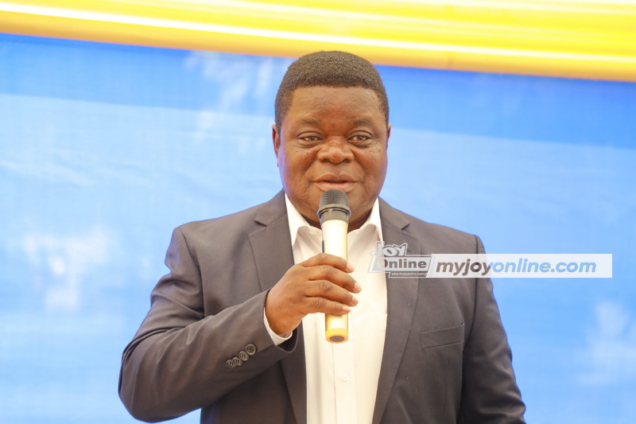
Economist Professor Peter Quartey has warned that Ghana remains highly vulnerable to external economic shocks because the country has limited buffers to absorb global disruptions.
He said the vulnerability is particularly worrying because Ghana continues to depend heavily on imported processed fuel despite being an oil producer.
Speaking on Joy News’ PM Express Business Edition on Thursday, Prof Quartey said businesses could expect some temporary relief from borrowing costs following the Bank of Ghana’s decision to maintain the policy rate at 14%.
He, however, cautioned that the relief depends on how global developments unfold.
“Oh yes, certainly businesses should be comforted, but temporarily,” he said.
“I mean, we should just touch wood, touch wood if nothing happens, if the prices come down, if what is happening in Iran between Iran and the U.S. doesn’t escalate and things get better, then why not?”
“At the moment, it’s a temporary relief for businesses. We’re not expecting to see higher costs of credit, at least in the next month or two.”
Prof Quartey said Ghana’s vulnerability becomes clearer when compared with countries facing the current geopolitical tensions.
He said that such countries have reserves that can provide some protection during global disruptions.
“For these countries that are even fighting, Iran, the U.S., and the rest, they have a buffer. They have oil reserves that they can fall on,” he said.
“Basically, they have very little buffer to fall on, and therefore, anything that happens is that when they sneeze, we catch a cold.”
He identified Ghana’s limited domestic fuel processing capacity as one of the major weaknesses.
“And I think we are not processing enough of the oil. We are an oil producer, but we are not processing quite a good chunk of the oil,” he said.
“We still continue to import processed fuel, and that is a big problem for us.”
Prof Quartey also raised concerns about Ghana’s continued reliance on fossil fuels while other countries accelerate their transition to alternative energy sources.
“Secondly, we’re relying too much on fuel, petrol and, you know, crude, for instance, whereas in other countries, other forms of fuel, green energy, green transition is happening rapidly,” he said.
“That is not happening so much with us, and I think that makes us very vulnerable to external shocks.”
He also pointed to Ghana’s dependence on gold for export earnings as another source of vulnerability.
“And if you even look at our exports, for instance, at the moment, gold accounts for almost 60% or 61% of our export earnings,” he said.
“That puts you in a very vulnerable situation.”
“Should gold prices tumble, or should anything happen to the international market, we are likely to suffer the consequences.”
Latest Stories
-
Messi completes purchase of second Spanish club
1 minute -
Government must engage horticulturists on tomato crisis – GhIH
4 minutes -
King Promise’s ‘Can’t Tame Us’ becomes official Chelsea anthem
9 minutes -
Afenyo-Markin demands Baffour Awuah’s release from EOCO’s custody, end to alleged political intimidation
13 minutes -
Rapper Rick Ross arrested on domestic violence charges
23 minutes -
Minority demands security review of Ghana-Colombia visa waiver and port deals
33 minutes -
Pursue drug kingpins, not persecute political opponents – Afenyo-Markin tells EOCO
45 minutes -
‘I am disappointed’ – Yaw Ampofo Ankrah breaks silence after NSA suspension
51 minutes -
UK in talks with EU partners to release strategic fuel reserves if needed, BBC understands
54 minutes -
I don’t think EOCO has legitimate basis to investigate SIC transaction – Atta Akyea
56 minutes -
Douglas Boateng receives IMM Institute Supply Chain Lifetime Achievement Award
1 hour -
From small beginnings in Navrongo to Doctor of Pharmacy: Theobald Kambonga’s scholarship story
1 hour -
Pentecost University to host international sustainability conference
2 hours -
Ampofo Ankrah did not collect World Cup visa money – Lawyer
2 hours -
Baffour Awuah to spend night in EOCO custody – Atta Akyea
2 hours