

Audio By Carbonatix
Ghana needs about $132 million to effectively fight new HIV infections to ensure its elimination by 2030.
Currently, funds from donor partners such as the United States President’s Emergency Plan for AIDS Relief (PEPFAR), the Global Fund, and UNAIDS amount to $45.2 million, leaving a funding deficit of more than 86 million dollars.
If Ghana does not make up for the deficit in funding, it may miss the target to eliminate the disease at the set target.
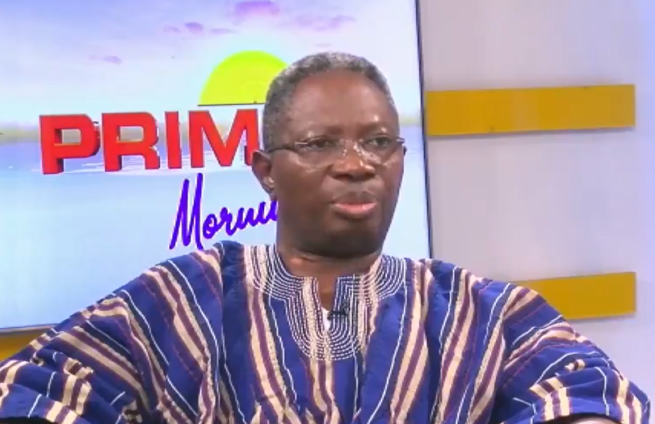
Dr Kyeremeh Atuahene, the Director General of the Ghana AIDS Commission disclosed this in an interview on the sideline of a USAID Focal Country Collaboration (FCC) Plan Workshop organised by SEND Ghana, in Accra, on Tuesday.
He indicated that the situation could erode the successes made in reducing new infections over the years.
“We have to find a way of filling this huge funding gap, otherwise, we stand the risk of reversing the gains that we have spent many years and resources to make,” he said.
The FCC Plan involves USAID, Global Fund, UNAIDS, Government of Ghana (GOG) jointly promoting human rights, reducing stigmatisation and discrimination against Persons Living with HIV (PLHIV), Key Populations and Tuberculosis patients, and ensuring progress towards achieving the 10-10-10 society enablers.
The objective of the workshop was to, therefore, review and prioritise the FCC Project activities for the next two years.
Dr Atuahene called on Ghanaians to support the AIDS Commission to address the funding gap.
He also called for funding support for constitutionally mandated bodies to protect the rights of vulnerable groups like People Living with HIV/AIDS (PLHIV).
Dr Atuahene noted that human rights protection was a function of law and indicated that they were constitutional and legally mandated bodies to enforce laws and protect the human rights of the citizens of the country.
He said concentrating funding on only Non-Governmental Organisations at the expense of such bodies was inimical to the fight against the disease.
“NGOs can contribute, but they have serious limitations when it comes to, you know, formulating laws and enforcing laws. That is not within their domain. And so, when we concentrate funding in the hands of NGOs at the exclusion of these state agencies, with the legal mandate for human rights and law enforcement, we end up not getting the optimal benefits of the investment we make with such resources.
“So, I am emphasising that we give funding to such bodies through the Ghana AIDS Commission so that those bodies like the Attorney General’s Department, the judicial service and all the law enforcement agencies, the prison service, the police, and the others, they all play critical role reducing stigma and eliminating stigma and discrimination in this country. And so, we have to work with them,” he added.
Latest Stories
-
Even Dangote cannot escape katanomics
60 minutes -
Sean ‘Diddy’ Combs files appeal asking for immediate prison release
1 hour -
Come again, Bank of Ghana!
1 hour -
$120,000 stolen from Ghanaian financial institution by hackers – INTERPOL
1 hour -
How presidential control has weakened Council of State – Prof H. Kwasi Prempeh explains
2 hours -
Why Council of State must be fixed, not scrapped – Constitution Review Chair explains
2 hours -
A second look, not a veto – Constitution Review Chair makes case for Council of State reform
2 hours -
U.S. airstrikes in Nigeria signal major shift in West African security
3 hours -
Too young to lead? – Prof H. Kwasi Prempeh says Ghana’s Constitution undervalues its youth
3 hours -
Let the people decide – Constitution Review Chair pushes back against fear of ‘young presidents’
3 hours -
Both of these influencers are successful – but only one is human
4 hours -
‘We suffered together’ – Amorim changes style as Man Utd win
8 hours -
‘I have never prayed before in my life’ – Seun Kuti
8 hours -
AU flatly rejects Somaliland bid, reaffirms Somalia’s unity
8 hours -
Mali rally to claim draw against AFCON host Morocco
8 hours