

Audio By Carbonatix
The Ghana National Association of Teachers (GNAT) has underscored the need for early childhood educators to be resourced to discharge their duties effectively.
It was important that the right opportunities were created for them to upgrade their knowledge, skills and teaching methodologies, President of the Association, Phillipa Larsen advocated.
According to the Ghana Living Standard Survey conducted in 2020, about 651,000 children in the country were at age four, which was the school-going age.
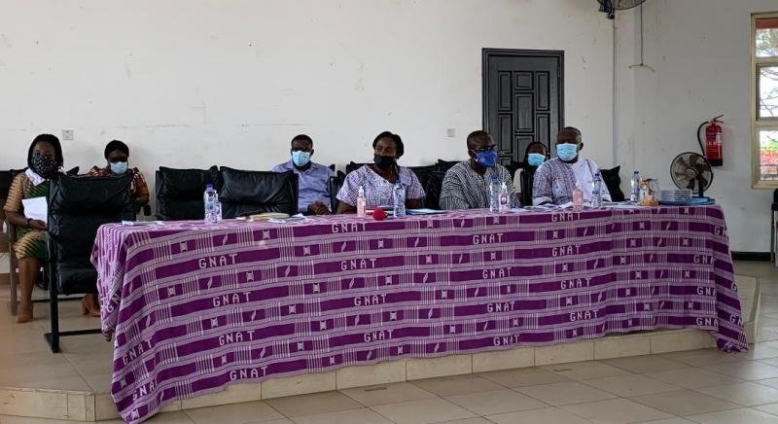
Ms Larsen, speaking at the National Early Childhood Educators (ECE) Representatives meeting at Abankro in the Ejisu Municipality of the Ashanti Region, bemoaned the non-recognition and respect for ECEs in the country.
“It has been perceived that teachers who teach at that level are not brilliant and skilled.
“However, this is not true, because the ECEs remain some of the best tutors on the Ghanaian scene since they are the foundation builders for all pupils,” the GNAT President emphasized.
Consequently, issues impeding their work such as inadequate classrooms to cater for the growing number of children, welfare issues and the lack of furniture, teaching and learning materials ought to be addressed.
Ms Larsen pointed out that this was necessary to enhance effective teaching and learning for the benefit of the Ghanaian child.
The programme saw the ECEs drawn from the 16 regions across the country, going through the Early Childhood Education Policy, the New Curriculum and the Universal Design for Learning.

It was designed to lift the professional status of the practitioners in early childhood education.
The GNAT President said once a new curriculum was implemented, there was the need for the ECEs to upgrade their knowledge and skills, and rise above just being mere care-takers.
She drew attention to challenges at the infants’ level, stemming from the designing of their classrooms, feeding and support for parents.
Ms Larsen called on the teachers to demonstrate actionable and practical steps towards children’s holistic development.
General Secretary, GNAT, Mr Thomas Tanko Musa, said good early childhood education ought to be strengthened and supported to make teaching and learning of infants more enjoyable.
“The child who does not have a good educational basis and cannot read and write before basic three is likely to drop out of school with the attendant negative consequences such as child labour and streetism,” he observed.
Director for Early Childhood Education at the Ghana Education Service (GES), Madam Barbara Ntow, called on all stakeholders in education to support the implementation of the ECE Policy to give impetus to infant education.

Latest Stories
-
Beyond Witchcraft: Why preparation, not spiritual fear, determines success
48 seconds -
Margaret Korme Tetteh
39 minutes -
Sammy Gyamfi’s work at Goldbod in few months would take someone five years – Ato Forson
54 minutes -
From Accra to Wuzhen: The Ghanaian schoolgirls making their mark in global AI
56 minutes -
Ghana must prioritise value addition to sustain IMF gains – Prof Asuming
1 hour -
Man allegedly poisons his incoming girlfriend over GH₵100 at Buduburam
1 hour -
Jennifer Frimpong: Ghana’s health system faces funding shock, urgent reforms needed
1 hour -
Tighter cocoa supply lifts prices as Ghana records good crop conditions
2 hours -
KAAF University donates to Widows, urges Public to end Discrimination against Elderly Widows
2 hours -
NAIMOS task force disrupts illegal mining operations along Ankobra River
2 hours -
President’s New Year message lacked hope and sincerity – NPP’s Senyo Amekplenu
3 hours -
Ebo Noah remanded pending psychiatric exam, to reappear on January 15
3 hours -
Our public university system is falling down
3 hours -
Ho Central Mosque under heavy security, worshippers forced to pray outdoors
4 hours -
An open letter to H.E. John Dramani Mahama: The audacity of the third shift
4 hours