

Audio By Carbonatix
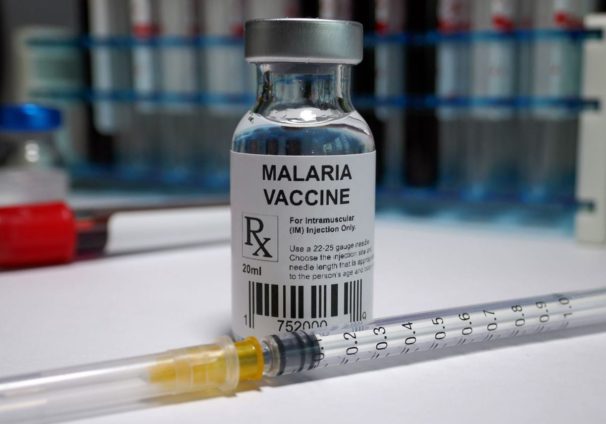
A keenly-watched malaria vaccine from Oxford University has secured its first approval, in Ghana, as the African country ramps up efforts to combat the mosquito-borne disease that kills a child every minute.
The effort is one of several focused on addressing the disease that kills over 600,000 each year, most of them children in Africa.
The complicated structure and lifecycle of the malaria parasite has long stymied efforts to develop vaccines.
After decades of work, the first malaria vaccine, Mosquirix from British drugmaker GSK, was last year endorsed by the World Health Organization (WHO), but a lack of funding and commercial potential has thwarted the company's capacity to produce as many doses as needed.
The Oxford vaccine, which has secured regulatory approval in the age group at highest risk of death from malaria - children aged 5 months to 36 months - has a manufacturing advantage thanks to a deal with Serum Institute of India to produce up to 200 million doses annually.
In contrast, GSK has committed to produce up to 15 million doses of Mosquirix every year through 2028, well under the roughly 100 million doses a year of the four-dose vaccine the WHO says is needed long-term to cover around 25 million children.
Mid-stage data from the Oxford vaccine trial involving more than 400 young children was published in a medical journal in September.
Vaccine effectiveness was 80% in the group that received a higher dose of the immune-boosting adjuvant component of the vaccine, and 70% in the lower-dose adjuvant group, at 12 months following the fourth dose. The doses were administered ahead of the peak malaria season in Burkina Faso.
Data from an ongoing phase III clinical trial in Burkina Faso, Kenya, Mali and Tanzania that has enrolled 4,800 children is expected to be published in a medical journal in the coming months.
However, late-stage data - which suggests a similar vaccine performance as in the phase II trial - has been shared with regulatory authorities over the last six months, Oxford scientist Adrian Hill said.
Childhood vaccines in Africa are typically paid for by international organisations such as Gavi and UNICEF after they have been backed by the World Health Organisation (WHO).
This is the first time a major vaccine has been approved first in an African country, before rich nations, Hill added, noting that it was unusual that a regulatory authority in Africa had reviewed the data quicker than the WHO.
"Particularly since COVID, African regulators have been taking a much more proactive stance, they've been saying...we don't want to be last in the queue."
Latest Stories
-
Armed men reportedly storm Adjen Kotoku Onion Market amid tensions
7 minutes -
Tecco Mensah writes: Why football fans must look beyond statistics
49 minutes -
Police recover stolen Honda CR-V in Kumasi within 48 hours
1 hour -
Apetorku Gbodzi 2026 Festival opens in Dagbamete with development focus
2 hours -
President Mahama arrives in Lyon to co-chair One Health Summit
2 hours -
Beverly View Plus Hotel draws crowds amid coastal Easter rush in Volta
2 hours -
Maiden Zongo Festival held in Wa amid calls to tackle drug abuse among the youth
2 hours -
FDA warns of fake HIV test kits on Ghanaian market
3 hours -
Africa urged to build resilient health systems as donor support tightens
3 hours -
Easter gesture: Ablakwa settles medical bills for 85 North Tongu constituents
4 hours -
Africa must harness its population strength—Titus-Glover
4 hours -
Visa-free access doesn’t mean unlimited stay – Lom Ahlijah
5 hours -
From Golgotha to Kwahu: The Easter Migration of the Faithful and the Faithless
6 hours -
How the Ghanaian onion traders’ standoff with Nigeria unfolded and threatened local supply
6 hours -
No compensation for demolished structures on 24-Hour Economy market lands — Gov’t to structure owners
6 hours