

Audio By Carbonatix
Ghana is seeking to position itself beyond the role of a consumer of space technology, with the country exploring opportunities to participate more actively in the growing global space economy.
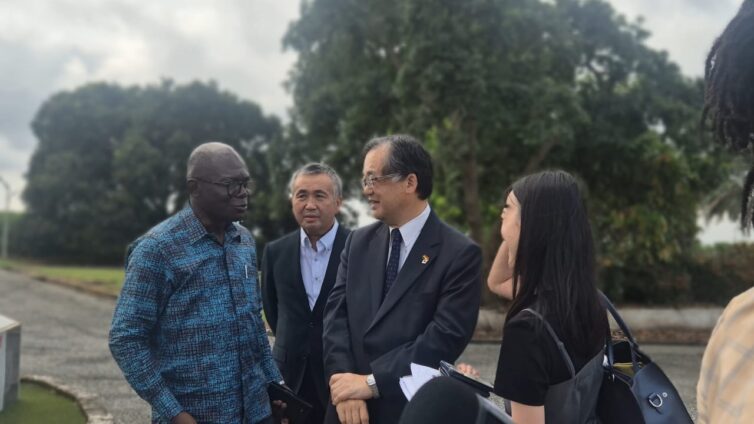
The ambition was highlighted during a visit to Ghana by veteran Japanese astronaut Koichi Wakata, Astronaut and Chief Technology Officer, Asia Pacific at Axiom Space, to the Ghana Space Science and Technology Institute.
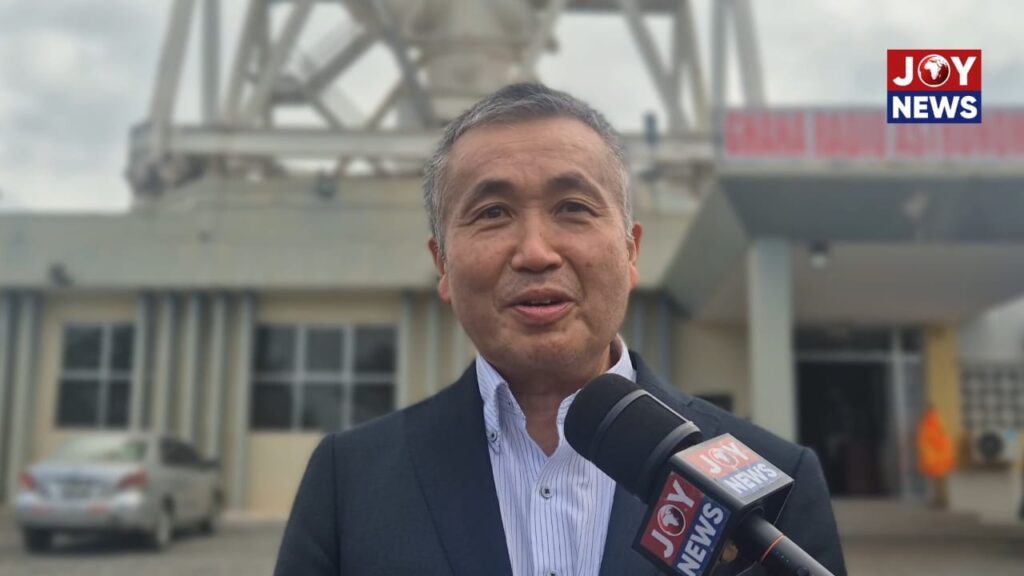
Wakata, who has completed five space flights and spent 504 days in space, engaged researchers and students during his visit as part of efforts to deepen discussions around aerospace, space science and Ghana’s potential in the sector.
According to the Director of the Ghana Space Science and Technology Institute, Dr Joseph Bremang Tandoh, Ghana already has a policy framework for the sector and must now focus on implementation.
“Ghana already has a space policy that has been approved by Cabinet, and last year an approval was given for the establishment of Ghana Space Agency.”
He said the country’s ambition should extend beyond using technologies developed elsewhere.
“We have a policy, and we need to start implementing it. We don’t want to be consumers; we want to partake, and we want to position ourselves in a way that we will contribute to the space economy.”
Dr Tandoh acknowledged that Ghana is still at an early stage of its space journey but believes sustained investment and commitment could eventually see the country produce an astronaut.
“Currently, we are in the baby stages, but if we are able to put in the right tools and the right commitment, we will be able,e in the next few years, also, to produce our own astronaut who can go to space.”
Learning from an astronaut
The visit also provided an opportunity for Ghanaian researchers and students to engage directly with someone who has experienced spaceflight.
Prof Felix Akomah Asante, a Professor at the University of Ghana and Principal Investigator of the Japan Centre Project, said Wakata was invited as the project’s scholar for the year.
He said the visit was intended to expose the astronaut to Ghana’s aerospace activities while creating an avenue for knowledge-sharing with researchers.
“He is an astronaut and works with Axiom Space, and he’s been to space several times, and the visit is several times, our aerospace things in Ghana and have discussions with researchers and he will share ideas on how we can also get closer to going to space.”
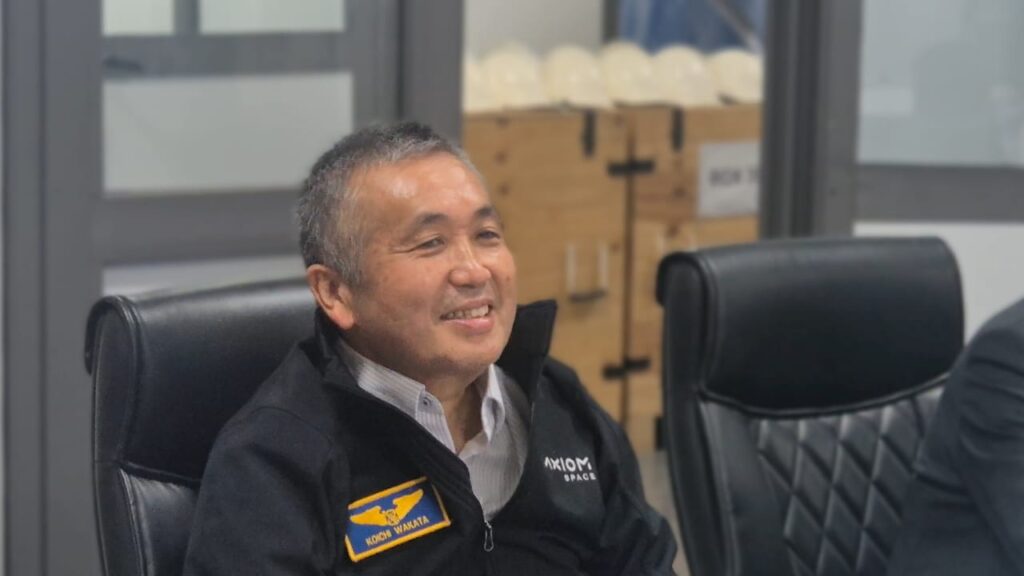
For students, the encounter offered something textbooks and classroom lessons cannot easily provide: direct interaction with someone who has actually been to space.
One student described the experience as particularly significant because astronomy had largely been something learned through scientific facts rather than direct experience.
“Ever since I was in basic school, it’s always been about scientific facts about astronomy, and you never get to experience it, but meeting an astronaut today will definitely help me make an impact.”
A Ghanaian astronaut?
For Wakata, the prospect of seeing more Ghanaians become involved in space exploration is one worth pursuing.
The veteran astronaut, who now works with Axiom Space on the development of commercial space activities, said he would like to see greater participation from Ghana.
“I would really like to see more people in Ghana who will utilise the space environment.”
He also expressed hope that Ghana could eventually have an astronaut participate in a space mission.
“I’m also looking forward to seeing a Ghanaian astronaut flying with us to the International Space Station at Axiom Space Station, and Ghana has huge potential in space exploration.”
Wakata’s career spans more than three decades in human space activities. He has flown on four types of spacecraft, including the Space Shuttle, Soyuz and Crew Dragon, and became the first Japanese astronaut to command the International Space Station in 2014.
His visit comes at a time when Ghana is seeking to strengthen its capacity in space science and technology and explore how the sector can contribute to national development.
For Ghana, the conversation is therefore no longer simply about looking up at the stars.
It is increasingly about asking what role the country can play once the next chapter of space exploration unfolds and whether, someday, a Ghanaian could be among those making that journey.
Latest Stories
-
Baffour Awuah cooperating with investigators after surrender and arrest – EOCO
5 minutes -
Destruction of aspirants’ posters breaches democracy—Ashanti NPP Communications Director
14 minutes -
BNI investigates Ampofo Ankrah over alleged $623,000 World Cup visa scheme
26 minutes -
NPP National Delegates Conference: Police announce road closures, diversions around Baba Yara Stadium
34 minutes -
Agric Committee demands financing plan for Pwalugu Irrigation Project before 2027 Budget
37 minutes -
Minority calls for the immediate suspension of Ghana-Colombia maritime agreement
47 minutes -
Ghanaian professional Sydney Hushie appointed UNFPA Chief of Digital Centre of Excellence
52 minutes -
GHS urges health managers to use community scorecards to improve healthcare delivery
59 minutes -
Ekyeamamfrom-Pivot irrigation project 90% complete but stalled over unpaid certificates
1 hour -
When the Gavel speaks, where is the choir that once sang for Wontumi?
1 hour -
NPP does not need a new chairman: It needs a brand architect
1 hour -
GNFS contains fire at Avenor North Industrial Area in Accra
1 hour -
NITA appoints Anthony Owusu-Ansah as Acting Deputy Director-General
1 hour -
RANA warns Salomey Bafoh case could have chilling effect on free expression
1 hour -
Who is the ‘hero’ Indian pilot who was stabbed on Israel-bound flight?
2 hours