

Audio By Carbonatix
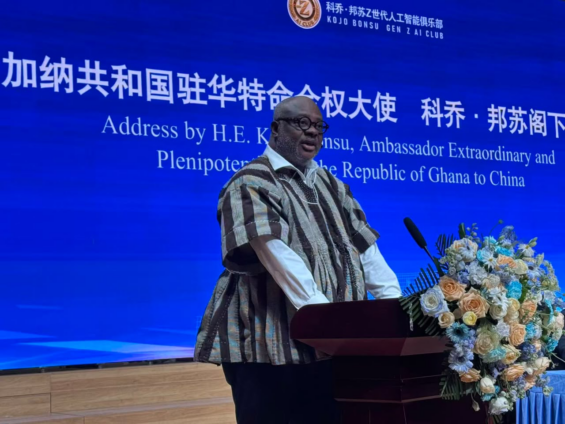
Ghana’s Ambassador to China, Kojo Bonsu, has launched a youth-focused Artificial Intelligence (AI) talent development programme aimed at equipping young Ghanaians with skills to build technology solutions for the country.
The China-Ghana Youth AI Talent Development Programme was launched during Ambassador Bonsu’s visit to Zhoukou, a major inland port and logistics hub in China.
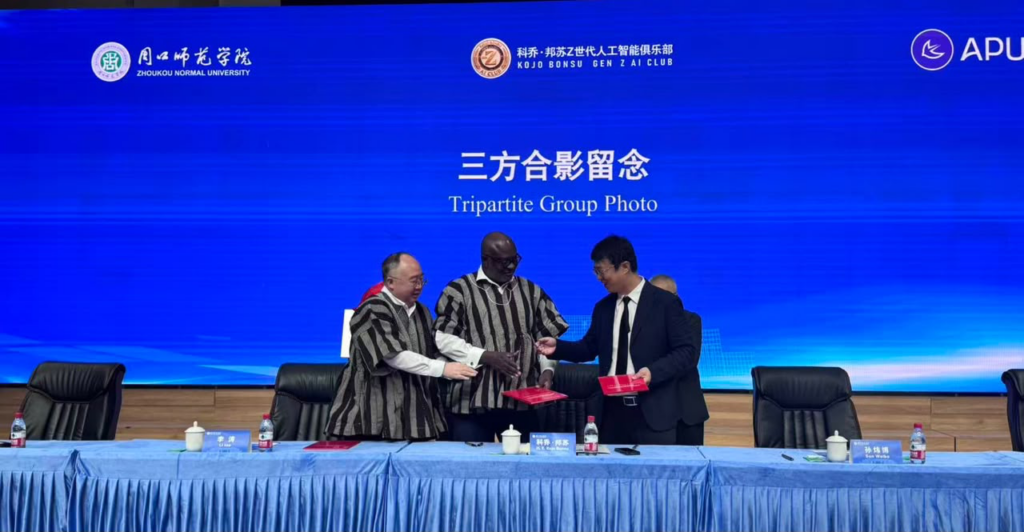
The programme is an expansion of the Ambassador’s Gen Z AI Club initiative and is being implemented in partnership with Chinese technology company APUS Technology Co., Ltd.
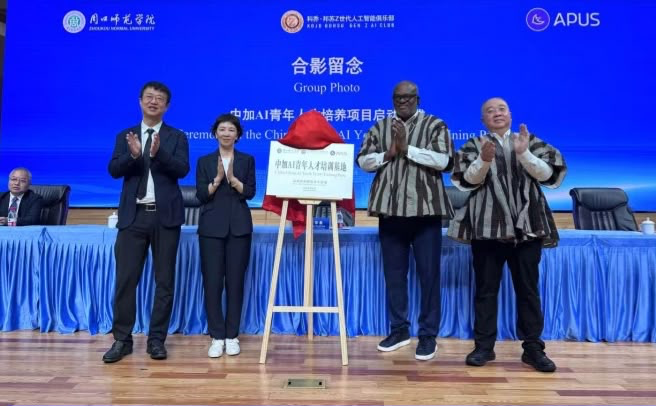
Under the initiative, Zhoukou Normal University will offer dedicated AI courses and scholarships to selected Ghanaian students.
The programme is intended to broaden Ghana-China cooperation beyond traditional areas such as trade and infrastructure by creating opportunities for skills development, technology and youth innovation.
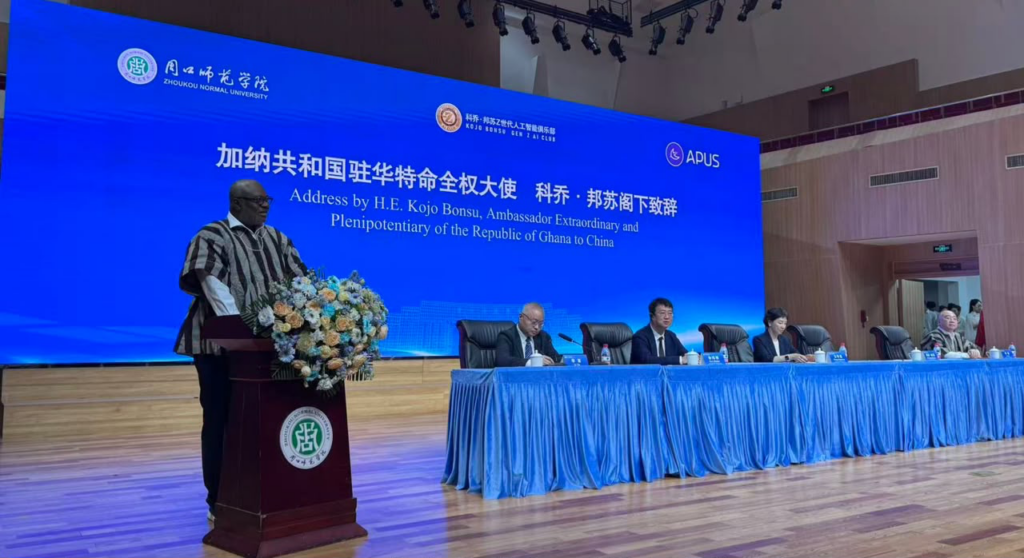
Speaking to students at the launch, Ambassador Bonsu highlighted Africa’s youthful population and the potential of young people to develop technology solutions tailored to local challenges.
“Africa has one of the world’s youngest populations, an enormous reservoir of talent, creativity and potential,” he said.
He said the programme would help young Ghanaians develop practical AI applications for key sectors of the Ghanaian economy.
“We want Ghanaian youth to build AI solutions for our farms, our hospitals, our classrooms.”
Ambassador Bonsu urged participants to approach the opportunity with a focus on learning, innovation and leadership.
The programme also seeks to connect training with employment and entrepreneurship opportunities.
APUS Technology Co., Ltd. is expected to offer outstanding students in China and Ghana internships and job contracts during the one-year programme.
The opportunities will be tailored towards the development of AI solutions relevant to Ghana’s economic and social needs.
The initiative is also expected to expose participants to China’s growing technology ecosystem while providing them with practical experience applicable to Ghana’s digital transformation efforts.
Supporters of the programme say it could provide a pathway for young Ghanaians to acquire specialised technology skills while contributing to solutions for challenges in areas such as agriculture, healthcare and education.
The initiative forms part of broader efforts to position young people at the centre of Ghana’s engagement with China, focusing on building skills and creating opportunities in emerging technologies.
Latest Stories
-
GHS urges health managers to use community scorecards to improve healthcare delivery
1 minute -
Ekyeamamfrom-Pivot irrigation project 90% complete but stalled over unpaid certificates
5 minutes -
When the Gavel speaks, where is the choir that once sang for Wontumi?
6 minutes -
NPP does not need a new chairman: It needs a brand architect
8 minutes -
GNFS contains fire at Avenor North Industrial Area in Accra
11 minutes -
NITA appoints Anthony Owusu-Ansah as Acting Deputy Director-General
18 minutes -
RANA warns Salomey Bafoh case could have chilling effect on free expression
19 minutes -
Who is the ‘hero’ Indian pilot who was stabbed on Israel-bound flight?
36 minutes -
NPP External Branches demand 90-day roadmap for ROPAA implementation
37 minutes -
No sustainable digital economy without trust, cybersecurity – CSA
39 minutes -
SSNIT increases stake in Société Générale Ghana to 24.36%
42 minutes -
Ghana-Colombia port deal sparks fresh cocaine trafficking security concerns
43 minutes -
EOCO moves to search Baffour Awuah’s office, residence after interrogation
49 minutes -
GoldBod, Kyrgyzstan discuss partnerships in gold and critical minerals
51 minutes -
SMEs can use vehicles, movable assets as collateral under Borrowers and Lenders Act
51 minutes