

Audio By Carbonatix
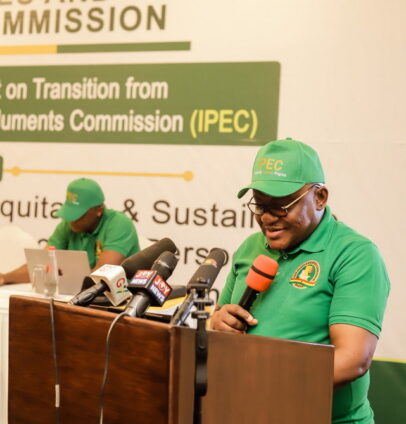
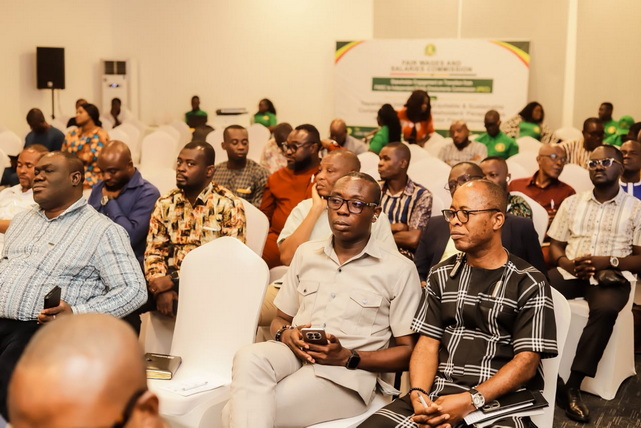
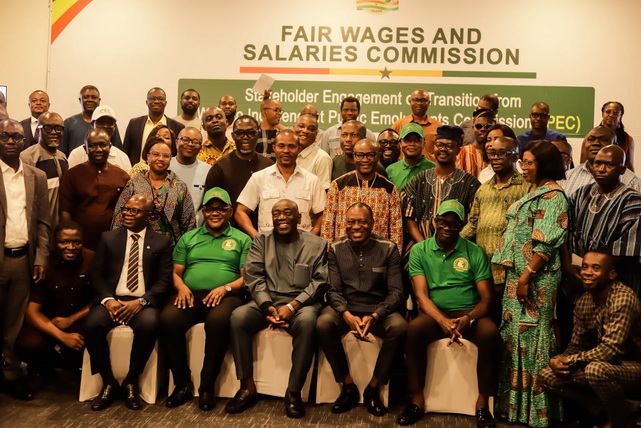
The Fair Wages and Salaries Commission (FWSC) has held a stakeholder engagement with Organised Labour on the transition from FWSC to the Independent Public Emoluments Commission (IPEC).
The engagement, held under the theme “Towards an Independent, Equitable, and Sustainable Compensation System: Stakeholders’ Perspectives on Ghana’s Public Sector Pay Reforms,” brought together key actors to deliberate on the future of public sector compensation.
The two-day meeting was aimed at briefing Organised Labour about the establishment of IPEC and also to solicit input from organised labour towards the development of a draft bill for the establishment of IPEC. The IPEC Bill, when passed, will repeal the Fair Wages and Salaries Commission Act 2007 (Act 737) to address pay fragmentation, politicisation of salaries, and rising wage bill pressures.
Challenges of Single Spine
Speaking at the opening of the meeting, the Chief Executive of FWSC, Dr George Smith-Graham, emphasised that the transition to IPEC must go beyond a mere change in institutional name and instead focus on building a stronger, more credible compensation system.
He noted that years of implementing the Single Spine Pay Policy have exposed several challenges, including disparities in allowances and conditions of service, distortions in internal pay relativities, difficulties in attracting and retaining critical skills, and the increasing need to align compensation with productivity.
“The proposed IPEC should therefore not be understood as a departure from the journey we have travelled. It should represent the next generation of public compensation governance,” he stated.
Dr Smith-Graham further assured Organised Labour that the consultation process was intended to meaningfully shape the proposed legislation, rather than simply validate predetermined decisions.
“Our purpose is not to manufacture consensus where real differences exist. It is to understand those differences, test our proposals against evidence, and build a compensation system that commands legitimacy across the public sector,” he added.
More than 50 labour groups attended, including the Trades Union Congress (TUC), Ghana Federation of Labour (GFL), Civil and Local Government Staff Association, Ghana (CLOGSAG), Ghana National Association of Teachers (GNAT), National Association of Graduate Teachers (NAGRAT), University Teachers Association of Ghana (UTAG), Teachers and Educational Workers’ Union (TEWU), Ghana Registered Nurses and Midwives Association (GRNMA), Ghana Medical Association (GMA), and the Judicial Service Staff Association of Ghana (JUSAG.
Latest Stories
-
Papaye, KFC and Pizzaman customers among most targeted as TrustGH uncovers nearly 1,000 scam numbers cloning Google business profiles of major food chains
6 minutes -
2026 U20 WWC: ‘We are in a tough group’ – Black Princesses’ Linda Owusu Ansah
13 minutes -
2026 U20 WWC: Ghana’s Ambassador to Czech Republic welcomes Black Princesses to Poland
39 minutes -
Oti NPP executives demand completion of stalled government projects
51 minutes -
Jinapor demands answers as Alima Mahama is asked to pay for Embassy spending outside her tenure
1 hour -
Russia doubles scholarships for Ghanaian students to 240 annually
1 hour -
Cedi’s year-to-date loss slumps to 4.09% as recent gains gather pace
1 hour -
‘Home has spoken’ – Justin Kodua Frimpong says as Ashanti delegates back his re-election bid
1 hour -
Mustapha Abdul-Hamid, seven others’ NPA case adjourned to August 27
2 hours -
Alima Mahama Refund: Jinapor challenges Ablakwa’s authority, says only Auditor-General can surcharge
2 hours -
Wontumi Conviction: 2 star witnesses placed under police protection amid death threats
2 hours -
Srem-Sai reveals surge in death threats after Wontumi conviction
2 hours -
GCB, Ecobank, 4 others are top tier banks in Ghana – PwC Banking Survey
2 hours -
Today’s front pages: Tuesday, August 18, 2026
3 hours -
Banks’ sustainable success will be defined less by interest margins – PwC
4 hours