

Audio By Carbonatix
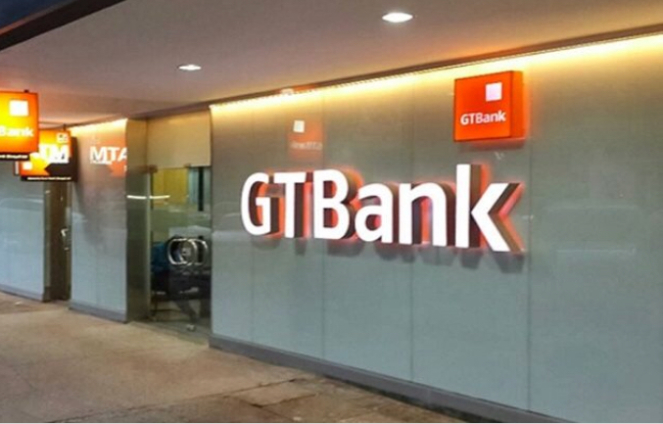
Ratings agency, Fitch Ratings has affirmed Guaranty Trust Bank (Ghana) Limited's (GTB Ghana) Long-Term Issuer Default Rating (IDR) at 'B-' with a Stable Outlook.
The bank's Viability Rating (VR) has also been affirmed at 'ccc'.
According to the UK-based firm, GTB Ghana's Long-Term IDR is driven by potential support from its Nigeria-based parent Guaranty Trust Bank Limited (GTB; B-/Stable), as expressed by its Shareholder Support Rating (SSR) of 'b-'.
The Stable Outlook reflects that on GTB's Long-Term IDR. GTB Ghana's Long-Term IDR is at the same level as Ghana's Country Ceiling of 'B-', which captures Fitch's view of transfer and convertibility (T&C) risk within Ghana.
“GTB Ghana's VR of 'ccc' reflects our view that failure remains a real possibility due to high exposure to the Ghanaian sovereign ('RD') through securities. This is despite losses incurred in the sovereign domestic debt restructuring, forthcoming external debt restructuring and impending loan-quality issues being tolerable due to large capital buffers. The VR is one notch below the implied VR of 'ccc+' due to the following constraint: Operating Environment/Sovereign Rating”.
Shareholder Support Rating of 'b-'
Fitch believes GTB has a high propensity to provide support, if required, despite the sovereign default, to preserve its Ghanaian operations due to the attractiveness and contribution of the Ghanaian market to its pan-African strategy, and the reputational implications of a subsidiary default.
However, GTB's ability to provide support is limited by its own creditworthiness. Fitch does not believe the authorities will introduce controls that impede banks in servicing their external debt.
Sovereign Default
Fitch saidGhana's domestic debt-exchange programme (DDEP), which involved exchanging cedi government bonds for new bonds with significantly lower coupons and longer tenors, concluded in February 2023, inflicting large net present value losses on participating bondholders. Ghana recently restructured other domestic debt instruments and is restructuring its external debt.
Problem Loans to Rise
It said macroeconomic conditions will burden borrowers' debt-repayment capacity and lead to increased problem loans.
However, loan-quality risks are diminished by GTB Ghana's small loan book (half-year 2023: 18% of total assets), with broader asset quality being more closely aligned with the sovereign's creditworthiness.
DDEP Pressures Profitability:
It pointed out that operating returns on risk-weighted assets decreased to 5.5% in 2022 (2021: 15.9%) as a result of large impairment charges stemming from the DDEP.
Fitch considers profitability to have been supported by a low discount rate to determine the fair value of the new bonds.
Latest Stories
-
Imprisonment should be rehabilitative, not punitive – Ghana Prisons boss at UNGA
18 minutes -
Ga Adangbe traditional priests petition Mahama over McDan aviation licence revocation
29 minutes -
Anti-LGBTQ Bill: NDC’s arrogance is worrying – Hassan Tampuli
40 minutes -
Let’s give OSP time to mature, not to scrap it – Hassan Tampuli
44 minutes -
Nigeria convicts 386 Islamist militants in mass trials
49 minutes -
Djibouti president wins election with 97.8% of vote, state media says
53 minutes -
We don’t have mandate to deduct tax from rent allowance of security services personnel – Interior Ministry clarifies
1 hour -
Ablakwa receives Presidential Special Envoy on Reparations to advance global agenda
1 hour -
Christina Koch becomes first woman to travel around the moon on Artemis II
2 hours -
Epstein survivors’ calls to meet King Charles and Queen harder to ignore as US visit approaches
2 hours -
UN Secretary-General names Ghana’s Anita Kiki Gbeho as South Sudan envoy
2 hours -
Mali withdraws recognition of Sahrawi Republic, backs Morocco’s autonomy plan
2 hours -
Gov’t distributes over 8,500 laptops to One Million Coders project
2 hours -
Julius Debrah, ‘man to beat’ as NDC’s James Agbey dismisses Musah Dankwah’s polls
2 hours -
GPRTU in Savannah Region to protest alleged eviction in Damongo
2 hours