

Audio By Carbonatix
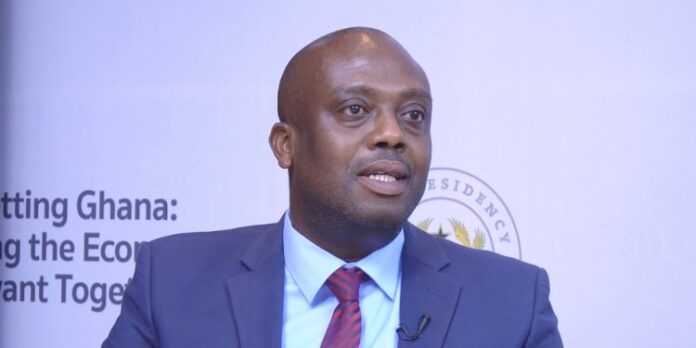
Ghana’s drive towards fiscal discipline and public accountability has recorded a major milestone following a 62.9 per cent reduction in financial irregularities across five key audited sectors of the economy, Deputy Minister for Finance, Thomas Nyarko Ampem, has revealed.
Total financial infractions plunged from approximately GH¢20.72 billion in 2024 to GH¢7.69 billion in 2025, representing a significant absolute drop of about GH¢13.03 billion.
The reduction surpassed the government's internal performance target of cutting public sector financial irregularities by 50 per cent in 2025, exceeding the benchmark by 12.9 percentage points.
Disclosing the figures during a high-level consultative engagement on the 2025 Auditor-General’s Reports, Mr Ampem described the sharp decline as concrete evidence of effective public financial management (PFM) reforms.
Addressing Chief Directors, Chief Executive Officers, and Heads of Covered Entities in Accra, the Deputy Minister praised the collective efforts of public institutions while emphasising the need for sustained vigilance.
“I am pleased to report that, taken together, financial irregularities across these five sectors declined from approximately GH¢20.72 billion in 2024 to GH¢7.69 billion in 2025,” he said.
“This represents a reduction of approximately GH¢13.03 billion, or 62.9 per cent. This is a significant achievement.”
Institutional accountability
Mr Nyarko Ampem attributed the progress to deliberate administrative measures aimed at closing systemic loopholes, enforcing internal audit mechanisms, and insisting on compliance across government ministries, departments, and agencies.
“This improvement demonstrates that when there is deliberate attention to public financial management, stronger controls and greater accountability, measurable results can be achieved,” he stated.
The stakeholder engagement focused on dissecting recurring systemic weaknesses highlighted in the Auditor-General’s annual reports and defining clear compliance responsibilities for administrative heads.
Institutional leaders were urged to aggressively implement the Auditor-General's recommendations, rectify existing internal control gaps, and enforce zero-tolerance measures to prevent the recurrence of financial infractions in subsequent audit cycles.
Latest Stories
-
Accra-Kumasi Expressway: 48 Engineer Regiment can deliver if well resourced – Political Lecturer
1 minute -
Businesses above GH¢750,000 turnover must register for VAT – GRA
5 minutes -
Kenya confirmed hosts of World Athletics Championships 2029
15 minutes -
No more pothole ambulance rides: Mahama’s roads will change lives – Agbodza tells Upper West farmers
40 minutes -
‘Physically better’ Kudus can start against Liverpool – De Zerbi
46 minutes -
Bonsu Baah sets up opener in Al Qadsiah win over Al Wasl
59 minutes -
Ghana has now become a distribution hub for drugs
1 hour -
Africa Nations Volleyball Championship: Ghana’s Black Spikers leave for tournament in Tunisia
2 hours -
Today’s Front pages: Tuesday, September 15, 2026
2 hours -
Auditing the Auditor-General: How special audit understated a COVID-19 expenditure
3 hours -
A Partnership for Progress: Why the ProMark–KPMG collaboration matters for Africa’s digital assets future
3 hours -
Catholic Bishops pressure gov’t to sign long-delayed mission schools agreement
4 hours -
Cedi under fresh pressure as Christmas import demand drives dollar surge
4 hours -
Ato Forson eyes first-week November for 2027 Budget, promises jobs and major infrastructure push
4 hours -
Catholic Bishops demand probe into ‘protocol admissions’ amid SHS placement challenges
4 hours