

Audio By Carbonatix
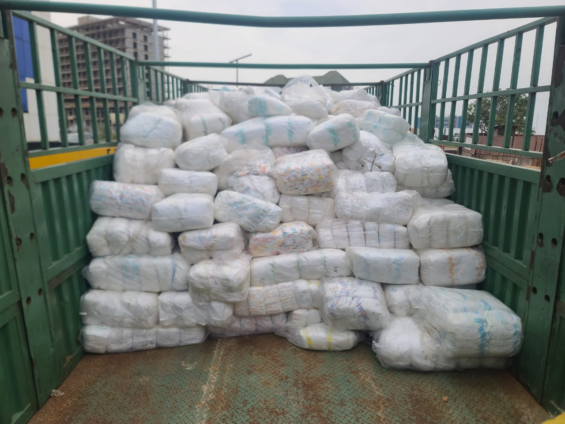
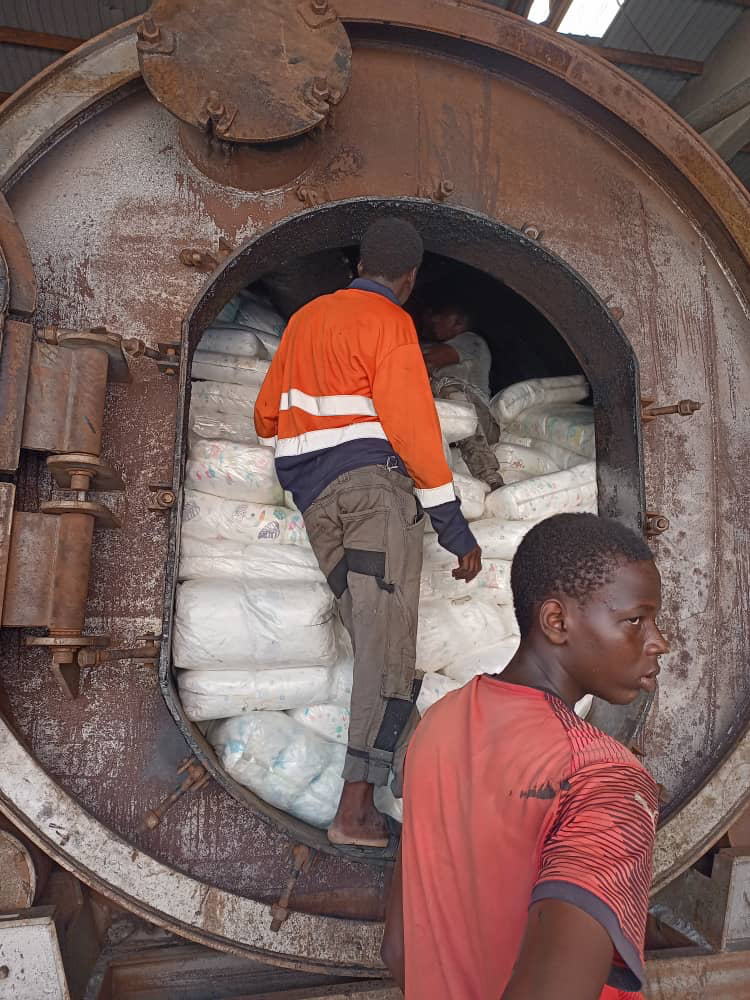
Ghana’s Food and Drugs Authority (FDA) has destroyed over one million counterfeit diapers that had infiltrated the local market.
The diapers, which were seized in two separate shipping containers, were deemed hazardous to public health and have now been permanently removed from circulation.
The incineration exercise, which took place under strict environmental and regulatory supervision in Ashaiman, marks a critical step in Ghana’s battle against the rising tide of counterfeit hygiene products.
According to the FDA, the operation is part of a larger framework to eliminate low-grade baby care goods that fail to meet national health and safety standards.
However, what has sparked even greater alarm is the source of many of these counterfeit products.
In March this year, China’s state-run broadcaster CCTV revealed during its annual “3.15” Consumer Rights Day program a disturbing supply chain: used diapers and sanitary pads were being salvaged from waste, reprocessed by rogue manufacturers, and passed off as new products.
After failing to meet domestic regulatory thresholds, these goods were deliberately redirected to developing markets, including Ghana, and sold at exploitatively low prices.
“These acts are not only unethical—they are dangerous,” said an FDA spokesperson.
“They expose infants to serious health risks such as infections, allergic reactions, and other complications. Ghana will not serve as a dumping ground for rejected or hazardous goods.”
In response, the FDA has ramped up its collaboration with the Ghana Revenue Authority (Customs Division), government agencies, and international partners.
New measures include enhanced border checks, random retail inspections, advanced lab testing, and tighter scrutiny of imports, especially in the hygiene sector.
The Authority has also launched a targeted awareness campaign, urging consumers to be vigilant when purchasing baby care products.
Signs of fake diapers include unusually low prices, unfamiliar branding, poor-quality packaging, and the absence of approval markings.
The public is encouraged to report any suspicious products through the FDA’s helplines or online reporting channels.
The recent destruction exercise is a reaffirmation of the FDA’s core mission: to uphold product quality and protect the most vulnerable.
It also reflects a broader government stance—led by the Ministry of Health and supported by regulatory agencies—that counterfeit baby products will not be tolerated under any circumstances.
“As regulators, we are deeply committed to ensuring every child in Ghana grows up with access to safe and hygienic products,” the FDA emphasised.
“This is not just a regulatory obligation—it is a national duty.”
Latest Stories
-
Police arrest suspect for unlawful possession and attempted sale of firearm
53 minutes -
3 arrested in connection with Tema robberies
1 hour -
Your mouth on weed is nothing to smile about
1 hour -
25% university fees hike, what was the plan all along? — Kristy Sakyi queries
3 hours -
Some OMCs reduce fuel prices; petrol going for GH¢10.86, diesel GH¢11.96
3 hours -
Trump says health is ‘perfect’ amid ageing concerns
4 hours -
China’s BYD set to overtake Tesla as world’s top EV seller
4 hours -
Joy FM’s iconic 90’s Jam returns tonight: Bigger, better, and packed with nostalgia
4 hours -
Uproar as UG fees skyrocket by over 25% for 2025/2026 academic year
5 hours -
Japan PM joins fight for more female toilets in parliament
6 hours -
Ga Mantse declares war on fishing industry child labour
7 hours -
Adom FM’s ‘Strictly Highlife’ lights up La Palm with rhythm and nostalgia in unforgettable experience
8 hours -
OMCs slash fuel prices as cedi gains
9 hours -
Around 40 dead in Swiss ski resort bar fire, police say
10 hours -
AFCON 2025: Aubameyang and Nsue make history among oldest goalscorers
11 hours