

Audio By Carbonatix
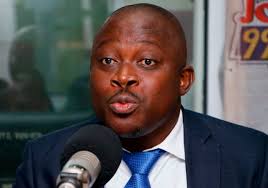
A Member of Parliament’s Mines and Energy Committee, Edward Bawa has noted that contrary to speculations by the ruling New Patriotic Party (NPP) in relation to energy sector debt, the country has not gotten to the stage where it needs to pay for excess capacity.
Mr Bawa explained that since 2001, the country has never had a situation where its available capacity went up to 3,700 megawatts.
According to him, given that the country’s available capacity is not up to the aforementioned level and government’s peak demand hovers around 3,480 megawatts, it shows that the country has never had the occasion to pay capacity charges.
The committee member defined excess capacity as when the generator declares availability which the off-taker cannot take.
According to him, there has been no instance of declaration of availability to which the off-taker cannot gain access.
“If you look at between 2001 to today, I tell you that to a very large extent, we have actually not gotten to a state where we have to pay excess capacity. If you look from 2001 to 2003 as we speak now, we have not had a situation where our available capacity had gone up to 3,700.
"So if you have a situation where your available capacity is not up to 3,700 and your peak demand is around 3,480, taking into consideration that you also need redundancy in your system, what it simply means is that we have not had the occasion to pay capacity charges,” he said on JoyNews’ Newsfile on Saturday.
Mr. Bawa therefore said that there is room to believe that the government has not been transparent in its argument on the capacity charges, warning that until there’s transparency the challenges facing the energy sector will persist.
Ghana’s energy sector is facing a debt crisis
The NPP has accused the NDC of signing some harsh Power Purchase Agreements which have become a burden on them.
Country Director for World Bank, Piere Laporte also made the same claim while speaking on the debt crisis bedeviling the sector.
The NDC has argued that even the NPP MPs at the time the PPAs were signed also appended their signatures to the same measure.
In 2021, Finance Minister, Ken Ofori-Atta while before parliament disclosed that the government paid a total of $937.5 million to independent power producers (IPP) for excess capacity charges between 2017 and 2020.
The total debt owed IPPs presently hovers around $1.58 billion. The power producers have also rejected a proposal from the government to restructure the debt.
Latest Stories
-
Brandon Asante and Coventry all but promoted to Premier League despite Sheffield Wednesday draw
14 minutes -
GPL 2025/26: Late Kwartemaa strike downs Hearts in Tema
21 minutes -
Ghana Faces Sierra Leone Moment as Prosecutorial Powers come under strain
31 minutes -
Don’t consume fish or seafood from Tema Shipyard until further notice – FDA warns
35 minutes -
Why volunteering might be Africa’s most underrated career accelerator
42 minutes -
ActionAid Ghana raises concern over gender gaps in Feed Ghana Programme
44 minutes -
Windstorm wreaks havoc in Gushegu, displacing nearly 2,000 residents and damaging schools
46 minutes -
Friends of Bridget Bonnie Marks her 35th birthday with donation to Kasseh Model Health Centre
2 hours -
From Ekumfi Kokodo to the Pulpit Stage: Essi Donkor’s gospel journey takes shape
2 hours -
Landfilling waste management creates no value, it’s an economic waste
2 hours -
Photos: Speaker Bagbin Commissions MPs constituency office under parliamentary decentralisation programme
2 hours -
Black Stars technical advisor Winfried Schäfer sacked as GFA shakes up backroom staff
2 hours -
Wenchi water project almost complete, critical to gov’t agenda – GWL MD
3 hours -
Anti-LGBTQ+ bill not part of government’s legislative agenda – Inusah Fuseini
3 hours -
Anti-LGBTQ Bill: Forget the rumour mongers, I’m a man of action, and will pass the bill – Speaker
3 hours