

Audio By Carbonatix
The Ministry of Education has called for continued and more structured engagement with Ghana’s pre-tertiary teacher unions as efforts intensify to resolve the ongoing impasse and facilitate the return of teachers to the classroom.
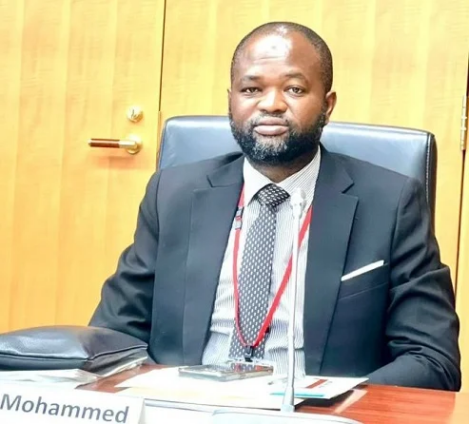
Education Ministry Press Secretary Hashmin Mohammed, speaking on Joy FM’s Top Story on Monday, said the dispute is an issue inherited by the current government and requires sustained dialogue between the relevant stakeholders.
His comments come as Education Minister Haruna Iddrisu meets the leadership of the country’s three major pre-tertiary teacher unions — the Ghana National Association of Teachers (GNAT), National Association of Graduate Teachers (NAGRAT) and Pre-Tertiary Teachers Association of Ghana (PRETAG) — at the Ministry of Education.
The meeting forms part of efforts to resolve the impasse and address the concerns that have kept the parties at odds.
Mr Mohammed said the ministry, together with other relevant agencies, had begun negotiations on the matter, stressing the importance of ensuring that all parties approach the discussions with a clear understanding of the issues at stake.
He said the current engagement provides an opportunity for the stakeholders to properly examine their respective concerns and work towards a common understanding.
“If you look at this issue, it is an issue that the current government has inherited,” he said, explaining that the ministry had been working with other agencies to commence negotiations.
He added that where adequate engagement had not previously existed, the Education Minister had now created a pathway for stronger discussions between the government and teacher representatives.
According to Mr Mohammed, the objective is to establish quality engagement capable of producing a resolution that will allow teachers to return to the classroom.
The Press Secretary said the discussions must continue because several of the issues under consideration require detailed examination of data before decisions can be taken.
He cited demands relating to rural and deprived-area allowances as an example, noting that determining the appropriate beneficiaries requires more than simply identifying teachers who work in rural locations.
“The ministry or Controller needs to have … who will be affected in the area because it is not all teachers who teach in the rural areas,” he said.
Mr Mohammed explained that the relevant authorities must be able to identify and disaggregate the data properly to establish which teachers qualify for particular allowances.
The emphasis on data, he said, is also intended to prevent inaccuracies in payment and beneficiary records.
He stressed the need for the parties to sit down, examine the available information and ensure that the data is properly disaggregated before implementation.
“We need to sit down and be able to disaggregate the data and get it right so that we will not have ghost names,” he said.
Latest Stories
-
Bond market: Turnover declined by 28% to GH¢1.56bn
15 minutes -
Volta Region National Public Speaking contest advances drug prevention conversation
20 minutes -
New health training facility at Ampoma-Jema to address admission shortfalls, but Minister flags missing amenities
45 minutes -
Black Challenge unveiled with sights set on Amputee World Cup glory
1 hour -
Pay striking teachers before expressway spending, Dr Kingsley Agyemang tells government
2 hours -
Customs intercepts assault rifle, two pistols and 610 rounds of ammunition at Tema Port
2 hours -
PKO boxers secure wins at Odwira Festival
2 hours -
South Tongu Records Rise in Teenage Pregnancy
3 hours -
Cabinet threw out US health compact faster than anything I’ve seen – Mahama
3 hours -
MoFA urges Finance Ministry to reverse World Bank food programme withdrawal over GH¢643m commitments
3 hours -
NAGRAT demands signed timelines before calling off strike
3 hours -
National Investment Quiz: West Africa SHS, St. Louis SHS advance to semi-finals
3 hours -
Shatta Wale appeals to Mahama for balanced framework to tackle social media abuse without stifling free speech
3 hours -
Education Ministry urges data-driven talks to resolve teacher impasse
3 hours -
‘What we wanted was money to buy medications’ – Dr Nawaane on US health support
3 hours