

Audio By Carbonatix
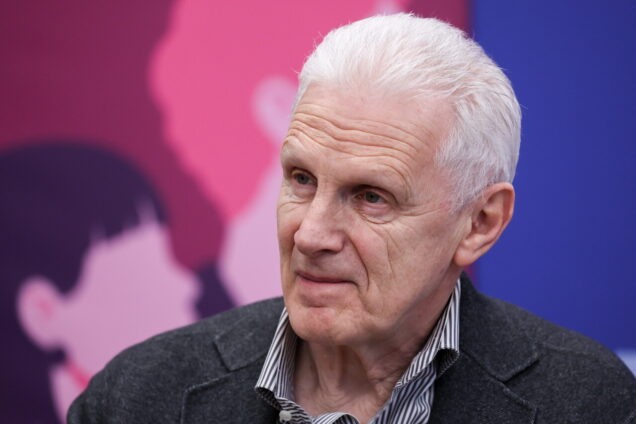
Aide to the President of Russia, Andrei Fursenko, has called for stronger critical thinking and information verification as artificial intelligence and the internet increasingly shape how people access and assess information.
Speaking at the International Festival of Youth (IFY) in Ekaterinburg on September 15, 2026, Mr Fursenko said trust and reputation remained important safeguards against unreliable information in what has become known as the “post-truth” era.
He made the remarks during a session titled “They Say Online… Verity in the Post-Truth Era”, which brought together academics and education leaders to discuss misinformation, artificial intelligence and the reliability of information.
“We have been discussing for a long time what to do in the post-truth era… and in the course of that discussion, everyone arrived at the same conclusion: the one key tool that allows us to stay within the bounds of reliability, real reliability, is a person’s reputation, a scholar’s reputation. In other words, trust,” Mr Fursenko said.
He said although artificial intelligence and the internet had made access to information easier, users needed the ability to critically assess what they encountered.
“I believe that if a person who uses artificial tools and the internet, artificial intelligence has the wisdom to understand and assess what’s there, then that is the main tool for preserving human leadership. Critical thinking,” he said.
Mr Fursenko also cautioned against assuming that digital technologies could fully reproduce every aspect of human experience.
“Our world is analogue, and it is far broader. There are overtones in music that cannot be digitised. Our strength lies in our ability to work with what cannot be digitised,” he said.
Education and verification
Rector of Moscow State Linguistic University, Irina Kraeva, said younger generations were increasingly questioning information rather than accepting it at face value.
She said the ability to verify information, analyse competing claims and draw independent conclusions should be incorporated into education and public communication.
“Doubting is always useful for an intelligent, educated person,” she said.
Andrei Loginov, Rector of the Russian State University for the Humanities, stressed the importance of preserving reliable physical records and archives as artificial intelligence becomes more influential in producing and distributing information.
He said relations between countries and peoples should be based on reliable information supported by objective archival evidence.
“Post-truth is called post-truth for a reason, and this is why it has flourished so unprecedentedly in the age of artificial intelligence and the internet; it distorts this knowledge, this objective knowledge. We need to understand very clearly what boundary we are standing at today,” Mr Loginov said.
Using a hypothetical scenario involving an AI system operating beyond human control, Mr Loginov highlighted the importance of physical libraries, archives and people with specialist historical knowledge.
He argued that preserving books and other physical records could provide an important reference point when digital information becomes unreliable or contradictory.
Andrey Sorokin, Director of the History and Archival Institute at the Russian State University for the Humanities, described post-truth as a situation in which everyday perceptions can displace professional and specialised knowledge in public discourse.
He said the challenge extended beyond the public sphere and could undermine professional disciplines and methods used to establish reliable knowledge.
International Festival of Youth
The International Festival of Youth is taking place in Ekaterinburg from September 11 to 17, 2026, under the motto “Follow Your Dream.”
According to organisers, the festival has brought together 10,000 young participants from 191 countries, comprising 5,000 Russians and 5,000 international participants.
The event includes representatives from public administration, science and education, media, entrepreneurship, technology, sport, creative industries and civic organisations.
The decree establishing the festival was signed by Russian President Vladimir Putin on December 29, 2025.
Latest Stories
-
Vaglas join Vughin to mark Dɛng Festival of Sonyor in Savannah Region
19 minutes -
Ghanaian model Eligere Di Merrebel attends 2026 Venice Film Festival
23 minutes -
“You can’t take our GH¢82m and run away to Nigeria” – Roads Minister fires Enchi–Elubo road contractor
25 minutes -
GCB Bank unveils GH¢1m unsecured loans to boost business growth at Kumasi MSME Caravan
28 minutes -
Education chanllenges: NPP not interested in gov’t failure, but we will hold them to account – Dr Kwabena Tandoh
34 minutes -
Kristo Asafo Bompata branch members allege post-funeral attacks
36 minutes -
‘Show up Friday or lose the contract’ – Roads Minister warns Top International over abandoned Enchi–Elubo road
36 minutes -
Customs revenue jumps to 450 million dollars monthly since AI introduction
42 minutes -
There is policy divergence at Education Ministry – NPP Education Committee spokesperson
49 minutes -
Police recover AK-47, 186 rounds of ammunition after gunfight in Accra
55 minutes -
Three classrooms, two teachers, one community: The struggles of Bresuano MA basic school
59 minutes -
Proposed Chinese, Arabic languages: We cannot run our education on contradictions – Dr Kwabena Tandoh
1 hour -
Takoradi–Agona Nkwanta road to open to traffic by November – Contractor
1 hour -
2027 AFCONQ: Amad, Adingra set to miss Ghana clash
1 hour -
Fuel prices will continue to surge – COPEC
1 hour