

Audio By Carbonatix
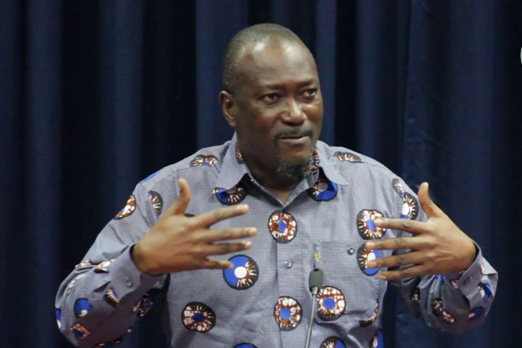
Professor Henry Kwasi Prempeh, Executive Director, Ghana Centre for Democratic Development, has expressed concerns about the secrecy of Article 146 of the 1992 Constitution concerning a Chief Justice’s (CJ) Removal Petitions.
In a statement, Prof Prempeh, who is also the Chairman of the Constitution Review Committee, noted that he had at least two problems with Article 146 in its present form.
He said the first was the secrecy or lack of transparency concerning the removal petition.
“Even if the removal proceedings must be held in camera, I believe that, at the minimum, the findings and outcome of the proceedings, including the grounds and supporting evidence behind the removal petition, must be made public after the fact–that is, whether or not the petition succeeds,” he stated.
“The public must not be kept in the dark as to why a removal petition failed or succeeded.”
Prof Prempeh reiterated that in the interest of justice, he believed the grounds and evidence in support of the Committee’s decision, whichever way must be made public, so that the public, too, could judge for themselves as to whether justice was served in the matter.
Touching on his second concern, Prof Prempeh said: “I think that, where the removal petition pertains to a Chief Justice, no sitting judge should be included in the five-person removal Committee that is constituted to hear the petition”.
“In other words, none of the CJ’s judicial peers must be made to sit in judgment on a removal petition involving their judicial colleague or “boss”, as they are likely to have an interest in the outcome of the case.”
He advocated that they could use retired jurists or other retired career public servants, preferably appointed by a special Committee of the Council of State, in place of sitting judges.
Prof Prempeh said the three other non-lawyer members of the removal Committee could also be selected through a more politically inclusive, diverse or neutral process, as opposed to being appointed, as Article 146 currently provides, by the President in consultation with the Council of State.
“Better to keep a President out of the removal process, except to implement, after the fact, the final outcome of the process as determined by an independent removal Committee,” Prof Prempeh said.
Latest Stories
-
Ghana is rising again – Mahama declares
2 hours -
Firefighters subdue blaze at Accra’s Tudu, officials warn of busy fire season ahead
3 hours -
New Year’s Luv FM Family Party in the park ends in grand style at Rattray park
3 hours -
Mahama targets digital schools, universal healthcare, and food self-sufficiency in 2026
3 hours -
Ghana’s global image boosted by our world-acclaimed reset agenda – Mahama
3 hours -
Full text: Mahama’s New Year message to the nation
3 hours -
The foundation is laid; now we accelerate and expand in 2026 – Mahama
4 hours -
There is no NPP, CPP nor NDC Ghana, only one Ghana – Mahama
4 hours -
Eduwatch praises education financing gains but warns delays, teacher gaps could derail reforms
4 hours -
Kusaal Wikimedians take local language online in 14-day digital campaign
5 hours -
Stop interfering in each other’s roles – Bole-Bamboi MP appeals to traditional rulers for peace
5 hours -
Playback: President Mahama addressed the nation in New Year message
5 hours -
Industrial and Commercial Workers’ Union call for strong work ethics, economic participation in 2026 new year message
7 hours -
Crossover Joy: Churches in Ghana welcome 2026 with fire and faith
7 hours -
Traffic chaos on Accra–Kumasi Highway leaves hundreds stranded as diversions gridlock
7 hours