

Audio By Carbonatix
China is pumping tens of billions of dollars into eight state-owned banks and insurance companies to help shore up the country's financial system and boost its slowing economy.
The cash injection, which is being led by China's finance ministry, will total 360 billion yuan ($53.6bn; £39.7bn), state news agency Xinhua said on Sunday.
The outlet said the move "will help further enhance their sound operating capabilities, risk resistance capabilities, and ability to serve the real economy".
It marks the latest move in Beijing's attempts to reinvigorate the world's second-largest economy as it faces issues including trade tensions with the West, the impact of the war in Iran, and an ageing population.
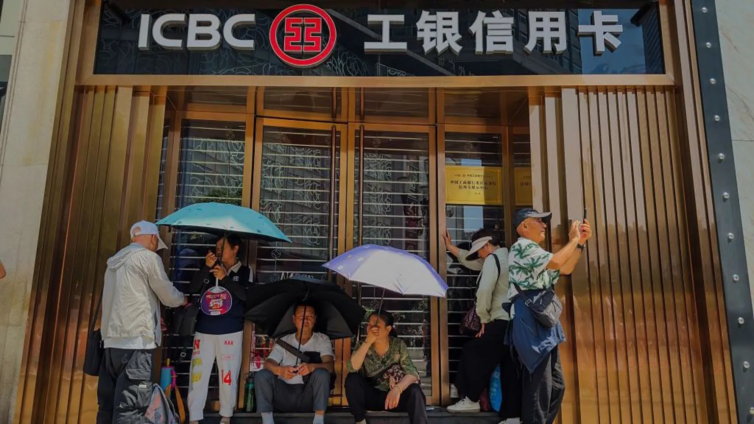
The package will boost the finances of three major lenders and five insurers, including the Industrial and Commercial Bank of China, the Agricultural Bank of China, and the China Export & Credit Insurance Corporation.
State news outlet Global Times said this "will give banks and financial institutions more resources to channel into credit for the real economy, while strengthening their ability to withstand external shocks at a time of global financial uncertainty".
President Xi Jinping has long seen financial stability as key to China's national security.
This weekend's announcements come as Beijing is aiming to reshape the economy in the face of a number of challenges such as a shrinking workforce, a years-long property market slump and ongoing trade and technology rivalry with the US.
China's economic growth slowed sharply between the start of April and end of June as weak domestic demand and the Iran war's impact on oil prices overshadowed the country's strong exports.
Official gross domestic product (GDP) figures released in July showed that China's economy grew by 4.3% in the second quarter, below Beijing's annual target, following a 5% rise in the first quarter.
In March, Beijing cut the growth target to a range of 4.5%-5%, its lowest economic expansion goal since 1991, a move some analysts say has given Beijing space to acknowledge pre-existing economic weakness.
Latest Stories
-
Bonsu Baah sets up opener in Al Qadsiah win over Al Wasl
8 minutes -
Ghana has now become a distribution hub for drugs
27 minutes -
Africa Nations Volleyball Championship: Ghana’s Black Spikers leave for tournament in Tunisia
42 minutes -
Today’s Front pages: Tuesday, September 15, 2026
1 hour -
Auditing the Auditor-General: How special audit understated a COVID-19 expenditure
2 hours -
A Partnership for Progress: Why the ProMark–KPMG collaboration matters for Africa’s digital assets future
2 hours -
Catholic Bishops pressure gov’t to sign long-delayed mission schools agreement
3 hours -
Cedi under fresh pressure as Christmas import demand drives dollar surge
3 hours -
Ato Forson eyes first-week November for 2027 Budget, promises jobs and major infrastructure push
3 hours -
Catholic Bishops demand probe into ‘protocol admissions’ amid SHS placement challenges
4 hours -
SHS placement: Catholic Bishops demand probe into alleged payments for school places
4 hours -
Facts about Nigeria’s Dangote oil refinery Initial Public Offering
4 hours -
Trump says AI safety fears a ‘hoax’ as he rejects calls for greater safeguards
4 hours -
Oil climbs as Saudi pipeline outage, fresh attacks heighten supply concerns
5 hours -
Donald Trump Jr and Bettina Trump say Putin ally paid for some wedding festivities as a ‘gift’
5 hours