

Audio By Carbonatix
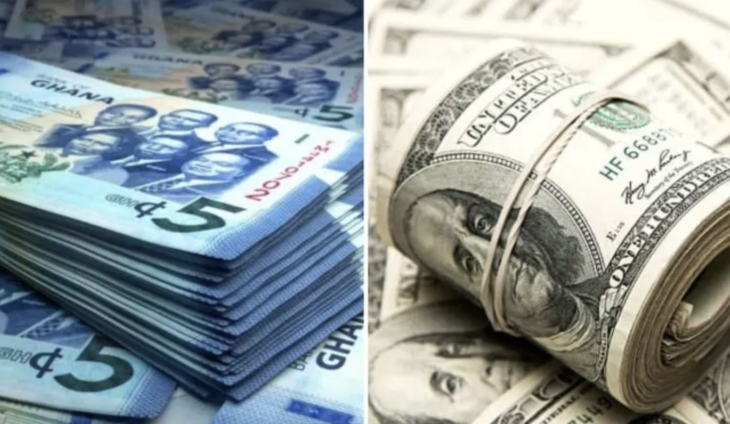
The Ghana cedi’s depreciation against the US dollar has widened to 9.5% in the first nine months of 2026, marking a sharp reversal from the currency’s strong performance a year earlier.
The latest Bank of Ghana data show the cedi trading at about GH¢11.55 to the US dollar in September, compared with GH¢10.45 at the end of December 2025.
The currency has also weakened against the pound and euro, recording year-to-date depreciations of 9.0% and 7.3% respectively.
The latest movement follows a period of relative improvement in August, when the cedi’s year-to-date depreciation against the dollar narrowed to about 7.1%.
The currency had strengthened to around GH¢10.95 to the dollar earlier in August before renewed pressure pushed it higher.
The depreciation represents a reversal of the cedi’s performance in 2025, when it recorded substantial gains against the dollar. Bank of Ghana data show the currency ended 2025 at GH¢10.45 to the US dollar, compared with GH¢15.30 at the beginning of the year.
The World Bank has identified increased foreign-exchange demand from the energy sector and dividend payments by some private corporations among factors contributing to pressure on the cedi.
At the same time, Ghana has continued to benefit from strong export earnings and improved external balances, indicating that foreign-exchange supply alone has not eliminated pressures arising from demand.
The Bank of Ghana has described recent exchange-rate movements within the context of a flexible, market-determined exchange-rate regime.
The central bank introduced a new Foreign Exchange Operations Framework in September to clarify the objectives and principles guiding its interventions while maintaining its inflation-targeting mandate.
The renewed weakness of the cedi comes as the Bank continues to manage competing pressures in the foreign-exchange market, including demand from businesses and other market participants.
The September data therefore point to a more challenging currency environment after the gains recorded in 2025, even as Ghana’s broader macroeconomic indicators continue to show signs of stabilisation.
Latest Stories
-
Bagbin officially summons Parliament to sit September 29
14 minutes -
Average lending rate stood at 15.9% as of August 2026
14 minutes -
Repeated cocaine seizures could hurt Ghana’s trade reputation – CDM
30 minutes -
Baffour Awuah’s failed arrest, parliamentary immunity & PDS bail conditions
36 minutes -
Stop producing research that ends up on shelves – Prof Dittoh challenges Ghanaian academics
37 minutes -
Ghana’s growing youth population could become unemployment time bomb — Alan Kyerematen warns
43 minutes -
Ghana signs agreement with Intel to expand AI for Youth programme
44 minutes -
AFCON 2027Q: ‘Our goals are clear’ – Carlos Queiroz on qualification
44 minutes -
Use legal means to achieve legal ends – Kyei-Mensah-Bonsu on MP’s attempted arrest
46 minutes -
Government pledges support for fashion industry through skills, technology and market access
53 minutes -
Gender Minister joins First Lady at OAFLAD summit as Ghana pushes stronger support for women, children
54 minutes -
Black Queens defender Susan Ama Duah signs for Mexican side Tigres
55 minutes -
Carlos Queiroz’s real test begins as Ghana face Côte d’Ivoire in Bouaké
55 minutes -
Social Audit Committee monitoring helping improve development projects in Tano North – Mehoso CEO
58 minutes -
IFC, LMI Holdings expand partnership to power Ghana’s industrial growth
1 hour