

Audio By Carbonatix
For a woman diagnosed with a suspicious breast lesion in a Ghanaian community, finding the problem may be only the beginning of a much longer journey.
She may need to leave her community for a hospital, undergo further tests and eventually begin treatment. But Breast Care International says too often there is no one to make sure she completes that journey.
"All the treatment centres are in the cities, the woman in the community has to move from the community to the centre. But who checks on that?" asked Dr Beatrice Wiafe Addai, President of Breast Care International.
Her question captures the thinking behind a new project being implemented by Breast Care International with Jhpiego in selected communities in Ghana.
The project is being launched in the Ashanti Region with education and screening activities aimed at identifying women who may have breast cancer and helping them move through the health system for diagnosis and treatment.
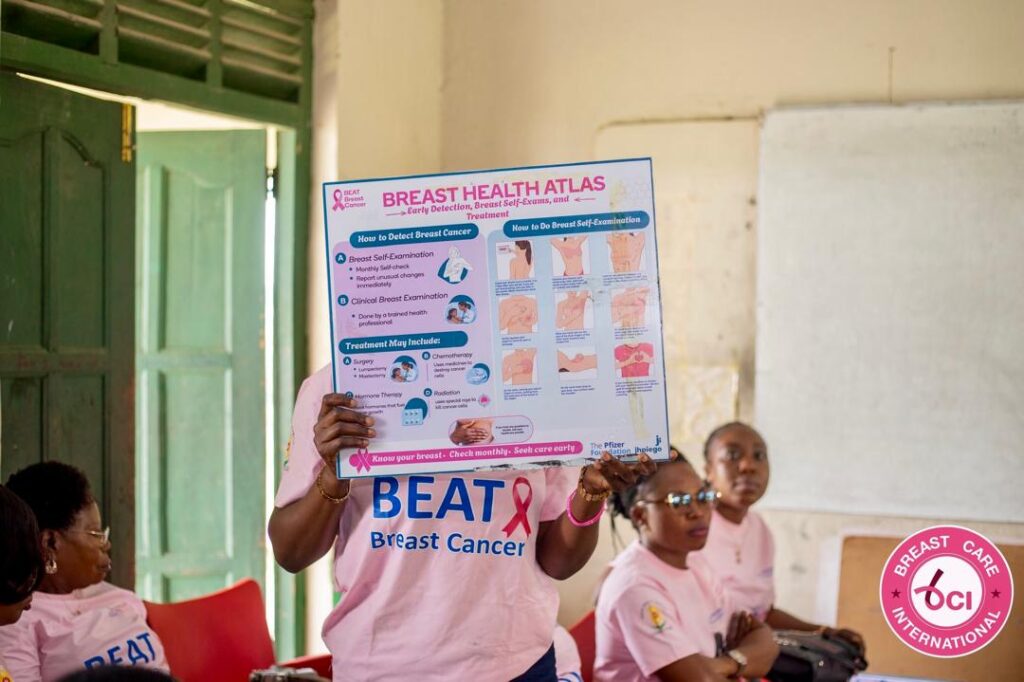
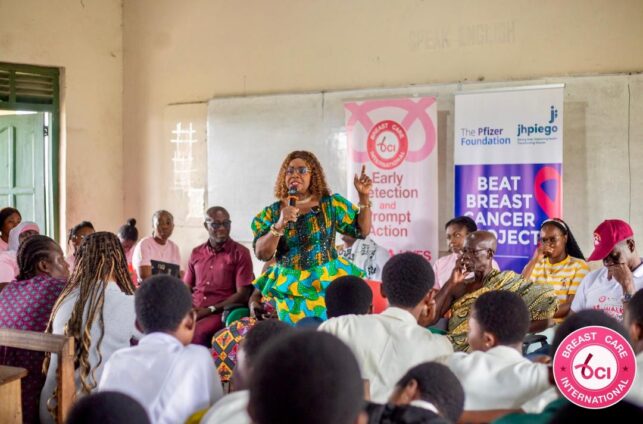
The first exercise was held at Boanim Senior High Technical School, where teachers and students were educated about breast cancer and taught how to carry out self-examination.
For Dr Wiafe Addai, however, screening is not enough. "Sometimes, when we go to a community, we find cases, and no one seems to care about whether the patient has continued to get the treatment she needs," she said.
The new project is intended to close that gap. "We hope that by the end of this Jhpiego project, we'll be able to have a clear pathway for navigation, from educating the people to clinically examining them," Dr Wiafe Addai said.
Women found to have suspicious lesions will be sent directly to hospital for further investigations, including mammograms, ultrasound and core biopsy, she said.
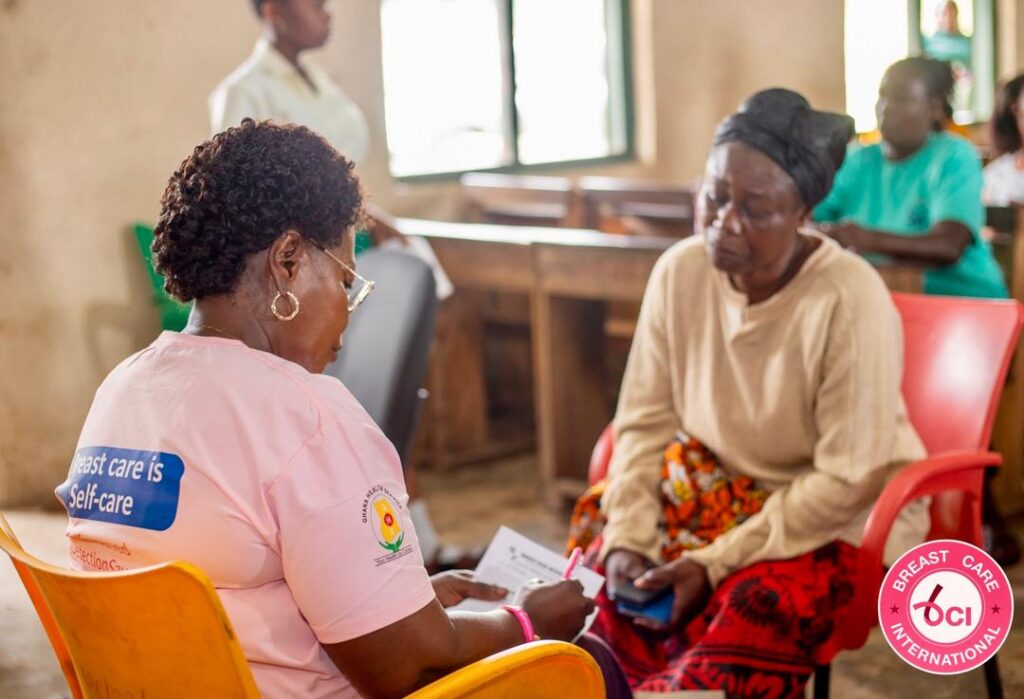
The aim is to ensure that women in communities are not left behind after screening.
"This is a very important project where those in the communities are not left behind, but rather encouraged and assisted to move through a smooth and clear pathway to get the diagnostics and treatment plan they need," she said.
At Boanim, the message also changed the way some participants viewed breast cancer.
A teacher at the school, Christian Marfo Tawiah, said he learnt that early detection could save lives.
"I've learnt today that early detection can save one's life," he said.
He said participants were taught to check themselves every month and were shown how to examine their breasts at home by raising their hands and checking for lumps or bumps. "If we notice anything unusual, we can go to the hospital for a check-up," he said.
He also said the programme taught her about the possible role of family and hereditary factors in breast cancer.
Another lesson was that surgery should not necessarily be feared if doctors recommend removal of an affected breast.
"If you go to the hospital for treatment and they say it needs to be removed, don't be afraid. It can help save your life and allow you to live longer," Mr Tawiah said.
Another teacher, Abigail Adu Gyemfi, said she was surprised to learn that breast cancer can run in families. "Something shocking that I've heard today is that breast cancer can be genetic and can run in families," she said.
She said the programme had also challenged the perception that breast cancer only affects older women. "It's not only older people who can get breast cancer. Younger girls can also develop it," she said.
She also stressed that men can develop breast cancer. "It's not only women who can get breast cancer. Males can also get breast cancer," she said.
A student, Victoria Tano, said she had learnt the same lesson. "You know that breast cancer does not normally occur only in women. Men can also be affected," she said.
She urged people who notice anything unusual to examine themselves and seek treatment. "If we find anything unusual, we should seek treatment," she said.
The Boanim exercise is the first stage of a wider programme. Dr Wiafe Addai said 30 towns under Mampong had been identified for visits. Other targeted areas in the Ashanti Region include Bekwai, Obuasi and Atwima constituencies.
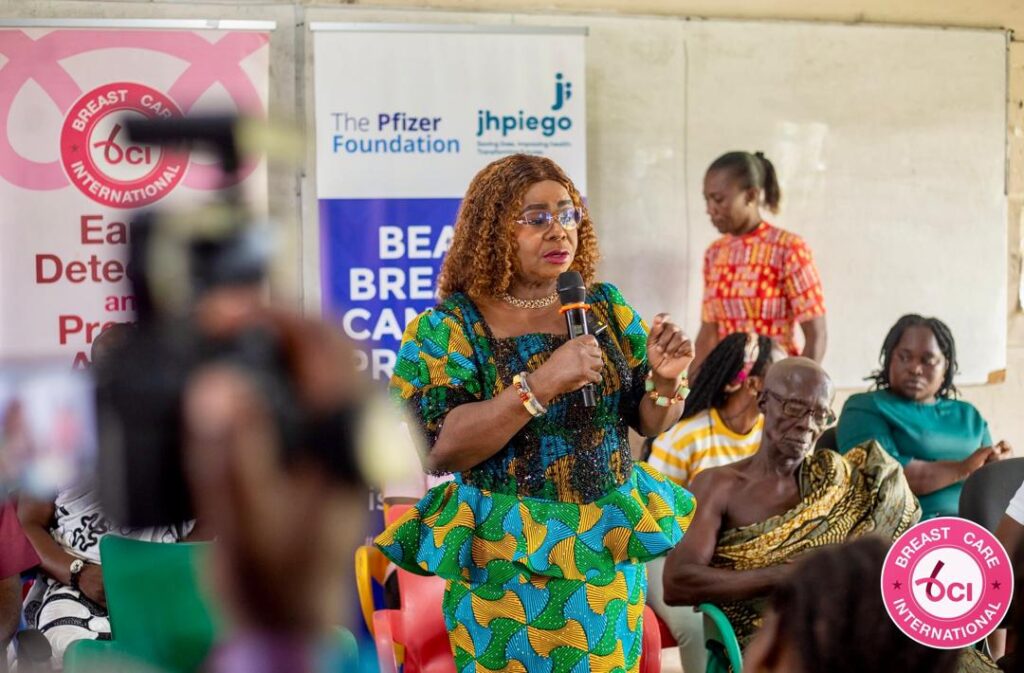
She said the initial exercise was also about learning how to manage the process before taking it to larger communities.
"Today is the first day, and it involves a lot of data collection," she said. "When we go to a big town where we have maybe 500 or 5,000 people, we will know how to manage them," she added.
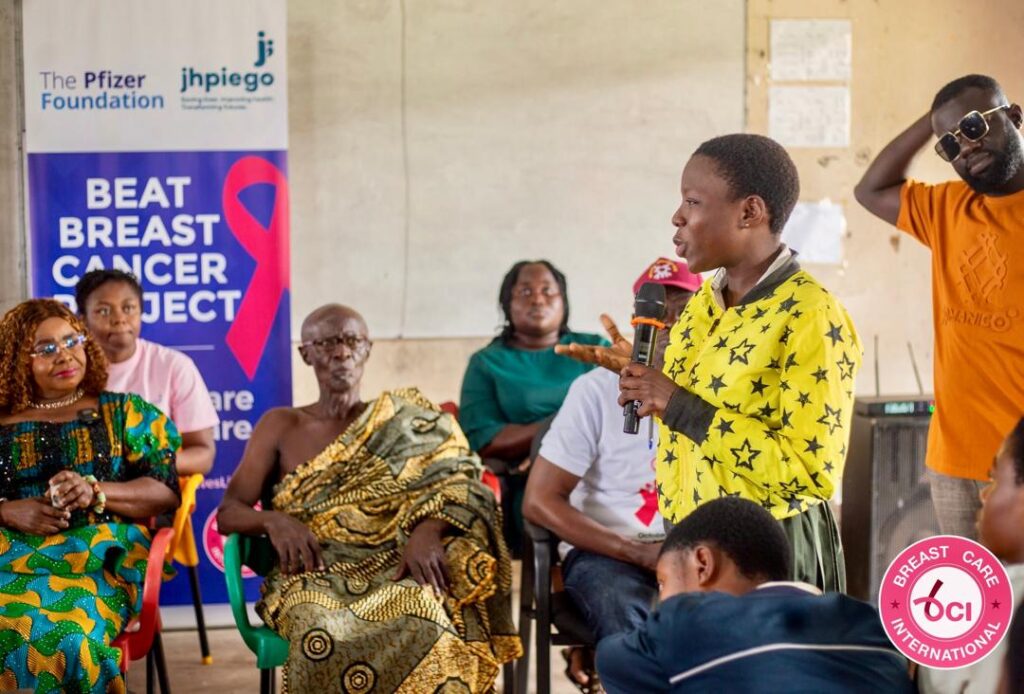
The organisation plans to involve opinion leaders and chiefs in following up women who need further care.
"We're going to be calling and reaching out to opinion leaders and chiefs to make sure that the woman who has a problem in that community is properly navigated and has started the diagnosis and treatment," Dr Wiafe Addai said.
She believes that keeping track of women after screening could help reduce late-stage presentation.
"We believe that by the end of this project, we're going to reduce late-stage presentation because we are not going to leave any woman behind," she said.
Latest Stories
-
‘Hungry to win’ – Villa’s Konsa joins Arsenal in £55m deal
45 seconds -
Argentina’s Paredes banned for 10 games
49 seconds -
Republic Bank Ghana and Enterprise Life launch enhanced insurance products for customers
8 minutes -
Patrons explore property, construction solutions as Day 1 of Republic Bank-JoyNews Habitat Fair ends
16 minutes -
NSMQ 2026: Anglican SHS cruise to one-eighth stage as Namong SHTS shine on debut
17 minutes -
Obaahemaa Nana Aframoa Fri
25 minutes -
Oppong Nkrumah challenges Deputy AG’s claim that his court application was based on ‘falsehoods’
35 minutes -
Germany investigates Russia links to weapons cache discovered in woods, reports say
37 minutes -
Two teenagers seriously injured after sword attack at Swedish school
39 minutes -
Prince Harry and six others face privacy case legal bill of up to £34.5m
42 minutes -
Court orders return of No.1 Oxford Street Hotel to Keningston Residential Partners
43 minutes -
Ebola outbreak ‘growing faster, wider’ as DRC death toll passes 2,500
43 minutes -
QNET supports EOCO in repatriation and handover of 33 Burkinabes rescued during anti-trafficking operation
45 minutes -
55-year-old woman gives birth to triplets at Brofoyedru
1 hour -
UniMAC students take ‘Project Dignity’ to Weija Leprosarium
1 hour