

Audio By Carbonatix
The Governor of the Bank of Ghana (BoG), Dr Johnson Asiama, has ruled out any immediate reduction in the country’s inflation target, cautioning that the recent improvement in price stability may be too early to declare permanent.
His comments come amid improving macroeconomic conditions, with inflation now below the lower bound of the Bank’s medium-term target band and the cedi showing renewed resilience.
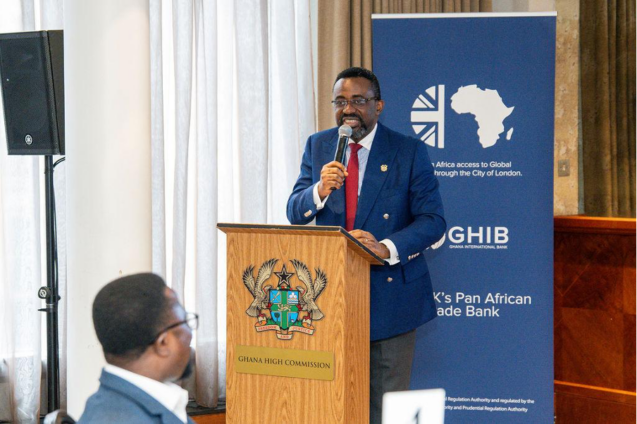
Speaking at the 2026 CEOs Connect organised by the Canada Ghana Chamber of Commerce, Dr Asiama said some investors had questioned why the Bank had not lowered its current 8% inflation target, with a tolerance band of plus or minus 2 percentage points.
“I was in a meeting with some investors the other day and they were asking, why don't we lower our inflation band?” he said.
According to the Governor, the investors believe Ghana could sustain inflation at a lower level and had suggested reducing the target range from the current 6–10% to about 4–6%.
“The 8 plus and minus 2, they believe, we can still do better. So why don't we bring it down to probably from 4 and 6?” he quoted them as asking.
However, Dr Asiama said the Bank remains cautious about changing the benchmark, citing ongoing geopolitical and external risks.
“And I said, well, Iran is still around the corner. The crisis in Iran, it may be too early for me to put that rope around my neck,” he said.
Despite the caution, the Governor expressed confidence that Ghana can sustain the recent gains in price stability over the medium term.
“But we envisage that stable low inflation will continue into the medium-term,” he added.
Dr Asiama said the immediate priority for the Bank is to consolidate the country’s macroeconomic gains rather than adjust the inflation benchmark prematurely.
He also attributed the cedi’s recent resilience to stronger foreign exchange reserve buffers, improved fiscal discipline and a well-calibrated monetary policy stance.
“The local currency, the cedi, continues to demonstrate resilience, supported by improved reserve buffers, fiscal discipline and a well-calibrated monetary policy stance,” he said.
The Governor noted that the broader objective is now to translate the gains in macroeconomic stability into stronger investment, private-sector growth, increased exports and the creation of quality jobs.
Latest Stories
-
Eight projects win €2m Ghana grants for vaccine and drug research
4 minutes -
Ghana steps up Ebola surveillance amid rising cases in Africa
16 minutes -
Acting Rent Control Commissioner directs landlords, hostel operators to issue rent cards
16 minutes -
Nsawam Prison to host Teacher Licensure Examination for inmates for first time
17 minutes -
IES demands stronger safeguards amid temporary Akosombo power arrangement
22 minutes -
Four workers dead after being hit by train in Japan
37 minutes -
Fact-check: Did GoldBod make a loss in 2025? Here’s what the records show
52 minutes -
Rev. Adzraku Kevi calls for more women in leadership
54 minutes -
Dagbon Kingdom suspends Damba Festival to honour late Overlord
56 minutes -
Harry and Meghan’s UK security arrangements remain a ‘private matter’ – Andy Burnham
1 hour -
At least 15 killed in Kyiv as Ukraine grapples with air defence shortages
1 hour -
Existing banking model could draw a dagger through Ghana’s 24-Hour Economy
1 hour -
NSMQ 2026: Heartbreak for Techiman SHS as Wesley High edge them by one point in prelims
1 hour -
IES demands release of July 29 blackout report after latest nationwide outage
1 hour -
Eastern TESCON backs Boakye Agyarko for NPP National Chairman
2 hours