

Audio By Carbonatix
The Bank of Ghana (BoG) has identified mounting pressure on the country’s external position as one of the key risks confronting the Monetary Policy Committee (MPC) as it considers its latest policy stance.
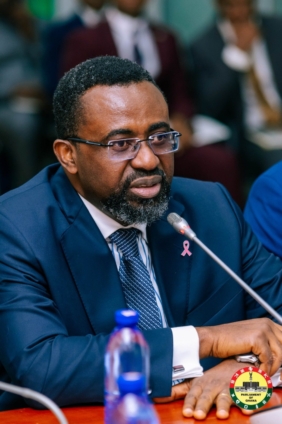
Governor Dr Johnson Asiama says the decline in international reserves, a weaker current account and a slowdown in gold shipments require careful assessment, particularly ahead of the expected increase in foreign exchange demand in the fourth quarter.
Speaking at the opening of the 132nd Monetary Policy Committee meeting, Dr Asiama said gross international reserves currently provide about 4.2 months of import cover, while the current account is projected to record a deficit in the third quarter.
He also noted that gold shipments have slowed, with GoldBod pausing exports since mid-August.
"Rebuilding reserves will be a key priority for the bank in the coming months indeed,” he said.
According to the Governor, the external position will determine how much policy space the Bank of Ghana can safely use, despite relatively stable domestic macroeconomic conditions.
“The domestic position affords policy space indeed. The external position determines how much of it can safely be used,” he said.
Dr Asiama also pointed to rising global risks, with the Middle East conflict pushing up energy prices and creating tighter global financial conditions.
Brent crude, he said, had risen from above $85 per barrel at the previous MPC meeting to about $107 per barrel as of last week.
He said the stronger US dollar and tighter global financial conditions had also weighed on emerging-market currencies, including the cedi.
Domestically, the Governor said headline inflation stood at 5% in August, although this remains below the Bank’s target band of 8% ±2%.
However, inflation has increased from a low of 3.2% in March to 5% in August, prompting the committee to assess whether the rise represents a temporary adjustment or could develop into more persistent inflationary pressure.
The MPC is also expected to consider developments in private-sector credit, fiscal policy and the implications of higher domestic borrowing for liquidity and the exchange rate.
At its previous meeting in July, the committee unanimously maintained the policy rate at 14%.
Dr Asiama said the key question before the 132nd MPC is whether the current policy rate remains an appropriate anchor for inflation expectations given the changing balance of risks.
The meeting is the first MPC session under Ghana’s new 36-month Policy Coordination Instrument with the International Monetary Fund, approved by the IMF Executive Board in July 2026.
Latest Stories
-
AI tool helps Ghanaian farmers identify crop threats from field observations
2 minutes -
NEIP: Designing a Ghana Startup Agency that builds enterprises, not programmes
9 minutes -
Breast cancer diagnosis is not a life sentence – Gender Minister urges early treatment
11 minutes -
‘How does a bad settlement translate into criminality?’ – Atta Akyea questions EOCO
16 minutes -
Foreign Affairs Ministry launches ‘ECOWAS for All’ campaign to boost public awareness
24 minutes -
Baffour Awuah’s EOCO questioning centred on SIC matter – Bosome Freho MP
27 minutes -
Kwaku Bonsam appeals to Mahama, Ablakwa to facilitate his US travel for skin graft; says he’ll fund it
42 minutes -
Baffour Awuah arrested after surrendering to EOCO
43 minutes -
Baffour Awuah cooperating with investigators after surrender and arrest – EOCO
1 hour -
Destruction of aspirants’ posters breaches democracy—Ashanti NPP Communications Director
1 hour -
BNI investigates Ampofo Ankrah over alleged $623,000 World Cup visa scheme
1 hour -
GoldBod’s $1.87bn boost strengthens Ghana’s path beyond IMF support – Institute of Fiscal Policy Research
1 hour -
NPP National Delegates Conference: Police announce road closures, diversions around Baba Yara Stadium
2 hours -
Agric Committee demands financing plan for Pwalugu Irrigation Project before 2027 Budget
2 hours -
Minority calls for the immediate suspension of Ghana-Colombia maritime agreement
2 hours