

Audio By Carbonatix
The Centre for Democratic Development (CDD-Ghana) says omissions identified in the Auditor-General’s COVID-19 expenditure audit are worrying for Ghana’s anti-corruption efforts.
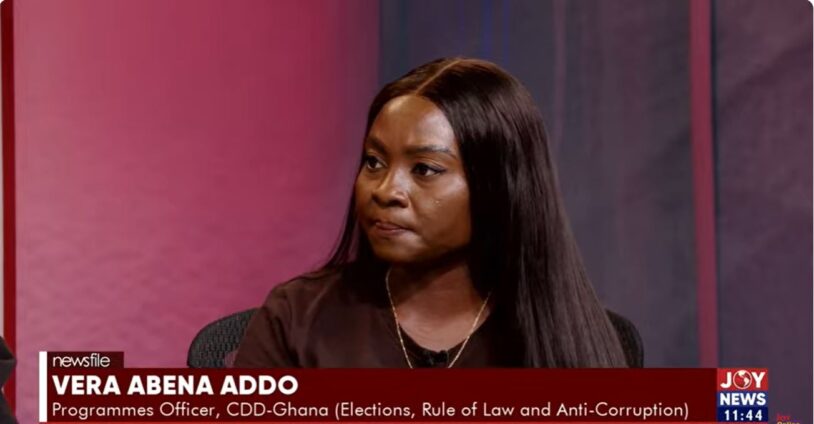
Speaking on JoyNews’ Newsfile on Saturday, Programmes Officer for Elections, Rule of Law and Anti-Corruption at CDD-Ghana, Vera Abena Addo, said the Auditor-General occupies a critical position in Ghana’s accountability framework.
She said civil society organisations, Parliament and citizens rely heavily on reports from the Auditor-General to monitor the use of public funds and pursue accountability.
“My worry with this process is that the Auditor-General occupies a very unique position in our accountability framework or architecture. CSOs, Parliament, citizens, we use their report.
“If we can't really trust Auditor-General's reports, that there are some omissions, it's not... I feel like it's worrying,” she said.
Ms Addo said CDD-Ghana and other anti-corruption organisations recently relied on the Auditor-General’s recommendations while conducting follow-up work in 24 districts.
She said the exercise, funded by the European Union and implemented by SODIL Ghana in partnership with the Ghana Anti-Corruption Coalition (GACC) and Transparency International Ghana, underscored the importance of the Auditor-General’s reports.
Ms Addo acknowledged that errors can occur within public institutions but said the scale of the omissions revealed in investigative journalist Manasseh Azure Awuni’s work requires a clear explanation from the Audit Service.
“I think we need an official response from them on why this is so. Because it's one of the reliable, credible organizations. We have used these tools for years,” she said.
She said the Audit Service’s response to Mr Awuni’s findings had not adequately addressed the concerns raised.
“They were worried about being accused. Even if you are being accused, you have an opportunity to respond appropriately about why that omission,” she said.
Ms Addo stressed that the difference between the expenditure captured in the Auditor-General’s report and the amount identified by Mr Awuni was too significant to be overlooked.
According to her, the concern extends beyond the possible financial loss to the wider implications for institutions working to combat corruption.
“Not just what is lost, but because it's Auditor-General, it's worrying for us as anti-corruption institutions that we have to question the work that they put out in public,” she said.
Latest Stories
-
UG Vice-Chancellor urges swift operationalisation of National Research Fund
10 minutes -
Pope Leo to have surgery after lump found in lung
16 minutes -
Joseph Cudjoe writes: Ghana must break free from the dangerous mindset that natural resources are the foundation for wealth
40 minutes -
Children among 109 dead after boat capsizes off Djibouti, UN says
44 minutes -
OmniBSIC Bank’s 11th health walk promotes fitness and business growth
53 minutes -
2026 World Maritime Day: Danish Embassy organises “The Gulf of Guinea Speaks”
1 hour -
New Economy will tackle unemployment and restore hope – Ato Forson
1 hour -
IMMILAC president recounts personal losses as security women lead breast cancer awareness campaign in Wa
1 hour -
University of Ghana postpones October 12 reopening as GAUA strike persists
2 hours -
Bahass Foundation launches vocational skills training to support mental health recovery in Wa
2 hours -
NPP orders parliamentary aspirants and their supporters to suspend campaign activities
3 hours -
Techiman unites against child marriage: Joy Impact Makers Awardee leads charge on International Day of the Girl Child
3 hours -
Ghana Psychological Association calls for greater involvement of people with lived experience in mental health care
4 hours -
Ablakwa says Ghana could evacuate more citizens from South Africa if the situation worsens
5 hours -
Violence against girls must be tackled through individual responsibility – Gender advocate
5 hours