

Audio By Carbonatix
President John Dramani Mahama has announced plans to construct 30 new E-block secondary schools, with the majority to be located in high-population-density communities across the country to bring secondary education closer to students.
The President said the new schools would be built from scratch under the government’s Star J Project and would primarily serve as community day schools, allowing children in densely populated areas to attend secondary school within or close to their communities.
“Now under the Star J Project, we're going to build another 30 new E-blocks. These 30 from scratch. The ones I talked about earlier was, we're finishing the abandoned ones. But with this we're going to build another 30 new E-blocks across the country. So, there will be 30 new secondary schools across the country.”
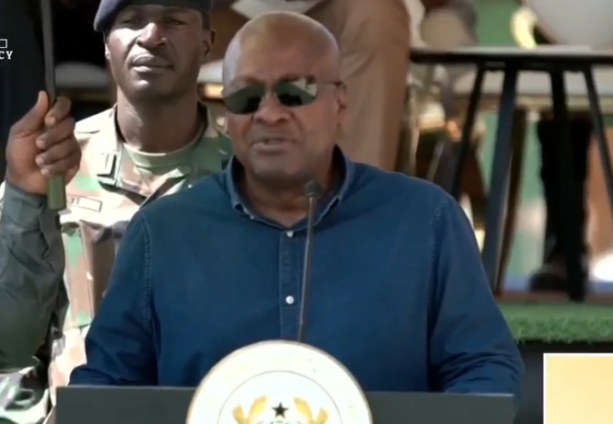
Speaking at Paga in the Upper East Region on Thursday, August 13 during his ongoing engagements with citizens, President Mahama said the location of the new schools would be a key part of the planning.
“A lot of these new ones are going to be in high population density areas.
“So in some of the major cities across the country, we will put E blocks in high-density areas so that those will be community day schools.”
He said the approach was intended to reduce the distance students have to travel to access secondary education, particularly in heavily populated urban communities.
“It means the children can even walk from home to the secondary school.
“So those new 30 ones are going to be mostly in high-density population areas so that they will be community-based schools.”
President Mahama explained that the location of earlier E-block schools had created a different challenge, particularly in rural districts where students often live in communities scattered across large geographical areas.
“But with schools like this, those we started in our previous term, several of them are situated in rural districts and we know that the children come from different communities across the district and so it's difficult for the children to commute daily to school.”
He said the geographical spread of communities in such districts had led to some of the earlier E-block schools being converted into boarding facilities.
“And so that's why several of those schools were converted into boarding schools.”
Latest Stories
-
AG has established a seperate justice system for NDC members – Manhyia South MP alleges
2 minutes -
GRA Commissioner-General commends Customs for improved revenue performance
12 minutes -
Ashanti Region records Ghana’s highest maternal mortality rate at 196.7 deaths per 100,000 births
13 minutes -
Upper East Airport will ease gold transport, attract investors — Mahama
14 minutes -
MTN to reward 30,000 customers with cash, Toyota Land Cruisers in 30th anniversary promotion
16 minutes -
“My new movie ‘Ama’ has no single dot of English” – McBrown
18 minutes -
From Altar to Aisle: How Ghana turned “prophets” into kingmakers
23 minutes -
Ending double-track will improve WASSCE performance – Mahama
24 minutes -
“Marketing opened my mind to the business of creativity” – fashion designer Michael Brett Odoom
27 minutes -
From AI adoption to African innovation: Building technology that solves real problems
43 minutes -
Police foil planned heist at three banks; 2 suspects killed, one arrested
55 minutes -
Why are international agencies exposing corruption Ghana cannot detect? — MP
1 hour -
DTI graduates over 1,500 master crafts persons, SMES to drive formalisation of Ghana’s informal sector
1 hour -
We don’t have confidence in AG to independently probe AKSA energy deal – NPP
1 hour -
Ofankor crash death toll rises to 12, 22 injured – NRSA confirms
1 hour